
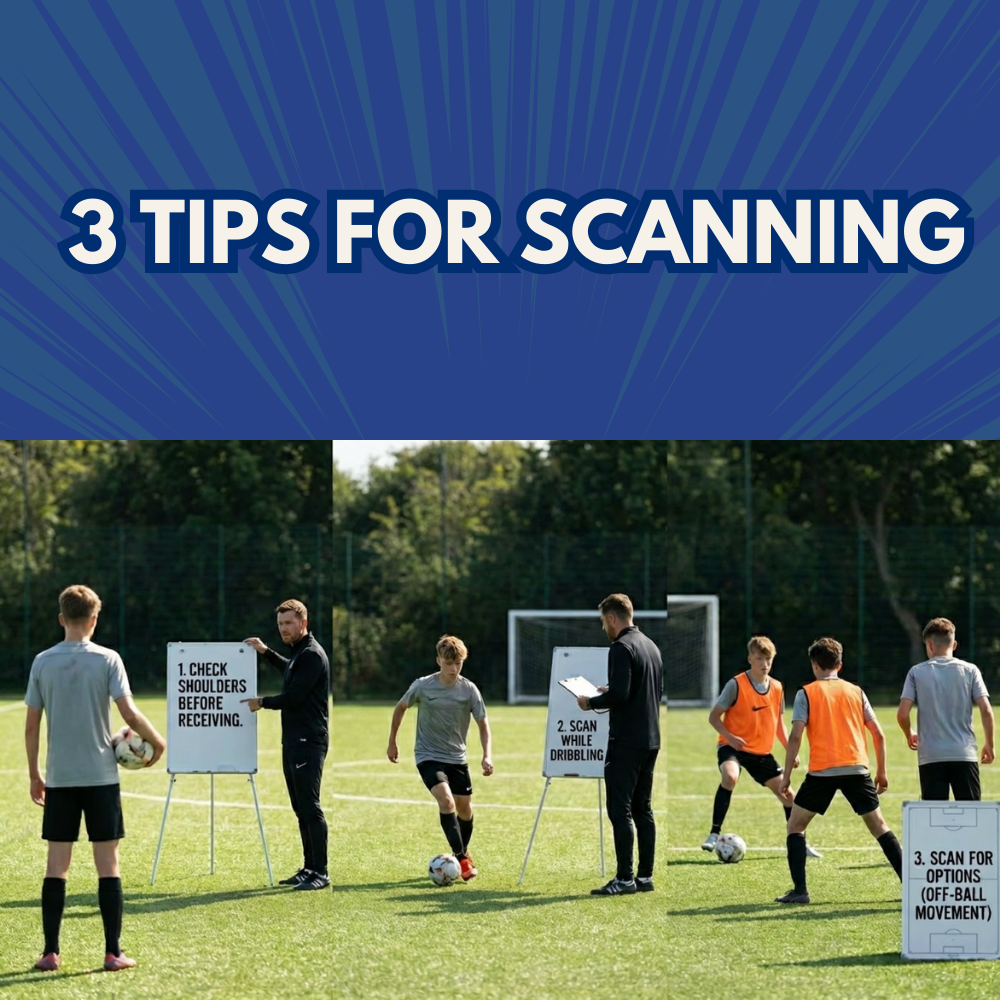
Mastering the Game: 3 Essential Practices for Elevating Your Football Scanning IQ
Mastering the Game: 3 Essential Practices for Elevating Your Football Scanning IQ
Did you know the world's most intelligent footballers aren't just naturally gifted? They actively train their eyes and minds to process information at lightning speed. Imagine seeing the next move, the opening pass, or the approaching defender before anyone else. This isn't magic; it's a developed skill, a high-level "scanning IQ" that transforms ordinary players into game-changers. It’s the secret weapon separating good players from truly great ones, enabling split-second decisions that win matches.
The Undeniable Power of Scanning IQ in Modern Football
In fast-paced football, gathering and interpreting environmental information is paramount, known as "Scanning IQ." It means constantly looking around, quickly assessing teammates, opponents, and the ball, even without possession. This builds a mental map of the pitch, allowing anticipation and optimal decisions under pressure, directly enhancing game intelligence.
Players with high football scanning IQ identify missed opportunities, release perfect passes, and evade pressure proactively. It's about cognitive processing and visual awareness, not just athletic prowess. Improving this skill significantly enhances individual performance, team cohesion, and leads to more successful outcomes. It's the silent force behind every great assist, tackle, and intelligent run.
What Exactly is Football Scanning IQ? Understanding the Core Concept
Football Scanning IQ refers to a player's proficiency in actively observing and processing visual information during a match. This involves quick, repetitive head movements – "checking your shoulders" – to understand the dynamic game landscape. A high Scanning IQ means accurately perceiving teammate locations, opponent movements, available space, and ball trajectory within fractions of a second. This constant information flow directly feeds into optimal decision-making skills.
Why Enhancing Scanning IQ is Non-Negotiable for Aspiring Footballers
The modern game demands tactical intelligence and situational awareness alongside athleticism. Tighter spaces shrink decision-making windows. Inadequate scanning leads to dispossession and missed opportunities. Conversely, a high Scanning IQ allows players to orchestrate play, protect the ball, exploit weaknesses, and contribute to fluid attacking styles. For aspiring footballers, improving scanning is a fundamental requirement to reach full potential.
Practice 1: Mastering the Art of Pre-Scan – Seeing the Pitch Before Receiving the Ball
The first crucial practice for elevating your football scanning IQ is pre-scanning: gathering vital information before you touch the ball. Elite players constantly scan their surroundings in the moments leading up to receiving a pass, forming a mental picture of their next action. This proactive approach ensures speed, precision, and confidence, often surprising opponents and unlocking new attacking possibilities.
The Importance of Constant Head Movement: Look Before You Leap
Constant head movement is the physical manifestation of pre-scanning, regularly checking your shoulders and surroundings, even when the ball is distant. This deliberate, cyclical action – scanning every 2-3 seconds – builds a constantly updated mental map of the game state. Without continuous feedback, your mental map quickly becomes outdated, leading to poor decisions. Regular head scanning becomes a natural reflex, providing crucial awareness of opponents, teammates, and open spaces.
Developing the Habit: Drills for Proactive Information Gathering
Integrating pre-scanning into your game requires specific training. Simple drills are highly effective:
1. The "Look Around" Cone Drill: Dribble through cones. Instruct players to call out a number/color/name held up at the side, before their next touch. This forces head-up scanning while maintaining control. Increase complexity with multiple or moving targets.
2. Shadow Play Scanning: In a small group passing drill, one player without the ball is the "scanner." Their job is to constantly check shoulders and verbally call "man on," "clear," or "space" to the player about to receive. This internalises the habit and awareness. Rotate roles frequently.
3. The "Check & Receive" Game: Play a small-sided game (e.g., 3v3). Before any player receives a pass, they must visually scan their surroundings. Failure to scan results in a turnover. This punitive measure reinforces the habit and enhances player performance by instilling discipline.
Case Study: The Midfield Maestro's Vision
Legendary midfielders, like Xavi or Pirlo, always seem to have time due to superior pre-scanning. Before receiving a pass, their heads were up, surveying the entire pitch, knowing defender and teammate positions and crucial spaces. By ball arrival, they had multiple options planned. This isn't innate; it's a cognitive skill honed through deliberate practice, making them ultimate decision-makers.
Practice 2: Developing Peripheral Vision and Situational Awareness – The Unseen Advantage
While head movement is essential, a high football scanning IQ also uses peripheral vision and comprehensive situational awareness. Peripheral vision perceives objects outside direct sight, offering a holistic game view, while situational awareness synthesises all visual data. This unseen advantage enables players to anticipate, react quicker, and exploit subtle openings, leading to truly smart football.
Training the Eyes: Expanding Your Field of Vision
Developing peripheral vision means processing dynamic information effectively at the edges of your sight, crucial in tight spaces for monitoring multiple threats. While physical visual field expansion is impossible, players can train their brains to interpret peripheral signals more effectively. This involves drills dividing attention between a central focus and peripheral events, enhancing overall football vision.
Practical Drills for Enhanced Peripheral Awareness
Specific training methods significantly improve a player's ability to utilise their peripheral vision and boost overall situational awareness:
1. The "Numbers Game" Drill: Two players pass, with numbered cones slightly out of direct sight on either side. As they pass, they call out numbers seen peripherally, engaging peripheral vision while focusing on the ball.
2. "Head Up" Dribbling & Decision Making: Dribble through a grid with passive/active defenders. Players must use peripheral vision to identify defenders and make quick decisions (pass, change direction, protect ball) without fixating. This links football vision to practical choices.
3. Small-Sided Games with "Awareness Cues": Play small-sided games (e.g., 5v5). If a player receives the ball and identifies an "off-screen" teammate or opponent using peripheral vision, they gain an advantage. This incentivises active peripheral scanning and holistic awareness, including identifying threats or passes two-three steps away.
Insight: The Defensive Midfielder's Radar
A great defensive midfielder operates like a radar, constantly aware of the entire midfield battle, opposition attackers, and forward runs, without fixating on the ball. They use peripheral vision to track multiple players, anticipating passes, danger, or possession wins. This comprehensive situational awareness enables intercepts, covers, and counter-attacks with effortless grace. This game intelligence is developed through training focused on expansive visual perception.
Practice 3: Implementing Game-Realistic Drills – Bridging Practice to Match Performance
The final step for improving football scanning IQ is transferring isolated skills to real match environments. Game-realistic drills bridge this gap, integrating scanning into scenarios mimicking actual play. This ensures scanning becomes an instinctive, unconscious habit, not a forced action, thereby enhancing decision-making under pressure and overall player performance.
Integrating Cognitive Load: Replicating Match Intensity
To truly enhance scanning IQ, training must simulate match cognitive load, adding pressure, fatigue, and multiple decision points. Drills must make scanning necessary for success, involving quick transitions, defensive pressure, and limited ball time. By replicating match intensity, players learn rapid information processing under duress, solidifying their decision-making skills and improving overall football training effectiveness.
Actionable Steps for Match-Specific Scanning Drills
Here are several visual scanning drills that can be incorporated into regular football training to make scanning a natural part of a player's game:
1. The "Traffic Light" Small-Sided Game: Coach holds colored cones: Green (play normally), Yellow (one touch), Red (pass immediately). Players must scan for signals and adjust decisions rapidly, simulating processing multiple information types.
2. Overload/Underload Scenarios: Drills with numerical advantages (e.g., 4v2, then 2v4). Overloaded team uses superior scanning to exploit advantage and maintain possession; underloaded team scans aggressively to close space and win the ball. This trains situational awareness in dynamic scenarios.
3. Transition Games with Gates/Goals: Design games where teams attack small goals but must transition quickly from defense to attack or vice-versa. Players must constantly scan during transitions to identify open teammates, track opposition runs, and switch focus.
4. Blind-Sided Receiving Drills: Players receive passes from behind, forcing them to turn and scan quickly for their next move. This mimics realistic scenarios where immediate midfield survey is needed to find an attacking option.
Expert Insight: The Art of Anticipation and Timing
Ultimately, a high scanning IQ leads to superior anticipation and timing, hallmarks of elite footballers. Consistent scanning allows players to read the game instinctively, anticipating opposition movement, ball trajectory, and advantageous spaces. This isn't just seeing; it's understanding game flow and making predictions. This deeper football training develops cognitive processing, directly impacting a player's ability to influence outcomes, actively shaping the game rather than just reacting.
Frequently Asked Questions About Improving Football Scanning IQ
1. What is the biggest mistake players make regarding scanning in football?
The most common mistake is not scanning enough or scanning too late, often only lifting their heads after receiving the ball. This misses the crucial window for making the best decision. The key is proactive, constant mental mapping before the ball arrives.
2. How often should a football player be scanning during a match?
Elite players typically scan every 2-3 seconds, sometimes more, depending on intensity and position. This equates to 600-800 purposeful head movements per 90-minute match, emphasising consistent, quick, and focused glances.
3. Can scanning ability truly be taught or is it an innate talent?
Absolutely, scanning ability can be taught and significantly improved. While some players may have natural spatial awareness, consistent training, specific drills, and a focus on cognitive development can enhance any player's scanning IQ. It's a trainable skill, not just a talent.
4. At what age should football players start focusing on improving their scanning?
It's never too early. For younger players (U8-U12), it can begin with simple "head up" games. As players progress through teenage years, structured drills and conscious coaching become vital for developing advanced game intelligence.
5. Are there any off-pitch exercises or tools that can help with scanning IQ?
Yes, vision training apps or specialised light boards can improve reaction time and peripheral vision. Activities like juggling with eyes up, or memory games, can aid cognitive processing and visual awareness. However, the most effective training always involves the ball in a game-like environment.
Final Thoughts: Elevating Your Game Through Intelligent Vision
Improving your football scanning IQ is not a quick fix; it's a fundamental shift in how you perceive and interact with the game. By dedicating time to mastering the art of pre-scan, developing comprehensive peripheral vision and situational awareness, and consistently implementing game-realistic drills, you're becoming a smarter player. This journey transforms you from someone who reacts to someone who anticipates, from someone who sees the immediate to someone who understands the unfolding narrative of the pitch. Embrace these three practices to unlock a new dimension in your game, making passes and influencing matches in profound ways. Commit to consistent effort and watch your game intelligence propel your performance to unprecedented heights, painting masterpieces with every touch.
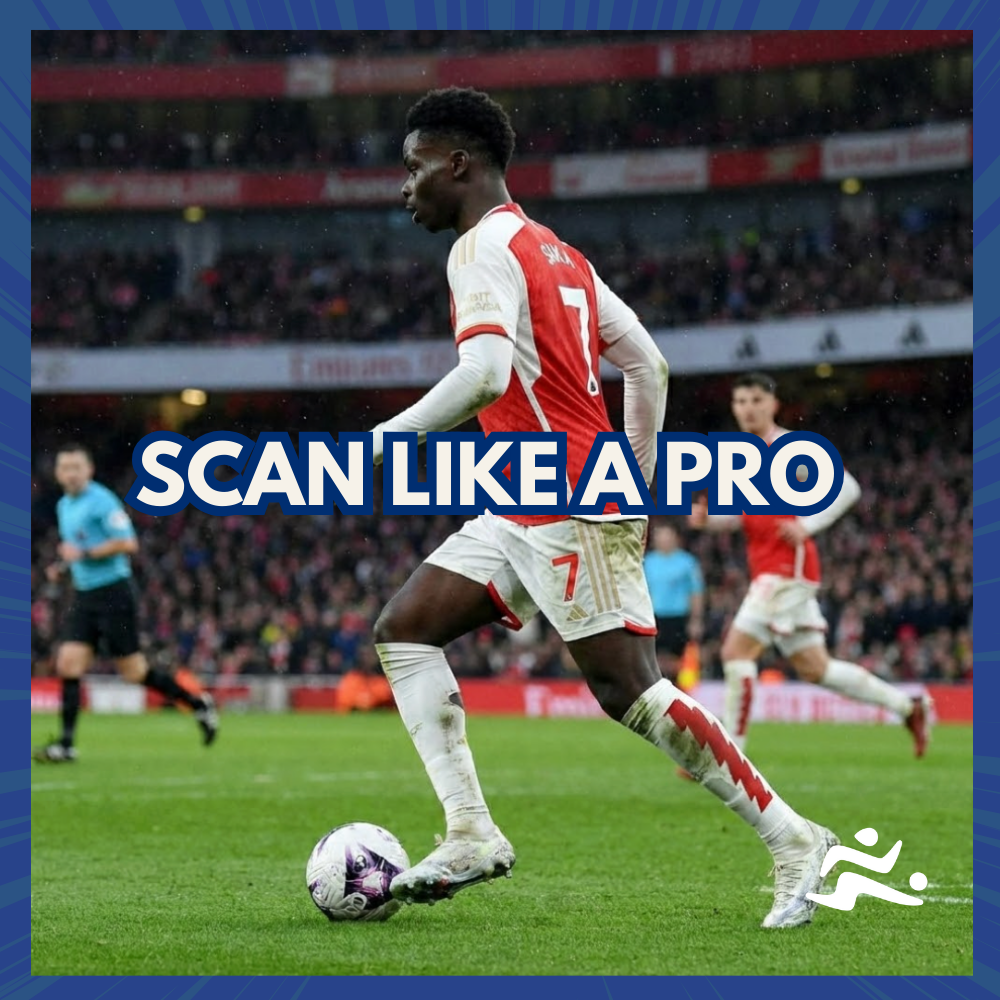
How to Scan Like a Pro in Your Football Match
How to Scan Like De Bruyne in Your Football Match
Imagine seeing the entire pitch unfold before you, anticipating plays, and finding teammates in acres of space that no one else spotted. What if you could receive the ball knowing exactly your next two or three moves, making every touch count? Top professional footballers are not just physically gifted; they possess an extraordinary mental edge. This edge often comes down to one crucial, yet often overlooked skill: scanning. If you want to elevate your game from good to genuinely impactful, mastering the art of scanning is your secret weapon.
Understanding the De Bruyne Effect: What is Scanning in Football?
At its core, scanning in football is looking around your surroundings on the pitch, primarily over your shoulders, before and after receiving the ball. It’s about constantly gathering visual information: teammates, opponents, and available space. Kevin De Bruyne, the midfield maestro, epitomises this skill; his impossible passes are a direct result of relentless, effective scanning.
This concept is vital for anyone looking to improve. It’s not just looking up; it’s purposeful observation. This constant data input allows quicker, more informed decisions, drastically increasing effectiveness on the ball and off-ball awareness.
Why Mastering Scanning Transforms Your Game
Mastering scanning is compelling, especially for players who struggle with decision-making under pressure. Strong scanning habits unlock key advantages that fundamentally change your performance.
Firstly, improved decision-making is significant. Scanning provides context for the right choice: pass, dribble, or protect the ball. It empowers choosing the best option.
Secondly, scanning enhances spatial awareness. You become familiar with open space for yourself and teammates. De Bruyne finds pockets of space even when marked, knowing where defenders aren't.
Thirdly, it impacts passing accuracy and range. Knowing your target's position, body orientation, and marking allows a more precise pass.
Finally, scanning is crucial for player safety and ball retention. Aware of pressure, you can shield the ball, turn from danger, or play a quick one-touch pass. This reduces turnovers and maintains possession.
The Science Behind De Bruyne's Vision: How Elite Players Scan
Scanning like De Bruyne involves perception, attention, and memory. Elite footballers perform many head turns, but it's the quality and timing that truly matter.
Top players scan more effectively in "critical moments," such as before receiving or during transitions. Their scanning is goal-directed, seeking specific information: closing defenders, teammate runs, open space.
De Bruyne's genius lies in rapid information processing and execution under pressure. His brain developed incredible pattern recognition, quickly identifying formations, weaknesses, and opportunities, making him seem a step ahead.
Elite scanners also use peripheral vision effectively. While eyes focus on a specific area, their brains process visual field edges. This broad awareness contributes to exceptional tactical understanding.
Building Your Scanning Habit: Practical Drills and Exercises
Transforming scanning into an ingrained habit requires deliberate practice. Consistent effort will significantly improve your pitch awareness and decision-making.
1. The "Head Check" Drill: In passing drills, check both shoulders before the ball reaches you. Actively identify something. One last quick scan as the ball approaches. Repeat every time.
2. The "Number Game" Rondo: In a rondo, place numbered cones. Before receiving, players scan and shout out a visible number. This forces active, specific scanning while maintaining possession.
3. Vision Cones/Flags: During dribbling or passing, place colored cones. Coach calls a color; glance at it before your next action. Improves peripheral vision and quick information processing.
4. "Picture This" Practice: In training games, freeze before receiving. Look around, mentally "picture" your next move, then execute. Links scanning with immediate decision-making.
Reading the Game: Anticipating Play Like a Pro
Scanning is vital for anticipating play. De Bruyne often knows what will happen before anyone else, due to pattern recognition and tactical understanding fueled by consistent scanning.
To anticipate, see the game as patterns, not just individuals. If a full-back pushes high, anticipate an overlap. If defenders converge, anticipate an opening.
Key elements for anticipation: Body Language: Observe opponent/teammate orientation for subtle cues. Space Creation: Look for developing spaces as players move in/out of position. Ball Trajectory: Scan while the ball is in the air to gather info on landing and options. Team Shape: Assess your team's and opponent's tactical setup. This macro-level understanding helps decisions, enhancing tactical awareness.
Communicating Your Vision: Applying Scanning to Team Play
Scanning's true power is unleashed collectively. De Bruyne creates opportunities through his vision and subsequent communication.
Verbal Communication: Identify space or threats, then use short calls: "Man on!" "Time!" "Turn!" This transmits information, guiding teammates and preventing turnovers. Crucial for team awareness. Non-Verbal Communication: Your body orientation after a scan signals intentions. Opening your body towards an open wing prompts a pass there. Shielding the ball signals support needed. Playing the Right Pass: The ultimate communication is the pass. A perfectly weighted through ball or quick switch, directed by your scan, communicates your vision to the entire team.
Overcoming Common Scanning Obstacles on the Pitch
Implementing scanning consistently presents challenges. Understanding these "potholes" allows you to overcome them.
1. Ball Fixation: Staring at the ball misses crucial info. The fix: Force yourself to lift your head and scan before and after ball release. 2. Physical Fatigue: Fatigue reduces mental sharpness. The fix: Maintain fitness. Practice scanning when tired to build resilience. 3. Pressure and Panic: Intense pressure leads to impulsive reactions. The fix: Practice composure drills under pressure, forcing quick scans to find an escape. 4. Lack of Direction: Scanning without purpose. The fix: Develop a "scan checklist": "Opponent left? Right? Teammate open? Space behind?" 5. Environmental Factors: Poor lighting/crowded pitch makes scanning hard. The fix: Adjust body position for better viewing. Utilise peripheral vision.
Your 7-Day Scanning Transformation Plan
This actionable 7-day plan helps embed scanning into your football habits. Consistency is key!
Day 1: Awareness & Intention: Consciously decide to scan. Perform one head check over your shoulder before every ball received. Day 2: Focused Observation: In passing drills, actively identify one specific thing during your scan (e.g., furthest cone) before the ball arrives. Day 3: Introducing Pressure: In small-sided games, prioritise scanning for "man on" or blind-side defenders. Day 4: Peripheral Vision & Space: During dribbling, use peripheral vision to spot targets. In passing, find the largest open space, enhancing spatial awareness. Day 5: Game Situation Application: In games, actively scan during transitions. Look for furthest attackers or potential through balls. Day 6: Post-Scan Decision Making: Link your scan to your decision. Ask: "What did my scan tell me, and how does it influence this pass?" Day 7: Review & Refine: Reflect. Identify one specific area for next week's improvement. Celebrate improved pitch awareness.
Advanced Scanning Techniques: Beyond the Basics
Once fundamental scanning is habitual, explore advanced techniques that truly set players like De Bruyne apart.
1. Predictive Scanning: Scan for potential threats/opportunities, not just current ones. See two steps ahead based on play flow. 2. "Off-Ball" Scanning Loops: Maintain constant scanning even without possession. Assess defensive positions, pressing traps, or spaces to move into. Critical for off-ball awareness. 3. Information Prioritisation: Instinctively know what information is most critical in a given situation to avoid overload. 4. Deception Scanning: Glance one way to feign intention, then pass the opposite, using information from an earlier, subtle scan. 5. Micro-Scans: Incredibly quick, almost imperceptible glances to confirm info or pick up tiny, crucial details efficiently.
Visual Cues and Decision-Making: Stealing De Bruyne's Playbook
De Bruyne's ability to scan and execute is a masterclass in reading visual cues for high-quality decision-making. Incorporate elements into your game.
1. Defender's Body Orientation: A defender facing their own goal might be unaware of your run (opportunity). A square defender is ready to react (dribbling riskier). 2. Teammate's Signals: Scan for teammates pointing to space or subtle hand signals, building telepathic understanding and team awareness. 3. Gap Recognition: Actively look for "half-spaces" – channels between defenders – that appear when a defender steps out. 4. The "Look Away" Pass: Scan one way to deceive, then execute a pinpoint pass in the opposite direction, using earlier scan info. Requires excellent football vision. 5. Understanding Defensive Shapes: Quickly identify opposition formation (flat back four, high line). This macro-level info dictates your next move, exploiting weaknesses.
Frequently Asked Questions About Scanning in Football
1. How often should I scan during a football match?
Elite players scan very frequently, hundreds of times per game. For midfielders, aim for every 3-5 seconds. Make it a continuous habit, constantly updating your mental map of the pitch. Focus on quality and purpose.
2. Is scanning only for midfielders?
Absolutely not! It's critical for every position. Defenders need it for incoming attackers, strikers for space, wingers for runs. Goalkeepers scan the entire pitch to organise defense and initiate attacks. It’s a universal football skill.
3. What's the difference between scanning and just looking around?
Simply looking around is passive; scanning is active and purposeful. When you scan, you actively search for specific information: opponents, teammates, open space, threats, or opportunities. It involves conscious information gathering for informed decisions.
4. Can scanning improve my passing accuracy?
Yes, significantly! Effective scanning means you know exactly where your target teammate is, their body orientation, and if they have space. This allows you to select the most appropriate pass and deliver it with greater precision, aiding their next action.
5. How long does it take to see improvements in scanning?
You can see noticeable improvements in awareness and decision-making within a few weeks of consistent, deliberate practice. The foundational habit can be built quickly. Committing to a specific plan and reinforcing it will yield faster results.
Final Thoughts
The ability to scan like Kevin De Bruyne isn't an innate talent reserved for a select few. It's a fundamental football skill, honed through deliberate practice and a deep understanding of its impact on the game. By consistently gathering information, you empower yourself to make quicker, smarter decisions, create space, and enhance both your individual performance and your team's collective intelligence. Embrace the drills, be patient, and commit to making scanning a non-negotiable part of your footballing DNA.