
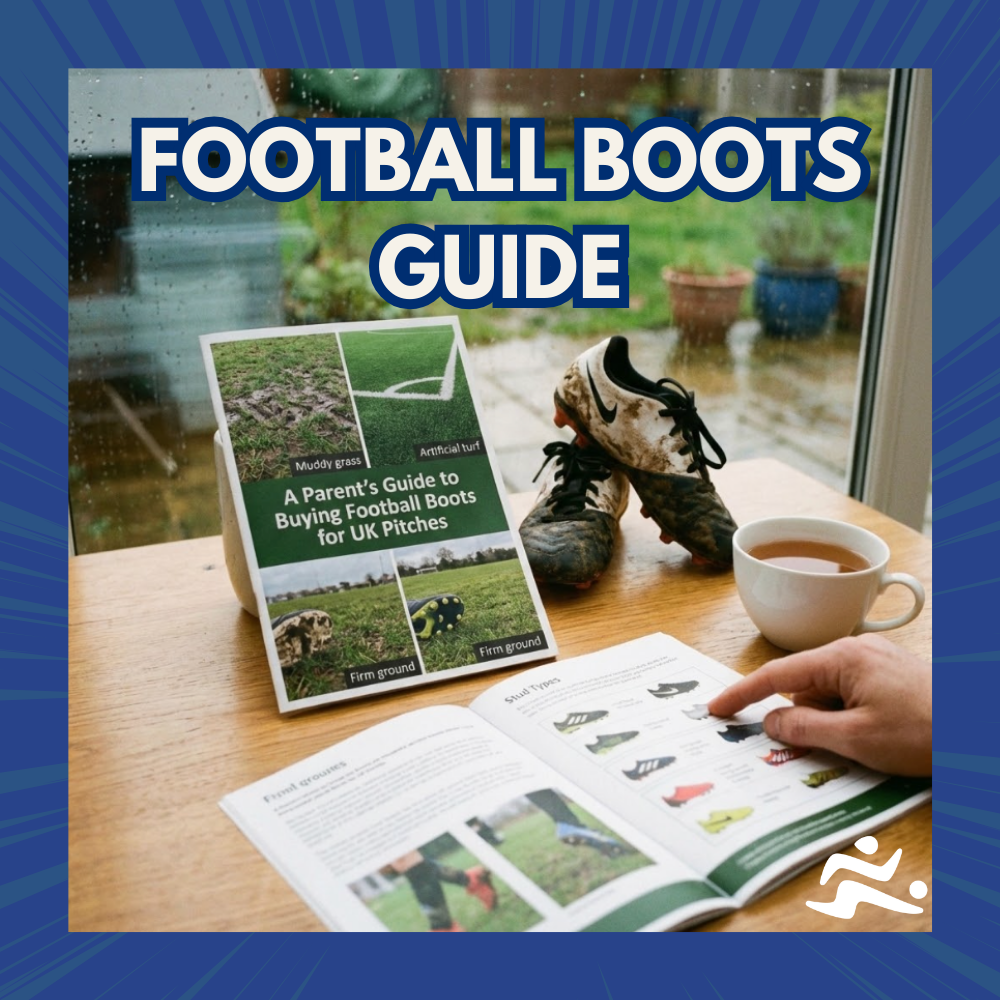
A Parent’s Guide to Buying Football Boots for UK Pitches
Did you know that playing in the wrong football boots increases a child's injury risk by up to 30% on certain pitches? For parents across the UK, the annual quest for new football boots is more than just a shopping trip; it's a critical decision impacting safety, performance, and enjoyment. With soggy winter pitches, rock-hard summer grounds, and artificial turf, finding the perfect pair can feel like navigating a minefield. This guide arms you with knowledge to make confident choices, ensuring your young footballer shines on any UK pitch.
A Parent’s Guide to Buying Football Boots for UK Pitches
Every year, as the football season approaches, parents across the UK face buying new junior football boots. This involves understanding diverse playing surfaces and matching footwear to specific conditions. From muddy park pitches to modern artificial turf, each surface demands a different sole for optimal grip, comfort, and safety.
The 'why' is crucial: the right boots enhance a child's performance and significantly reduce injury risks like ankle sprains or knee issues. Ensuring safety and maximising enjoyment makes this guide essential, transforming a confusing purchase into an informed decision benefiting your budding footballer.
Understanding the UK Pitch Landscape and Its Impact on Football Boot Choices
The Unique Challenges of British Football Pitches for Footwear
The UK's unpredictable weather profoundly impacts football pitch conditions, ranging from firm and dry to muddy bogs. Natural grass pitches vary, and increasingly, artificial pitches (3G or 4G) demand specific boot types. Understanding this diverse landscape is the first step in an informed purchase.
Why Matching Boots to Pitch Type is Not Just a Suggestion, But a Necessity
Choosing the correct football boot for the specific pitch type is fundamental for safety and comfort. Using FG boots on soft ground causes slips; SG boots on hard or artificial pitches risk knee and ankle injuries. Wrong boots also wear out prematurely. Matching the boot to the pitch invests in your child's well-being and footwear longevity.
Decoding Football Boot Types: A Deep Dive into Soles and Stud Configurations
Firm Ground (FG) Boots: The Everyday Warrior for UK Grass
Firm Ground (FG) boots are the most common choice for grassroots football in the UK, designed for natural grass pitches that are dry to slightly damp. Their soleplates feature moulded plastic studs, typically conical or bladed, providing excellent traction.
FG boots are versatile for most good-to-average natural grass pitches during spring and autumn, offering a good balance of grip and comfort. However, they struggle on exceptionally hard, baked-dry summer pitches or extremely soft, waterlogged winter pitches.
Soft Ground (SG) Boots: Conquering the Mud and Slippery Conditions
Soft Ground (SG) boots are engineered for wet, muddy, or extremely soft natural grass pitches, often seen during heavy downpours. They feature longer, often removable, metal or plastic studs designed to penetrate deep into soft ground for maximum grip and to prevent slips.
Parents whose children play on waterlogged pitches, particularly in colder, wetter months, should consider SG boots. Many modern SG boots feature hybrid soleplates for adaptive grip. These boots should never be worn on hard ground or artificial surfaces due to injury risks and damage.
Artificial Ground (AG) Boots: The Specialist for Modern Synthetic Surfaces
With the rise of 3G and 4G pitches across the UK, Artificial Ground (AG) boots are indispensable. These synthetic pitches, with their rubber crumb infill, require a different soleplate. AG boots feature numerous shorter, hollow, conical studs to distribute pressure evenly and prevent snagging in the turf.
Using FG boots on 3G or 4G pitches is dangerous; longer studs can snag, leading to knee and ankle injuries. Investing in dedicated AG boots is crucial for safety, comfort, and longevity if your child regularly plays on modern synthetic pitches.
Astro Turf (TF) Boots: Maximising Grip on Harder Artificial Pitches
Astro Turf (TF) boots are designed for older-generation artificial pitches, which are harder, shorter-pile, and sometimes sand-filled. They also suit very hard natural surfaces. TF boots feature a durable rubber outsole with a multitude of small, rubber studs or nubs.
This multi-studded configuration provides excellent grip and cushioning on hard surfaces, distributing pressure broadly. Ideal for casual kickabouts or training on older astro pitches, they offer superb comfort and stability. However, they lack the deep penetration for natural grass or specialised grip for modern 3G/4G pitches.
Multi-Ground (MG) Boots: The Versatile Option for Varied Play
Multi-Ground (MG) boots are a newer category offering versatility across different playing surfaces, often with a blend of shorter, conical studs. They aim to provide reasonable performance on both firm natural grass and artificial turf, reducing the need for multiple pairs.
For parents on a budget or whose children play on varied pitches, MG boots offer a convenient compromise. They reduce injury risk associated with wearing FG on AG, while still offering decent traction on drier natural grass. Though versatile, MG boots are often "jack of all trades, master of none," but are a solid all-round solution for varied UK grounds.
Beyond the Soles: Key Considerations for Comfort, Performance, and Durability
Choosing the Right Material: Leather vs. Synthetic for Young Players
The upper material significantly impacts comfort, touch, and durability. Leather football boots, especially K-leather, are prized for their natural feel, comfort, and ability to mould to the foot, offering a 'barefoot' touch. They can be more expensive, require more maintenance, and might be less durable in very wet conditions.
Synthetic football boots are typically lighter, more durable, and more water-resistant, making them practical for wet UK pitches. Modern synthetics can mimic leather's feel, but often with a stiffer initial fit. They are easier to clean and maintain, a huge bonus for busy parents, suiting fast players or those needing low-maintenance footwear.
The Importance of a Perfect Fit: Measuring, Trying On, and Avoiding Injuries
A perfect fit is paramount to prevent blisters, discomfort, and injury. Always measure your child's feet accurately, ideally at day's end, and have them try boots with typical football socks. The fit should be snug, not tight, with no excessive heel movement and about a thumb's width space at the longest toe.
Pay attention to width. Test boots by walking or running. While boots, especially leather, stretch slightly, don't rely on dramatic stretching. Buying boots too big for "growth room" harms ball control and increases tripping risk.
Ankle Support and Protection: High-Cut, Mid-Cut, and Low-Cut Designs
Boot designs around the ankle vary from traditional low-cut to modern high-cut 'collars'. Low-cut boots offer maximum ankle freedom. Mid-cut and high-cut boots, with a sock-like collar, aim for enhanced ankle stability and a seamless connection.
These collars provide a sense of security but don't offer medical brace support. Choice depends on personal preference and comfort. If your child has a history of ankle issues, these designs might offer peace of mind, but always consult a medical professional for serious support needs.
Durability and Value: Making Your Investment Last Through the Season
Football boots endure significant wear, so investing in durability saves money and hassle. Choose reputable brands known for quality. Check upper stitching and the soleplate bond. A good pair, with proper care, should last a full season or until outgrown.
A slightly more expensive, well-constructed synthetic boot likely outlasts cheaper alternatives, even with frequent cleaning. Consider expected wear given play frequency and pitch conditions, ensuring lasting value.
Practical Steps for Parents: Your Buying Journey Simplified
Assessing Your Child's Playing Environment: Pitch Types and Frequency
Before shopping, assess your child's playing environment – this is the most critical factor for choosing the right football boot type. Consider where league matches and training occur: natural grass or artificial pitches? What are typical pitch conditions – muddy/soft or firm/dry?
Also, determine play frequency on each surface. If 80% of play is on 3G, AG boots are a clear priority. Understanding these factors narrows options, ensuring you buy functionally appropriate kids football boots.
Setting a Realistic Budget: Balancing Quality with Affordability
Junior football boots range widely in price. Setting a realistic budget helps guide choices. A higher price doesn't always mean the "best" boot; mid-range options often offer excellent value, blending good quality and affordability.
Consider previous season's models, often discounted but still performing superbly. Prioritise fit and function over brand prestige or the newest 'tech' if budget is a concern, ensuring suitable footwear.
The In-Store vs. Online Debate: Where to Find the Best Fit and Deal
Both in-store and online shopping have benefits. In-store, especially at specialist retailers, allows your child to try multiple pairs and receive expert advice on fit and suitability. This hands-on approach reduces the risk of ill-fitting boots.
Online shopping offers wider selection and better deals. The drawback is inability to try them on. If buying online, know brand sizing, read reviews, and check return policies. Strategy: find fit in-store, then search online for deals.
Bringing Your Child into the Decision: Empowering Their Choice
Involving your child in the decision-making process is crucial as they will wear the boots. Let them express colour and style preferences within reason. Most importantly, ensure their comfort; an awkward or tight boot hinders performance and enjoyment.
Educate them on why certain boots suit specific pitches, fostering understanding. A child who feels ownership and finds their boots comfortable is more likely to play with confidence and enthusiasm.
Expert Tips and Common Pitfalls to Avoid When Buying Junior Football Boots
Don’t Fall for the Hype: Prioritise Functionality Over Flashy Designs
It’s easy to be swayed by flashy designs and celebrity endorsements, but the most expensive or eye-catching boots aren't always best. The primary function of children's football boots is to provide grip, comfort, and protection suitable for the specific pitches they play on.
Prioritise the correct soleplate, a comfortable fit, and appropriate material over trends. An AG boot is functionally poor on soft, muddy grass, regardless of its looks. Focus on essential features for optimal performance and safety.
The Growth Spurt Dilemma: Balancing Current Fit with Future Growth
Children’s feet grow rapidly, tempting parents to buy boots a size too large, but this is a common pitfall. Boots that are too big cause blistering, discomfort, poor ball control, and increase tripping and ankle injury risks.
While a thumb's width of space is acceptable, significantly oversized boots are detrimental. If a growth spurt is imminent, consider a moderately priced, well-fitting pair for now. Two well-fitting, less expensive pairs are better than one ill-fitting, expensive one.
Post-Purchase Care: Extending the Life of Their New Football Boots
Proper care significantly extends the lifespan of football boots. After every use, especially on muddy UK pitches, clean them immediately: remove excess mud with a brush or cloth. If very wet, stuff with newspaper to absorb moisture, but avoid direct heat sources.
For leather boots, regularly apply conditioner to prevent drying and cracking. Store boots in a cool, dry place, ideally in a breathable boot bag. This simple routine maintains condition, comfort, and performance.
When to Replace: Signs of Wear and Tear and Performance Decline
Even with excellent care, football boots don't last forever. Knowing when to replace them is crucial for continued performance and safety. Look for worn-down or missing studs, which compromise grip. Check for soleplate separation, indicating compromised structural integrity.
Holes or significant tears in the upper reduce foot protection. Persistent discomfort, even after breaking in, can signal inadequate support or lost cushioning. Regular checks help identify these issues early, preventing injuries and ensuring reliable footwear.
Frequently Asked Questions About Buying Football Boots for UK Pitches
What is the main difference between firm ground (FG) and artificial ground (AG) boots?
FG boots have fewer, longer studs for natural grass, while AG boots feature numerous shorter, hollow, conical studs for synthetic turf. Using the wrong type, especially FG on AG, leads to poor grip, discomfort, and increased injury risk.
Can my child wear multi-ground (MG) boots on all types of UK pitches?
MG boots offer good versatility for firm natural grass and artificial turf. They are generally safer than FG on AG but are "jack of all trades, master of none," meaning they might not offer optimal grip on very soft, muddy pitches (SG needed) or precise traction of dedicated FG or AG boots.
How much growing room should I leave when buying junior football boots?
Ideally, about a thumb's width (roughly 1cm) of space between the longest toe and boot end. Excessive room causes blisters, poor ball control, and increased tripping/ankle injury risks. Focus on a snug, comfortable fit that secures the heel and midfoot.
What materials are best for football boots used on wet UK pitches?
Synthetic materials generally offer superior water resistance and durability in wet conditions compared to natural leather. They repel water, dry faster, and maintain shape, making them practical for frequently damp UK pitches. Leather can become heavy when wet and needs more care.
What should I do to properly clean and maintain my child's football boots?
After each use, clean off mud with a brush or cloth. If wet, stuff with newspaper to absorb moisture and air dry naturally, away from direct heat. For leather boots, regularly apply conditioner. This routine maintains condition, comfort, and performance.
Final Thoughts on Equipping Your Young Footballer for Success
Navigating football boots for UK pitches can seem daunting, but with the right knowledge, it simplifies supporting your child's passion. Understanding their specific playing pitches—muddy pitches, hard artificial turf, or firm grass—is key. Matching the correct soleplate ensures their safety and prevents common injuries, which is fundamental.
Beyond studs, material, fit, and proper care contribute to comfort, durability, and enjoyment. By prioritising functionality over trends and involving your child, you empower them to step onto any pitch confidently. Invest wisely, care diligently, and watch your young footballer thrive. Your thoughtful approach provides a reliable foundation for countless memories and sporting triumphs.