
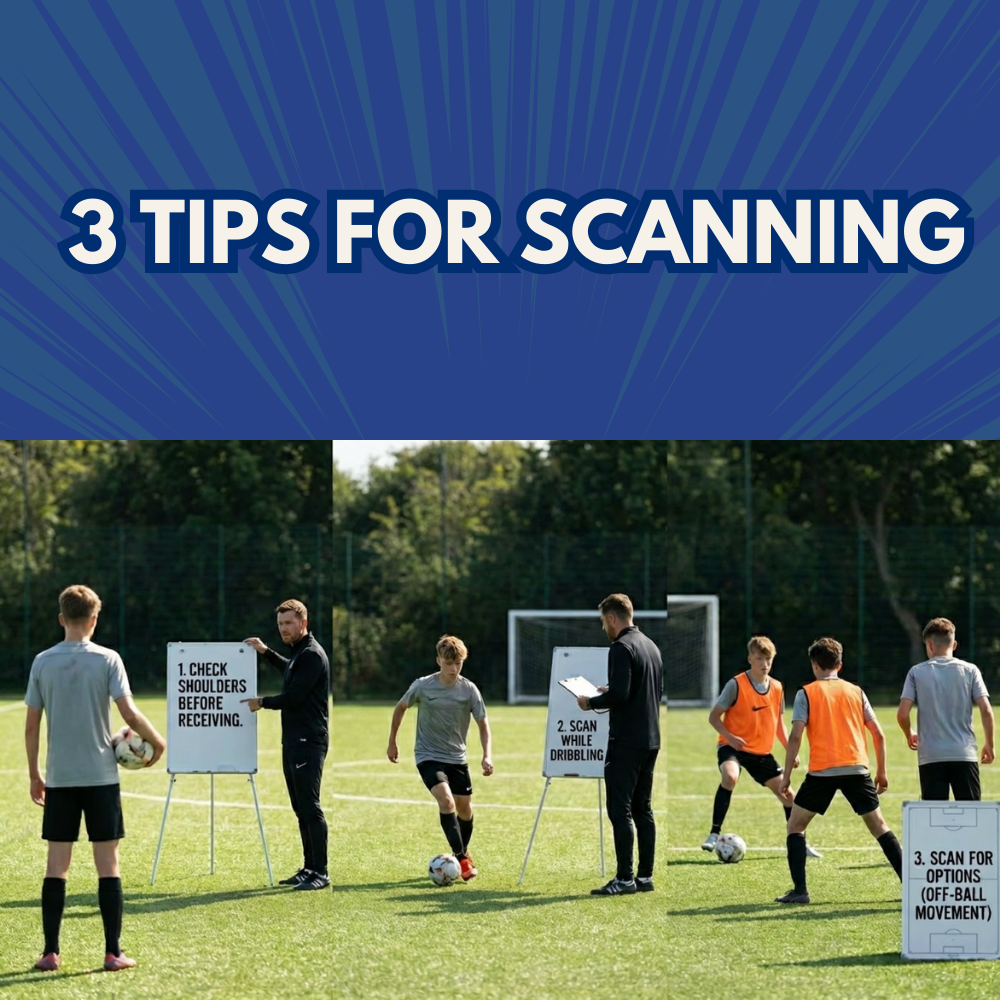
Mastering the Game: 3 Essential Practices for Elevating Your Football Scanning IQ
Mastering the Game: 3 Essential Practices for Elevating Your Football Scanning IQ
Did you know the world's most intelligent footballers aren't just naturally gifted? They actively train their eyes and minds to process information at lightning speed. Imagine seeing the next move, the opening pass, or the approaching defender before anyone else. This isn't magic; it's a developed skill, a high-level "scanning IQ" that transforms ordinary players into game-changers. It’s the secret weapon separating good players from truly great ones, enabling split-second decisions that win matches.
The Undeniable Power of Scanning IQ in Modern Football
In fast-paced football, gathering and interpreting environmental information is paramount, known as "Scanning IQ." It means constantly looking around, quickly assessing teammates, opponents, and the ball, even without possession. This builds a mental map of the pitch, allowing anticipation and optimal decisions under pressure, directly enhancing game intelligence.
Players with high football scanning IQ identify missed opportunities, release perfect passes, and evade pressure proactively. It's about cognitive processing and visual awareness, not just athletic prowess. Improving this skill significantly enhances individual performance, team cohesion, and leads to more successful outcomes. It's the silent force behind every great assist, tackle, and intelligent run.
What Exactly is Football Scanning IQ? Understanding the Core Concept
Football Scanning IQ refers to a player's proficiency in actively observing and processing visual information during a match. This involves quick, repetitive head movements – "checking your shoulders" – to understand the dynamic game landscape. A high Scanning IQ means accurately perceiving teammate locations, opponent movements, available space, and ball trajectory within fractions of a second. This constant information flow directly feeds into optimal decision-making skills.
Why Enhancing Scanning IQ is Non-Negotiable for Aspiring Footballers
The modern game demands tactical intelligence and situational awareness alongside athleticism. Tighter spaces shrink decision-making windows. Inadequate scanning leads to dispossession and missed opportunities. Conversely, a high Scanning IQ allows players to orchestrate play, protect the ball, exploit weaknesses, and contribute to fluid attacking styles. For aspiring footballers, improving scanning is a fundamental requirement to reach full potential.
Practice 1: Mastering the Art of Pre-Scan – Seeing the Pitch Before Receiving the Ball
The first crucial practice for elevating your football scanning IQ is pre-scanning: gathering vital information before you touch the ball. Elite players constantly scan their surroundings in the moments leading up to receiving a pass, forming a mental picture of their next action. This proactive approach ensures speed, precision, and confidence, often surprising opponents and unlocking new attacking possibilities.
The Importance of Constant Head Movement: Look Before You Leap
Constant head movement is the physical manifestation of pre-scanning, regularly checking your shoulders and surroundings, even when the ball is distant. This deliberate, cyclical action – scanning every 2-3 seconds – builds a constantly updated mental map of the game state. Without continuous feedback, your mental map quickly becomes outdated, leading to poor decisions. Regular head scanning becomes a natural reflex, providing crucial awareness of opponents, teammates, and open spaces.
Developing the Habit: Drills for Proactive Information Gathering
Integrating pre-scanning into your game requires specific training. Simple drills are highly effective:
1. The "Look Around" Cone Drill: Dribble through cones. Instruct players to call out a number/color/name held up at the side, before their next touch. This forces head-up scanning while maintaining control. Increase complexity with multiple or moving targets.
2. Shadow Play Scanning: In a small group passing drill, one player without the ball is the "scanner." Their job is to constantly check shoulders and verbally call "man on," "clear," or "space" to the player about to receive. This internalises the habit and awareness. Rotate roles frequently.
3. The "Check & Receive" Game: Play a small-sided game (e.g., 3v3). Before any player receives a pass, they must visually scan their surroundings. Failure to scan results in a turnover. This punitive measure reinforces the habit and enhances player performance by instilling discipline.
Case Study: The Midfield Maestro's Vision
Legendary midfielders, like Xavi or Pirlo, always seem to have time due to superior pre-scanning. Before receiving a pass, their heads were up, surveying the entire pitch, knowing defender and teammate positions and crucial spaces. By ball arrival, they had multiple options planned. This isn't innate; it's a cognitive skill honed through deliberate practice, making them ultimate decision-makers.
Practice 2: Developing Peripheral Vision and Situational Awareness – The Unseen Advantage
While head movement is essential, a high football scanning IQ also uses peripheral vision and comprehensive situational awareness. Peripheral vision perceives objects outside direct sight, offering a holistic game view, while situational awareness synthesises all visual data. This unseen advantage enables players to anticipate, react quicker, and exploit subtle openings, leading to truly smart football.
Training the Eyes: Expanding Your Field of Vision
Developing peripheral vision means processing dynamic information effectively at the edges of your sight, crucial in tight spaces for monitoring multiple threats. While physical visual field expansion is impossible, players can train their brains to interpret peripheral signals more effectively. This involves drills dividing attention between a central focus and peripheral events, enhancing overall football vision.
Practical Drills for Enhanced Peripheral Awareness
Specific training methods significantly improve a player's ability to utilise their peripheral vision and boost overall situational awareness:
1. The "Numbers Game" Drill: Two players pass, with numbered cones slightly out of direct sight on either side. As they pass, they call out numbers seen peripherally, engaging peripheral vision while focusing on the ball.
2. "Head Up" Dribbling & Decision Making: Dribble through a grid with passive/active defenders. Players must use peripheral vision to identify defenders and make quick decisions (pass, change direction, protect ball) without fixating. This links football vision to practical choices.
3. Small-Sided Games with "Awareness Cues": Play small-sided games (e.g., 5v5). If a player receives the ball and identifies an "off-screen" teammate or opponent using peripheral vision, they gain an advantage. This incentivises active peripheral scanning and holistic awareness, including identifying threats or passes two-three steps away.
Insight: The Defensive Midfielder's Radar
A great defensive midfielder operates like a radar, constantly aware of the entire midfield battle, opposition attackers, and forward runs, without fixating on the ball. They use peripheral vision to track multiple players, anticipating passes, danger, or possession wins. This comprehensive situational awareness enables intercepts, covers, and counter-attacks with effortless grace. This game intelligence is developed through training focused on expansive visual perception.
Practice 3: Implementing Game-Realistic Drills – Bridging Practice to Match Performance
The final step for improving football scanning IQ is transferring isolated skills to real match environments. Game-realistic drills bridge this gap, integrating scanning into scenarios mimicking actual play. This ensures scanning becomes an instinctive, unconscious habit, not a forced action, thereby enhancing decision-making under pressure and overall player performance.
Integrating Cognitive Load: Replicating Match Intensity
To truly enhance scanning IQ, training must simulate match cognitive load, adding pressure, fatigue, and multiple decision points. Drills must make scanning necessary for success, involving quick transitions, defensive pressure, and limited ball time. By replicating match intensity, players learn rapid information processing under duress, solidifying their decision-making skills and improving overall football training effectiveness.
Actionable Steps for Match-Specific Scanning Drills
Here are several visual scanning drills that can be incorporated into regular football training to make scanning a natural part of a player's game:
1. The "Traffic Light" Small-Sided Game: Coach holds colored cones: Green (play normally), Yellow (one touch), Red (pass immediately). Players must scan for signals and adjust decisions rapidly, simulating processing multiple information types.
2. Overload/Underload Scenarios: Drills with numerical advantages (e.g., 4v2, then 2v4). Overloaded team uses superior scanning to exploit advantage and maintain possession; underloaded team scans aggressively to close space and win the ball. This trains situational awareness in dynamic scenarios.
3. Transition Games with Gates/Goals: Design games where teams attack small goals but must transition quickly from defense to attack or vice-versa. Players must constantly scan during transitions to identify open teammates, track opposition runs, and switch focus.
4. Blind-Sided Receiving Drills: Players receive passes from behind, forcing them to turn and scan quickly for their next move. This mimics realistic scenarios where immediate midfield survey is needed to find an attacking option.
Expert Insight: The Art of Anticipation and Timing
Ultimately, a high scanning IQ leads to superior anticipation and timing, hallmarks of elite footballers. Consistent scanning allows players to read the game instinctively, anticipating opposition movement, ball trajectory, and advantageous spaces. This isn't just seeing; it's understanding game flow and making predictions. This deeper football training develops cognitive processing, directly impacting a player's ability to influence outcomes, actively shaping the game rather than just reacting.
Frequently Asked Questions About Improving Football Scanning IQ
1. What is the biggest mistake players make regarding scanning in football?
The most common mistake is not scanning enough or scanning too late, often only lifting their heads after receiving the ball. This misses the crucial window for making the best decision. The key is proactive, constant mental mapping before the ball arrives.
2. How often should a football player be scanning during a match?
Elite players typically scan every 2-3 seconds, sometimes more, depending on intensity and position. This equates to 600-800 purposeful head movements per 90-minute match, emphasising consistent, quick, and focused glances.
3. Can scanning ability truly be taught or is it an innate talent?
Absolutely, scanning ability can be taught and significantly improved. While some players may have natural spatial awareness, consistent training, specific drills, and a focus on cognitive development can enhance any player's scanning IQ. It's a trainable skill, not just a talent.
4. At what age should football players start focusing on improving their scanning?
It's never too early. For younger players (U8-U12), it can begin with simple "head up" games. As players progress through teenage years, structured drills and conscious coaching become vital for developing advanced game intelligence.
5. Are there any off-pitch exercises or tools that can help with scanning IQ?
Yes, vision training apps or specialised light boards can improve reaction time and peripheral vision. Activities like juggling with eyes up, or memory games, can aid cognitive processing and visual awareness. However, the most effective training always involves the ball in a game-like environment.
Final Thoughts: Elevating Your Game Through Intelligent Vision
Improving your football scanning IQ is not a quick fix; it's a fundamental shift in how you perceive and interact with the game. By dedicating time to mastering the art of pre-scan, developing comprehensive peripheral vision and situational awareness, and consistently implementing game-realistic drills, you're becoming a smarter player. This journey transforms you from someone who reacts to someone who anticipates, from someone who sees the immediate to someone who understands the unfolding narrative of the pitch. Embrace these three practices to unlock a new dimension in your game, making passes and influencing matches in profound ways. Commit to consistent effort and watch your game intelligence propel your performance to unprecedented heights, painting masterpieces with every touch.
