Why I Ban the Term "Weak Foot" in My Football Sessions
Imagine a world where half of your potential is immediately labeled as deficient, almost before you even try. What if a single phrase, often used without a second thought, inadvertently limits a young player's growth and confidence on the football pitch? Could a common term silently undermine a fundamental aspect of their development, preventing them from unlocking their full athletic prowess? Let's explore why.
Understanding the "Weak Foot" Mentality: What's the Harm?
In the vibrant world of football, the term "weak foot" is commonly used to distinguish a player's dominant and less-favored foot. For me, as a coach, this seemingly innocuous phrase carries a heavy burden, often becoming a significant barrier to a player's true potential. It's a term I've consciously banned from my training sessions for very good reason, prioritising comprehensive football development.
The term "weak foot" implies a fundamental deficiency rather than an area for growth. This linguistic framing profoundly impacts a player's psychology, instilling a sense of limitation and discouragement. Labeling a foot as "weak" can create a self-fulfilling prophecy, causing players to avoid their non-dominant foot and hinder its essential skill development.
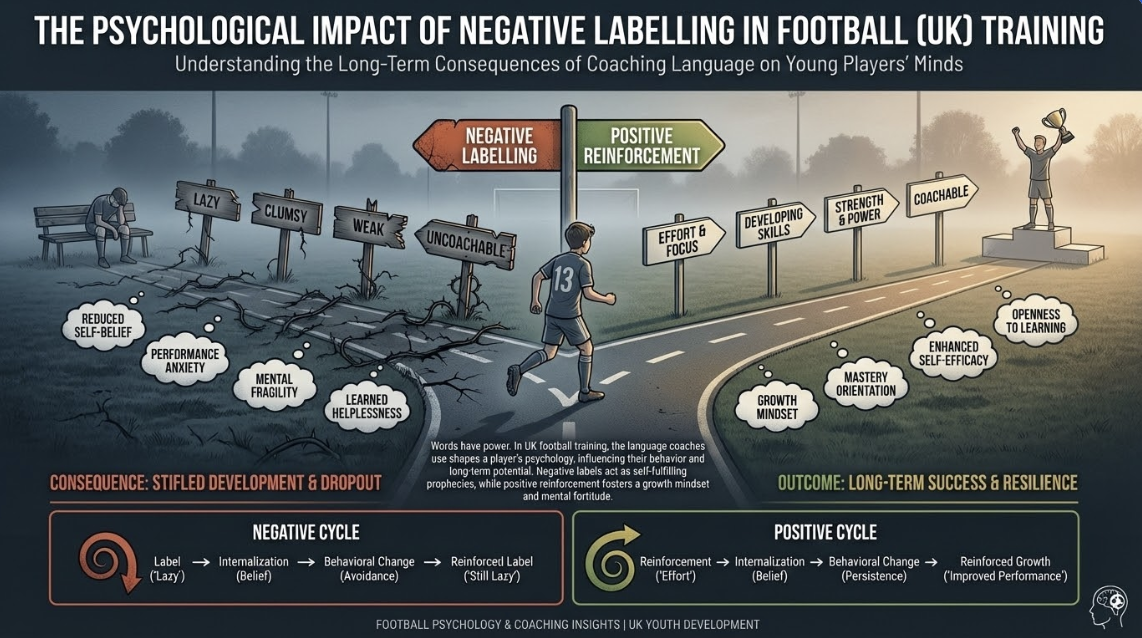
The Psychological Impact of Negative Labeling in Football Training
Constant negative messaging about a "weak left foot" erodes a young player's football confidence. This apprehension limits practice with the non-dominant foot, creating a cycle of underdevelopment. As coaches, our language must build confident, capable players, shaping their perception and effort towards growth in youth football coaching.
Why "Weak Foot" Hinders Holistic Player Development
The "weak foot" label contradicts true holistic player development. A complete footballer uses both feet, but reliance on one makes them predictable and limits tactical options. Embracing this label means accepting incomplete development, hindering progress towards full ambidexterity in football, which is crucial for modern play.
Embracing Ambidexterity: The Vision of a Two-Footed Player
My coaching champions ambidexterity in football, enabling players to perform equally well with both feet. This goal requires deliberate practice, a positive mindset, and consistent encouragement, offering immense tactical advantages and enhanced decision-making for any two-footed player.
The Tactical Advantages of Developing Both Feet in Football
A player proficient with both feet presents immense tactical advantages, becoming a nightmare for defenders. They can receive, pass, and shoot from any angle, removing predictability. This versatility, whether cutting inside or delivering crosses, makes them a highly effective and valuable asset to any team, enhancing overall football strategy.
How "Non-Dominant Foot" Training Boosts Football Confidence
Encouraging non-dominant foot training significantly boosts football confidence. Each successful touch or pass reinforces capability, helping players feel more versatile and complete. This empowerment translates into improved overall game and leadership, fostering growth rather than limitation on the pitch.
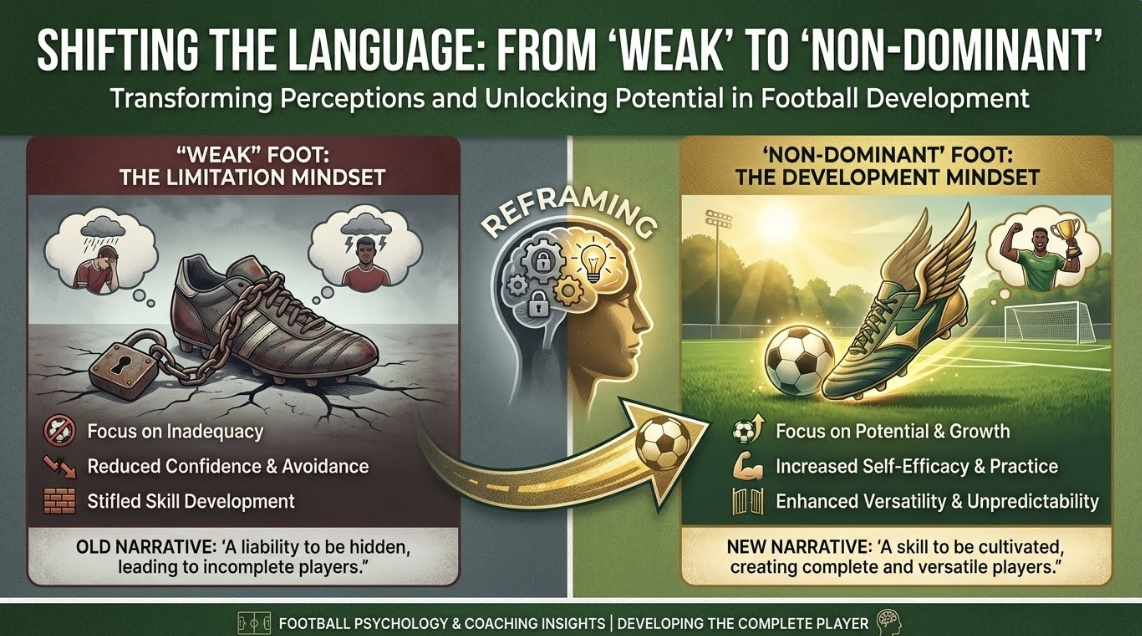
Shifting the Language: From "Weak" to "Non-Dominant"
The solution is simple: change the language. Replacing "weak foot" with "non-dominant foot" reframes the challenge from deficiency to a development opportunity. This linguistic shift encourages effort, practice, and patience, fostering a positive approach to skill acquisition.
The Power of Positive Terminology in Football Coaching
Words matter in football coaching. Encouraging work on the "non-dominant foot" implies potential and growth. This positive framing empowers players, fostering a crucial growth mindset for long-term athletic development. It represents a fundamental shift in technical skill coaching.
Inspiring a Growth Mindset for Enhanced Football Skills
Using "non-dominant foot" actively cultivates a growth mindset, encouraging players to believe in developing abilities through dedication. They learn that focused attention can improve their less proficient foot. This perspective fosters persistence and resilience, framing every session as an opportunity for enhanced football skills and a more complete playing style.
Practical Coaching Strategies for Developing Both Feet
Changing language is only the first step. The next is implementing effective coaching strategies that actively encourage and facilitate the development of the non-dominant foot. This requires creativity, patience, and a structured approach to training.
Practices to Engage the Non-Dominant Foot Early in Practice
I integrate specific football drills early in sessions to force non-dominant foot training. Warm-ups like toe-taps or figure-eights are modified, and passing drills often have constraints like "first touch with your non-dominant foot." This consistent focus naturally improves the less-favored side.
Progressive Training Techniques for Achieving Two-Footed Proficiency
Achieving two-footed proficiency requires progression: from basic control and passing to dribbling and shooting with the non-dominant foot. We break down movements into manageable steps, like starting with stationary shots before progressing to shooting under pressure. Repetition, consistent feedback, and positive reinforcement are crucial for this skill development.
A Relatable Example: The Story of Leo Young Leo relied solely on his right foot, making him predictable. We rebranded his left as his "developing foot," celebrating every small victory. Through specific drills and games, his non-dominant foot gained confidence, transforming him into a less predictable, more impactful two-footed player.
Overcoming Common Challenges in Two-Footed Training
Players naturally favor their strengths. Non-dominant foot training involves overcoming resistance, frustration, and old habits. My approach tackles these common challenges by understanding player hurdles and providing effective, encouraging solutions.
Addressing Player Frustration When Developing New Football Skills
Developing new football skills, especially with the non-dominant foot, can cause frustration. I normalise this by sharing stories of pros and emphasising that mistakes are part of mastery. We celebrate effort and small improvements, focusing on the learning journey to maintain motivation.
Maintaining Consistency in Non-Dominant Foot Practice
Consistency is paramount for non-dominant foot practice. I encourage players to integrate drills like wall passing or juggling into daily home routines. In training, using both feet is an expectation, building crucial muscle memory and confidence through consistent reinforcement.
Expert Insights and Comparisons: The Ambidextrous Advantage
The football world increasingly values ambidextrous players. The comparison between one-footed and two-footed footballers highlights clear tactical and technical advantages. Elite football clubs actively seek players proficient with both feet, recognising the immense flexibility they bring to the squad.
Analysing the Performance Gap: One-Footed vs. Two-Footed Footballers
Players like Son Heung-min or Ousmane Dembélé demonstrate the advantage of being truly two-footed footballers. Their ability to use either foot for shooting, passing, or dribbling makes them unpredictable. In contrast, a one-footed player often loses time adjusting, a subtle difference that impacts high-level games.
Why Elite Football Clubs Prioritise Multi-Footed Players
Elite football clubs prioritise multi-footed players for their tactical flexibility. They can be deployed across various positions, offering effectiveness regardless of spatial demands. This versatility reduces substitutions and enables more fluid, unpredictable play, reflecting a modern football development imperative.
Actionable Tips: Empowering Parents and Players at Home
Player development extends beyond the training pitch. Parents and players themselves can significantly contribute to building two-footed proficiency with consistent, focused practice at home. Here are some actionable steps and simple drills.
Simple Drills for Non-Dominant Foot Improvement at Home
Wall Passing: Repeatedly pass against a sturdy wall with only your non-dominant foot, focusing on clean strikes and technique.
Juggling: Intentionally use your non-dominant foot more, retrieving the ball and restarting after each touch.
Cone Dribbling: Dribble through cones or household items using only your non-dominant foot, focusing on close control.
Mirror Training: Practice ball manipulation in front of a mirror or by recording yourself for immediate visual feedback on technique.
Everyday Tasks: Incorporate your non-dominant side in daily activities, like casually kicking objects or holding a door open, to build general coordination.
Parental Support for Fostering Two-Footed Football Talent
Parents are crucial. Encourage non-dominant foot practice without pressure, praising effort over perfection. Avoid "weak foot," using "developing" or "other foot" instead. Provide unstructured play for experimentation, as positive reinforcement is a powerful motivator for youth football coaching.
Frequently Asked Questions About Developing Both Feet in Football
Addressing common queries helps reinforce the importance of this coaching philosophy.
How long does it typically take to develop a strong non-dominant foot in football?
Developing a strong non-dominant foot in football varies, but with consistent, daily practice, proficiency can take several months to a year or more. Small improvements are noticeable within weeks, boosting motivation.
Is it detrimental for a young player to rely heavily on only their dominant foot?
Yes, heavy reliance on one foot limits a player's long-term football development. It makes them predictable, reduces tactical options, and hinders progress to higher levels of the game.
What are the main benefits of being truly two-footed in football?
Being truly two-footed in football offers enhanced tactical flexibility, greater unpredictability, improved decision-making, and increased spatial awareness. Players can effectively perform from any angle, making them invaluable assets.
Can adult players still significantly improve their non-dominant foot, or is it too late?
No, it's not too late for adult players. Consistent, focused practices and a positive mindset can lead to remarkable improvements in their non-dominant foot, adding a new dimension to their game.
What are some simple drills I can do at home to improve my non-dominant foot?
Effective home practice for football includes wall passing, targeted juggling, cone dribbling using only the non-dominant foot, and even casual kicking. These build muscle memory and coordination.
Final Thoughts: Building Complete Footballers, Not Limited Ones
Banning the term "weak foot" is a core coaching philosophy, committing to holistic player development. It fosters a growth mindset, reframing perceived weakness into a development opportunity, and empowering players towards ambidexterity. While challenging, the journey to becoming a two-footed player offers immense rewards in confidence and tactical versatility. Let's inspire young players to unlock their full potential, one developing foot at a time. The future of football development lies with those comfortable with every aspect of their game.
Thanks for reading, if you found this blog useful, you may also like:
3 Signs Your Child is Suffering from Football Burnout
A Hero's Welcome: Go Football Academy Recognised by the EFL & Sage!
The Ultimate Shield: How S&C Is Your Best Injury-Proofing Strategy
The "Too Bulky" Myth: Why Strength Training Makes You FASTER, Not Slower
The Power of Micro-Goals: How Small Steps Lead to Massive Results