
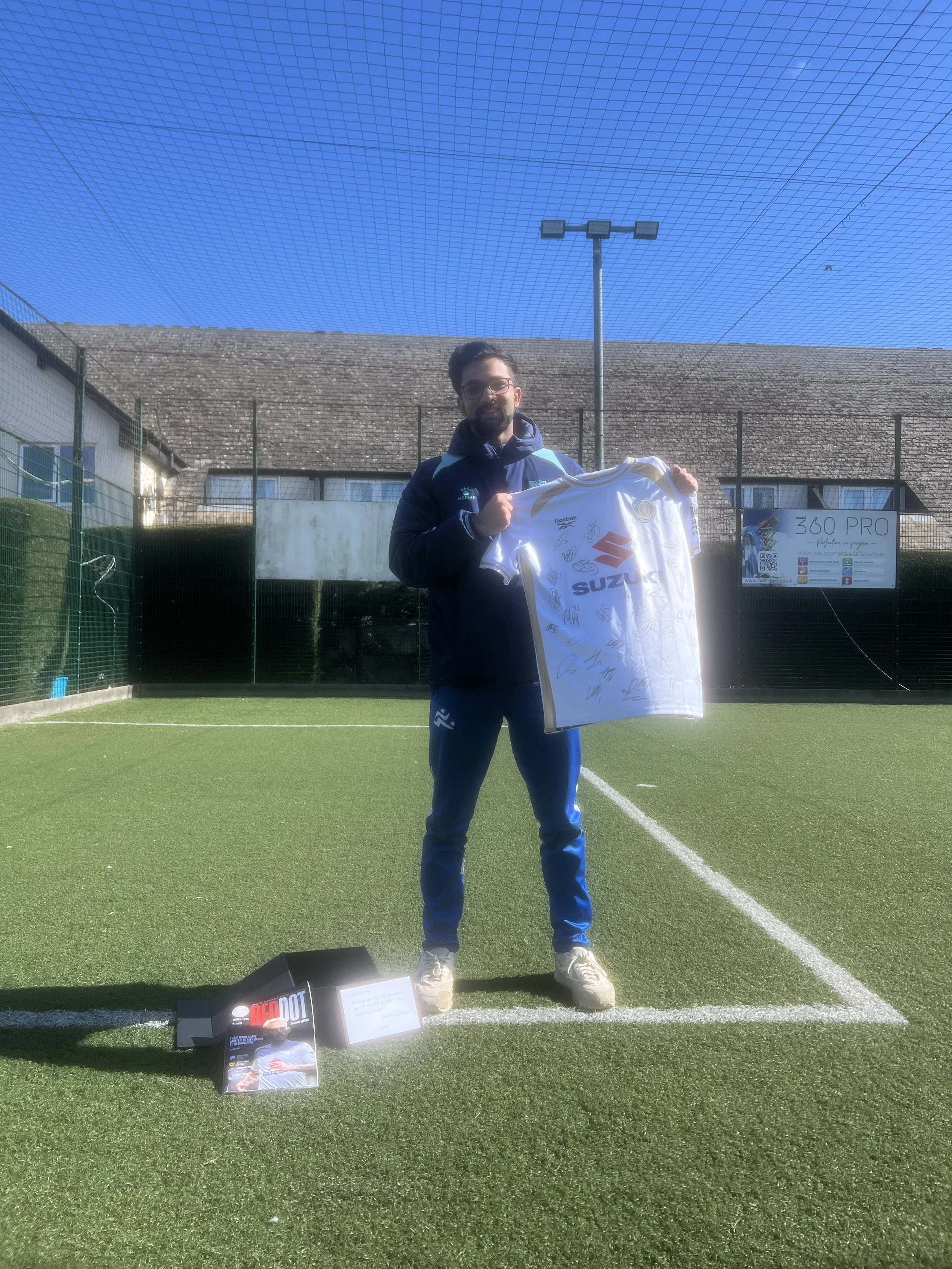
From the Pitch to the Boardroom: GFA Wins the Sage & EFL 'Beyond Business' Challenge 🏆
At Go Football Academy, we often talk to our players about the "Elite Mindset." We tell them that success isn't just about what happens during the 90 minutes on a Sunday; it’s about the preparation, the discipline, and the willingness to push beyond your comfort zone.
Recently, I had to put that same philosophy to the test in the business world.
I am incredibly proud to announce that Go Football Academy was recently named a winner of the Sage "Beyond Business" Challenge for small businesses.
Why This Matters for Our Players and Parents
You might wonder what a business award from a global tech giant like Sage has to do with a Tuesday night training session in Leighton Buzzard or a Saturday morning in Milton Keynes.
The answer is simple: Standards.
To win this challenge, GFA had to demonstrate the same level of organisation, forward-thinking, and professional infrastructure that we bring to our coaching. Whether we are designing an S&C programme or managing our academy operations, we do it at a "Premier League" standard.
Winning this award validates our mission to provide the most professional grassroots environment in the UK.
A Special Gift from the MK Dons
To cap off the win, I was honoured to receive a signed MK Dons shirt, courtesy of the team at Sage.
As an academy with deep roots in the Milton Keynes community, it is fantastic to have the support of our local professional club. At GFA, we aim to bridge the gap between grassroots football and the professional game. Seeing a global brand like Sage and a local icon like the MK Dons come together to support small businesses is exactly the kind of community spirit we foster in our squads.
What’s Next for GFA? 🦁
Winning the Beyond Business challenge is just the beginning of a massive season for us. As we look toward our St George’s Park elite trip on April 2nd of another exciting project, we are always looking for ways to "Level Up."
We aren't just building football players; we are building a professional culture where young athletes in Luton, MK, and Leighton Buzzard can thrive.
A huge thank you to Sage for the recognition and to our GFA parents and players for being part of this award-winning journey.
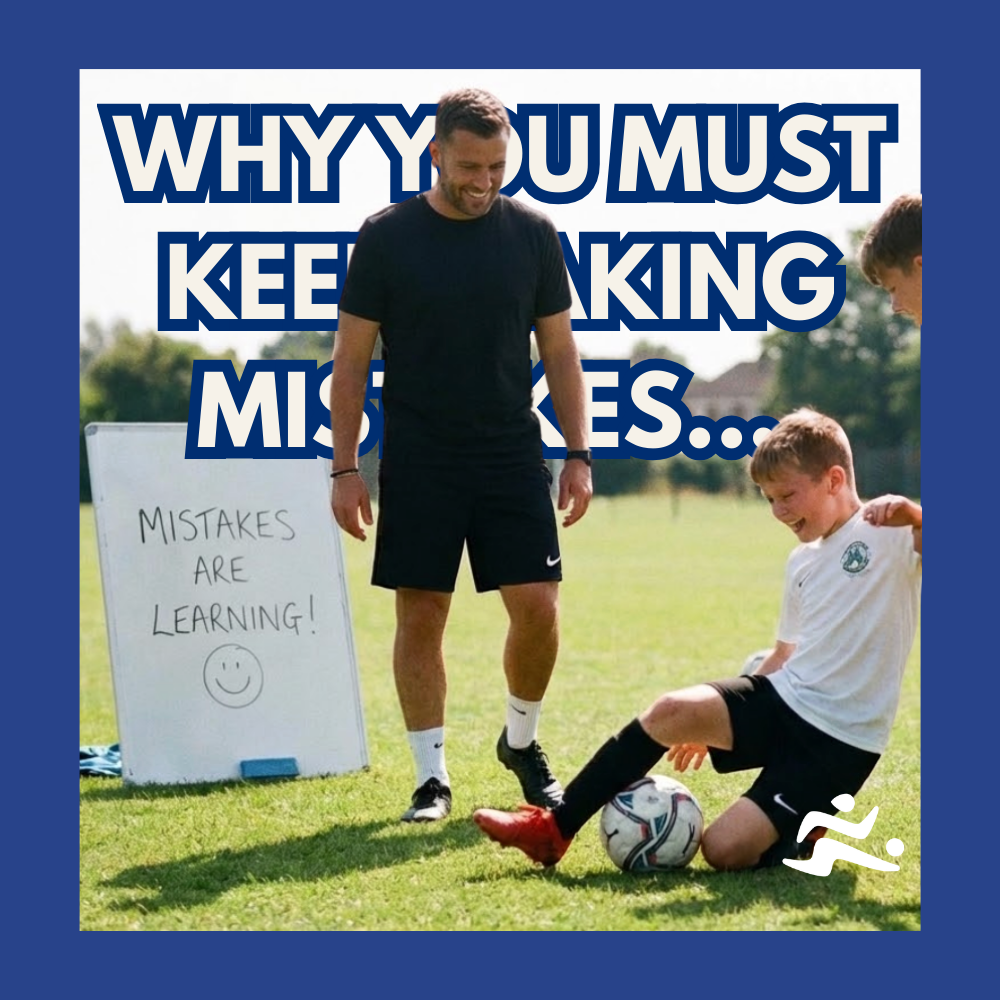
Why Making Mistakes is Vital for Football Player Development
Why Making Mistakes is Vital for Football Player Development
What if the secret to becoming an elite football player isn't about flawlessly executing every pass, tackle, or shot? What if the path to unparalleled skill and unwavering mental toughness is paved not with perfect performances, but with lessons learned from every misstep on the pitch? The truth is, mistakes are not just inevitable in football player development; they are the most powerful catalysts for growth. They shape a player's journey from raw talent to a refined master of the beautiful game.
Football is dynamic and unpredictable, where errors are a constant companion, from a misplaced pass to a missed tackle. However, viewing these moments as invaluable feedback, not failures, unlocks transformative potential for player development. This shifts focus from perfection to continuous learning. Embracing mistakes accelerates technical mastery, fortifies mental resilience, and achieves highest potential.
Understanding the Transformative Power of Error in Football
Beyond Perfection: The Unrealistic Pursuit of an Error-Free Game
In football, an unspoken expectation for error-free performance often exists, especially among young players. This pursuit of perfection is fundamentally flawed and counterproductive, breeding a fear of failure. It leads players to play safe, avoid creative risks, and stifle their natural talent.
Imagine a midfielder always opting for simple backward passes, avoiding potential turnovers. While this avoids mistakes, it also prevents game-changing plays and true football player development. Growth comes from stepping outside comfort zones, where mistakes increase, but so does potential for significant learning.
The Brain's Learning Mechanism: How Mistakes Rewire for Success
The human brain excels at learning from errors. When a player makes a mistake, the brain registers a discrepancy, triggering a powerful learning process. Neuroscientists show mistakes, followed by reflection and correction, activate neural pathways to consolidate new information and refine motor skills.
For a striker practicing a shot, each miss provides feedback—wrong body position, off-contact, incomplete follow-through. This feedback loop enables micro-adjustments, rewiring neural connections. This iterative process improves technical skills and tactical decision-making, making mistakes vital data points for improvement.
The Psychological Edge: Building Resilience Through Adversity
Developing Mental Toughness: Bouncing Back from On-Field Blunders
Football is a mental game, demanding exceptional mental toughness from players. This attribute develops not through flawless performances, but by making mistakes and learning to recover from them. Consider a young goalkeeper letting in an easily saveable goal in a crucial match.
A truly resilient player quickly processes the error, acknowledging what went wrong, then mentally "resets" for the next play. This "short memory" for errors, bouncing back with focus, is a hallmark of top performers. Coaches cultivate this by encouraging immediate self-correction and positive self-talk.
Confidence and Risk-Taking: The Courage to Try New Things
Fear of mistakes significantly inhibits a player's potential, leading to conservative play. This cautious approach stifles creativity, limits tactical innovation, and prevents players from discovering true capabilities. A player afraid to attempt a daring through-ball might never realise their potential as a playmaker.
Conversely, an environment where mistakes are accepted fosters confidence and encourages risk-taking. Players feel safe to experiment with ambitious passes or audacious dribbles. Each failure provides invaluable data, teaching about timing, spacing, and opponent reactions. This iterative process builds genuine confidence in their capacity to learn and adapt.
Tactical and Technical Growth: Refining Skills on the Pitch
Learning from Positional Errors: Improving Game Awareness and Strategy
Tactical understanding in football requires constant information processing. Positional errors are common in developing players, offering rich learning opportunities. Imagine a central defender repeatedly out of position, exploiting a gap. This is a tactical lapse, not just technical.
A good coach uses this mistake as a teaching moment, explaining why it was an error and how to correct it. The player learns better spatial awareness, communication cues, and strategic positioning. These insights, forged from game mistakes, are often more impactful than theoretical sessions for football player development.
Perfecting Technical Execution: The Repetition and Correction Cycle
Technical skills in football—passing, shooting, dribbling—are refined through a continuous cycle of repetition and correction, which inherently involves making mistakes. Consider a striker perfecting their finishing, taking hundreds of shots, many of which miss or lack power. Each is a technical error.
Each error provides immediate feedback: leaning back, wrong foot contact, incomplete follow-through. This self-correction, often coach-guided, leads to incremental improvements. The framework is simple: Observe -> Correct -> Practice -> Master. This process, driven by identifying and rectifying mistakes, builds muscle memory and technical proficiency under pressure.
Real-World Examples and Actionable Strategies for Players and Coaches
Iconic Players Who Learned from Their Setbacks and Failures
Even the greatest footballers, like Lionel Messi, faced significant setbacks, enduring heartbreaking defeats in major finals with Argentina. These moments fueled his desire to return stronger, showcasing incredible resilience.
Similarly, Cristiano Ronaldo, critisied for early free-kick technique, transformed it through constant practice and adapting his approach. These elite athletes exemplify how accepting and learning from mistakes is fundamental to achieving and maintaining peak performance in football.
Creating a "Mistake-Positive" Environment in Training Sessions
For coaches, fostering a "mistake-positive" environment where players feel safe to err is paramount. Instead of immediate criticism, coaches should treat mistakes as teachable moments. Implementing "safe zones" in drills, where experimentation is encouraged and consequences are minimised, is an actionable step.
For players, adopting a "growth mindset" is crucial. View errors as data points for player development. Ask: "What could I have done differently?" Seek feedback from coaches and teammates. Regular debriefing sessions, focusing on improvement rather than blame, transforms a team's learning culture, unlocking creative and technical potential.
The Role of Feedback: Turning Errors into Constructive Insights
Effective feedback bridges making a mistake and learning from it. Simply pointing out an error without context helps little. For feedback to be constructive, it needs to be specific, timely, and actionable. "You were too far inside; next time, stay wide to cover the overlapping run," provides clear guidance.
Players must be open to receiving feedback as a tool for growth, not criticism. Proactively asking "What could I have done better?" shows a proactive approach. Encouraging peer-to-peer feedback fosters collaboration. When feedback loops are positive, mistakes quickly convert into concrete insights, accelerating the player's development curve.
Common Misconceptions About Mistakes in Football Development
Dispelling the Myth: "Elite Players Don't Make Many Mistakes"
A pervasive myth in football is that elite players play an error-free game. While top professionals show consistency, they still make numerous mistakes. The key difference isn't absence of errors, but the type of errors, how quickly they learn, and how effectively they recover.
Elite players' mistakes are often subtle, like a slightly under-hit pass. Crucially, they adapt and correct mid-game. A top midfielder's risky pass that fails prompts quick strategy adjustment. Their superior tactical awareness and mental resilience allow them to mitigate error impact, recovering possession or preventing escalation.
Mistakes vs. Laziness: Distinguishing Between Intentional Errors and Poor Effort
It's crucial to differentiate genuine mistakes—part of learning—from errors stemming from lack of effort or focus. A player attempting a difficult pass that fails makes an execution mistake with positive intent. This offers valuable learning opportunity for football player development.
Conversely, failing to track back due to jogging, or misplacing a simple pass from lack of concentration, exhibits poor effort. Expert coaches understand this distinction. Technical/tactical errors with honest effort need constructive feedback. Errors from laziness demand accountability and reinforcing team standards.
Frequently Asked Questions About Mistakes in Football Development
How can a coach encourage players to take risks without fear of making mistakes?
Coaches should explicitly state experimentation is encouraged, especially in training. Implement drills with low consequences for errors and provide positive reinforcement for brave attempts, regardless of outcome. Emphasise learning and growth over flawless execution to build player confidence.
Is there a point where mistakes become too frequent or detrimental?
Yes, a consistent pattern of the same fundamental errors can signal deeper issues like lack of foundational technical skill, poor tactical understanding, or overwhelming pressure. Coaches must intervene with targeted training, breaking down skills, or addressing psychological factors.
How do professional academies incorporate learning from errors?
Professional academies use video analysis and data to systematically review mistakes with players, often one-on-one, identifying patterns. Training sessions are then tailored to address weaknesses, gradually increasing pressure to simulate real game situations and enhance football player development.
What's the best way for a player to recover mentally after a significant mistake during a game?
The "short memory" approach is crucial. Acknowledge the mistake, take a deep breath, and consciously shift focus to the next play using a mental cue. Remind yourself one mistake doesn't define the performance and focus on making a positive impact on the next action.
Can watching replays of my own mistakes actually help me improve?
Absolutely. Video analysis is a powerful tool for learning from mistakes. It allows objective identification of specific errors (e.g., body positioning, decision-making) and their consequences. Reviewing with a coach provides expert insights and actionable steps for faster, more targeted improvement.
Final Thoughts: The Unseen Architect of Football Excellence
In the relentless pursuit of football excellence, the path isn't a flawless ascent. The true narrative of every great player is punctuated by countless errors and misjudgments. These are not roadblocks, but unseen architects building skill, resilience, and tactical intelligence.
Embracing mistakes means adopting a robust learning mindset. Every misplaced pass, missed tackle, or strategic miscalculation is a golden opportunity to gather data, adapt, and return stronger. For players, this means shedding fear and daring to experiment; for coaches, fostering an environment where learning triumphs over perfection.
So, as you step onto the pitch, or watch from the sidelines, remember that the true measure of player development isn't how few mistakes are made. It's about how much is learned from each one, fueling your journey. Embrace the errors, analyse them keenly, and let them build your resilience. The greatest triumphs often begin with the courage to make a mistake. Unleash your potential by understanding the power of imperfection in football.

Unlocking the Elite: The 3 Non-Negotiable Traits Academy Scouts Demand from Centre-Backs
Unlocking the Elite: The 3 Non-Negotiable Traits Academy Scouts Demand from Centre-Backs
In the high-stakes world of elite English football, the Centre-Back position is the heartbeat of the team. Standing as the last line of defense before the keeper, a modern CB is tasked with a dual role: being an immovable wall and a creative playmaker. One heavy touch or one missed interception, and the game is lost.
So, what separates a "Sunday League" defender from a Premier League academy prospect? At Go Football Academy, we look beyond the highlight-reel slide tackles. We evaluate three core pillars: Physical Presence, Technical Range, and Tactical Leadership.
Pillar 1: Physical Presence and "Recovery Pace"
Before a scout looks at your passing, they look at your "Physical Profile." In the high-intensity environment of the professional game, a CB must be a complete athlete.
Recovery Pace and Lateral Agility
In a league defined by "High Lines" and explosive strikers, a CB without Recovery Pace is a liability. Scouts look for players who can sprint stride-for-stride with a winger if the offside trap fails. But speed isn't just a straight line; it’s about Explosive Agility.
Elite CBs need fluid hips to "jockey" an attacker. You must be able to change direction instantaneously, mirroring the attacker’s feints without losing your balance. At GFA, our S&C programs focus on this "First 5-Yard" burst—the difference between a clean interception and a red card.
Aerial Dominance and "Play Strength"
While height is an advantage, Play Strength is the real requirement. Can you hold your own in a 50/50 duel? Can you "box out" a striker during a corner? Scouts watch how a player uses their body to shield the ball and their timing in the air. It’s not about how high you jump; it’s about attacking the ball at its highest point with conviction.
Pillar 2: Technical Range and the "Architect" Mindset
In the modern game, the attack starts with the defense. A CB who just "boots it long" won't make it in today's academies.
Elite Distribution: Breaking the Lines
A top-tier CB must be comfortable on the ball under extreme pressure. Scouts look for Passing Range:
The Diagonal: Can you ping a 40-yard ball to the opposite winger?
The Line-Breaker: Can you find the feet of your #10 through a crowded midfield?
First-Touch Orientation: Does your first touch take you away from pressure and set up your next pass?
Scanning and "BOTS" Awareness
The "Unseen Skill" of elite defenders is Scanning. Before the ball even reaches you, are you checking your shoulder? At GFA, we teach the BOTS method:
Ball: Where is it moving?
Opponents: Who is pressing me?
Teammates: Who is my out-ball?
Space: Where can I drive into or need to cover?
Pillar 3: Tactical Leadership and the "General" Mentality
The mental game of a CB is perhaps the most crucial differentiator. You aren't just playing your own game; you are managing the entire back four.
The "General" on the Pitch
An elite CB is a vocal leader. You are the "General" who organises the defensive line, calls the "squeeze," and directs the holding midfielder. Scouts look for players who communicate constantly. If you aren't talking, you aren't defending.
The "Short Memory" and Resilience
Every defender makes a mistake. You will get beat, and you will concede. The "Elite" have a Short Memory. They reset instantly, maintaining their composure to lead the team for the next 89 minutes. This psychological resilience—the "Van Dijk Calm"—is what scouts value above almost everything else.
Actionable Insights for Players and Parents
For Aspiring Defenders:
Don't just practice tackling. Work on your weak-foot distribution and your S&C. A defender who can't pass or move laterally will struggle to progress. Most importantly, start talking. Be the loudest player on the pitch.
For Coaches:
Evaluate your defenders on their decision-making, not just their physical size. Look for the player who organises others and stays calm under pressure.
🦁 Take Your Game to the "Home of England"
Understanding these traits is the first step. The next is testing them in an elite environment.
On April 2nd, 2026, Go Football Academy is heading to St George’s Park. This is your chance to train where the England Seniors train, using the same S&C metrics and tactical drills used by the pros.
"Being a Centre-Back is a thinking player’s game. You have to see the danger before it happens."
Want to see if you have the "3 Non-Negotiables"? Join us for our next session or book your spot for the SGP Elite Trip today.

The Ultimate Pre-Match Meal for Grassroots Football Players: Fuel Your Game, Elevate Your Performance
Is your performance on the football pitch lagging in the second half? Do you feel that sudden drop in energy when the game truly heats up? Many grass-roots players underestimate the power of proper nutrition, settling for quick fixes that actually sabotage their efforts. What if a simple change to your pre-match meal could unlock sustained energy, sharper focus, and elevate your entire game?
The Ultimate Pre-Match Meal for GrassRoots Football Players: Fuel Your Game, Elevate Your Performance
For aspiring footballers, passion for the game is undeniable. Training hard is key, but the secret weapon for peak performance isn't found in a fancy new boot; it's on your plate. A well-planned pre-match meal strategically fuels your body for the intense physical demands of 90 minutes of football, impacting your stamina and decision-making.
Ignoring pre-match nutrition is like trying to drive a car on an empty tank; you might start, but your engine will struggle. This guide will help you understand the foundational principles of sports nutrition tailored for the grass-roots player, ensuring you step onto the pitch optimally fueled and ready to dominate.
The Science Behind Pre-Match Fueling: Why What You Eat Matters
Football is an intermittent sport, characterised by bursts of high-intensity sprints. Your body needs a constant supply of energy to meet these varying demands. Understanding how food translates into on-field performance is crucial for optimising your game.
Understanding Energy Demands on the Pitch
From the first whistle, your body burns calories rapidly. High-intensity activities like sprinting and tackling primarily rely on carbohydrate stores for quick energy. If these reserves run low, fatigue affects reaction times and a noticeable dip in your performance. A full 'battery' ensures sustained power.
The Role of Glycogen: Your Football Fuel Tank
Glycogen, the stored form of carbohydrates in your muscles and liver, is your body’s primary fuel during exercise. Consuming carbohydrates replenishes these glycogen stores, ensuring a full 'fuel tank' before the game. This direct link is crucial for maintaining stamina and endurance throughout the match.
Hydration: The Unsung Hero of Performance
Proper hydration is vital. Even a small degree of dehydration impairs physical and mental performance, causing decreased endurance, reduced strength, and muscle cramps. Well-hydrated means maintaining blood volume, regulating body temperature, and transporting essential nutrients for optimal function.
Crafting Your Winning Plate: The Pillars of an Ultimate Pre-Match Meal
Building the perfect pre-match meal involves strategically combining macronutrients. Each component plays a specific role in providing energy, supporting muscle function, and ensuring you feel comfortable and ready to play.
Carbohydrates: Your Primary Power Source
Complex carbohydrates are the cornerstone of any pre-match meal. They provide a sustained energy release, slowly replenishing your glycogen stores without causing a rapid sugar spike. Aim for easily digestible options to avoid discomfort during the game.
Examples of excellent complex carbohydrates include:
• Whole wheat pasta
• Brown rice
• Sweet potatoes
• Oats (porridge)
• Wholemeal bread
These foods are rich in starches that break down gradually, ensuring a steady supply of glucose into your bloodstream for sustained energy for football.
Lean Protein: Muscle Support and Satiety
Modest amounts of lean protein are essential. Protein aids muscle repair, recovery, and contributes to feelings of fullness. However, too much protein slows digestion, so portion control is key for a balanced pre-match meal supporting both immediate energy and long-term muscle health.
Good sources of lean protein include:
• Grilled chicken breast
• Turkey
• Fish (cod or salmon)
• Eggs
• Tofu
• Low-fat Greek yogurt
A small serving of grilled chicken alongside your brown rice, for example, provides a balanced approach to pre-game fueling.
Healthy Fats: Energy Backup (In Moderation)
Fats are an important energy source, but they take longer to digest. Too much fat pre-game causes stomach upset and sluggishness on the pitch. Keep fat content low in your pre-match meal, saving the majority of your healthy fat intake for other meals throughout the week.
If included, small amounts can come from:
• A few slices of avocado
• A sprinkle of seeds
• A light dressing
The goal is to focus on easily digestible fuels for immediate use, not long-term storage, in the hours leading up to kick-off.
Fruits and Vegetables: Vitamins, Minerals, and Antioxidants
Fruits and vegetables pack essential vitamins, minerals, and antioxidants, supporting overall health and recovery. They also provide fiber, important for digestive health. Opt for lower-fiber, easily digestible options closer to the game to avoid discomfort.
Consider easily digestible options like:
• Bananas
• Berries
• Cooked carrots
• Spinach (lightly cooked)
These add nutritional value without overwhelming your digestive system. A banana, for instance, is a fantastic source of quick, natural sugars and potassium, perfect for a pre-game snack.
Timing is Everything: When to Eat Your Pre-Match Meal
Eating the right foods at the wrong time is detrimental. The timing of your pre-game food is critical for proper digestion and optimal energy availability. It's not a one-size-fits-all, but general guidelines help you achieve this.
The 3-4 Hour Window: The Main Event
Your main pre-match meal should be consumed approximately 3-4 hours before kick-off. This allows ample digestion time, converting carbohydrates into stored glycogen. Eating too close to the game can leave you heavy and sluggish. This meal truly tops up your glycogen stores for your match day diet.
The 1-2 Hour Snack: A Quick Top-Up
If you feel hungry or need a final energy boost closer to the game, a small, easily digestible, carbohydrate-based snack 1-2 hours pre-kick-off helps.
Ideal snacks include:
• A banana
• A small handful of pretzels
• A rice cake with jam
• A sports drink (if needed for electrolytes and quick carbs)
This light snack acts as a quick top-up without causing digestive distress, ensuring you maintain optimal energy for football from start to finish.
Pre-Game Sips: The Importance of Hydration
Don't wait until kick-off to hydrate. Drink water steadily throughout the day leading up to the game. Aim for around 500-600ml 2 hours before the game, then another 200-300ml 15-30 minutes before kick-off. This proactive hydration strategy ensures you start well-hydrated, critical for endurance and stamina.
What to Avoid: Common Pre-Match Mistakes That Can Cost You the Game
Knowing what to eat is important, but what to avoid is equally crucial. Certain foods can hinder your game day performance, causing discomfort or energy crashes. Avoid these foods for peak play.
High-Fat Foods: The Digestive Disaster
Foods high in fat—such as greasy fast food, fried items, rich sauces, and heavy cream dishes—take a very long time to digest. This can lead to heavy, bloated feelings, stomach cramps, and even nausea. Your body diverts blood flow to your digestive system, impacting your performance food. Steer clear of these on match day.
Spicy and Processed Foods: Unwanted Surprises
Spicy foods can cause heartburn or digestive upset, especially when combined with physical exertion. Heavily processed foods, often laden with artificial ingredients, offer little nutritional value and lead to energy fluctuations. Your stomach should be settled and ready for action.
Sugary Drinks and Sweets: The Energy Crash
While sugary foods provide a quick burst of energy, they often lead to an equally rapid drop in blood sugar, known as a 'sugar crash,' leaving you fatigued and unfocused. Sports drinks are an exception, formulated for sustained effort, but regular soda or excessive sweets are a definite no-go. Focus on steady energy for football.
Experimenting on Game Day: Stick to What You Know
Game day is not the time to try out a new recipe or an unfamiliar food. Stick to meals and snacks that you know your body tolerates well and that you've tested during training. This minimises the risk of unexpected digestive issues. Consistency is key for your football nutrition plan and game day performance.
Real-World Examples & Actionable Tips: Building Your Pre-Match Playbook
Let's put theory into practice. Here are actionable tips and examples to help build your ultimate pre-match meal routine.
Sample Pre-Match Meal Ideas
Here are simple meal ideas for the 3-4 hour window pre-game:
• Classic Pasta Power-Up: Whole wheat pasta with light tomato sauce and grilled chicken or fish.
• Rice Bowl Resilience: Brown rice with baked chicken or turkey breast and roasted sweet potato.
• Oatmeal Energy Boost (for morning games): Porridge with banana and a drizzle of honey.
• Sandwich Savvy: Wholemeal bread sandwich with lean turkey or chicken, lettuce, and light spread.
Remember, portion sizes will vary based on your individual energy needs and body size.
Hydration Strategy: More Than Just Water
Your hydration for football extends beyond just drinking water. On hot days or if you're a heavy sweater, consider adding an electrolyte tablet to your water or opting for a low-sugar sports drink. These help replenish fluids and vital minerals lost through sweat. Start hydrating actively the day before the match.
Travel & Away Games: Eating on the Go
Midfielder Sarah used to grab unhealthy options during two-hour bus journeys to away games, causing poor performance. Now, she packs homemade meals: whole wheat pasta, grilled chicken, fruit, and water. She fuels up before leaving, eats on the bus, arriving light, energised, and ready to play. This transformed her away game performance.
Actionable Tip: Plan ahead for away games. Pack non-perishable, easily digestible options like wholemeal sandwiches, fruit, rice cakes, and plenty of water. Avoid relying on unknown or potentially unhealthy options from service stations.
Listen to Your Body: Personalised Nutrition
Your body is unique. Pay attention to how different foods make you feel: do they cause stomach upset or leave you feeling sluggish? Experiment with different healthy options during training weeks to find what works best. A simple food diary helps track what you ate and how you performed for personalised nutrition.
FAQs: Answering Your Top Pre-Match Meal Questions
Navigating pre-match nutrition can raise several questions. Here are answers to common queries from grass-roots footballers.
Is it okay to have coffee before a football match?
Moderation is key. Caffeine can enhance alertness but excessive amounts cause jitters, anxiety, or digestive upset. If you regularly consume coffee, a small cup 60-90 minutes pre-game might be fine. Avoid trying it for the first time on match day. Ensure you're also well-hydrated with water, as caffeine is a diuretic.
What if I feel hungry closer to kick-off?
If genuinely hungry after your main meal, a small, easily digestible, carbohydrate-rich snack is appropriate 1-2 hours before the game. Think a banana, a few pretzels, or a rice cake with jam. These provide a quick energy top-up without heavy digestion.
Can I have a protein shake before the game?
While protein is important for muscle repair, a large protein shake might be too heavy and slow to digest right before a game. Focus on complex carbohydrates in your main meal. For a small protein boost closer to the game, choose a light, easily digestible source like a small pot of low-fat Greek yogurt, ensuring it doesn't cause stomach upset.
What should I eat immediately after the game for recovery?
Post-match, your body needs to replenish glycogen stores and repair muscle tissue. Aim for a meal or snack within 30-60 minutes after the final whistle that combines carbohydrates and protein. Examples: a chicken or tuna sandwich, a recovery shake with protein and carbs, or yogurt with fruit and granola.
How much water should I drink on game day?
General recommendations suggest drinking about 2-3 liters of water throughout the day, more if it's hot. On game day, start early and drink consistently. Aim for 500-600ml 2 hours before the game, and another 200-300ml 15-30 minutes before kick-off. Continue sipping during warm-ups and at halftime.
Final Whistle: Fueling Your Passion for Peak Performance
The ultimate pre-match meal for grass-roots football players isn't a secret formula; it's a strategic approach to fueling your body optimally. By mastering complex carbohydrates, lean protein, and proper hydration, you empower yourself to perform your best from whistle to whistle. No more fading or cramping; a smart football nutrition plan means investing in your stamina, endurance, and overall enjoyment of the game. Take control of your plate to control your performance – fuel your passion and elevate your game.
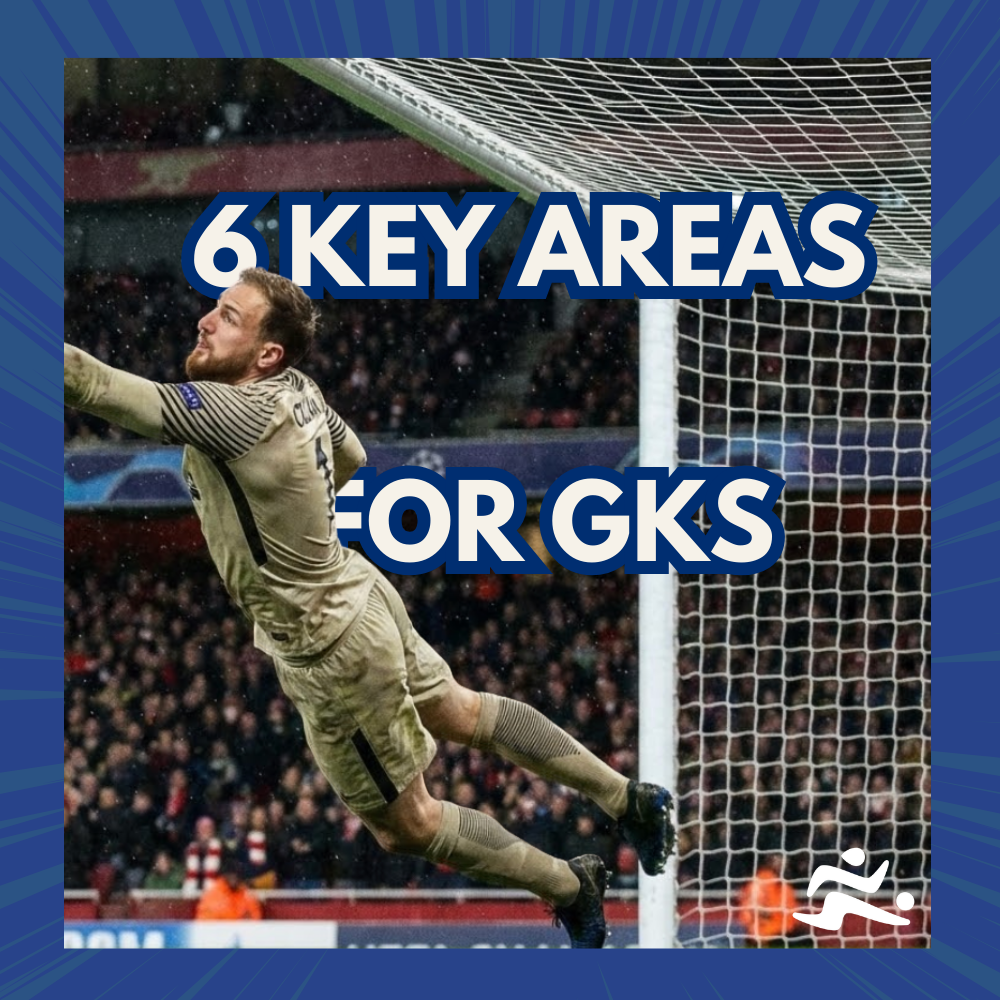
The 6 Key Areas for GKs in Football: Mastering the Modern Game
The 6 Key Areas for GKs in Football: Mastering the Modern Game
Has the role of a goalkeeper truly been underestimated for too long? In a sport often dominated by goalscorers, the figure between the posts is now one of the most dynamic and critical positions on the pitch. No longer just a shot-stopper, the modern goalkeeper acts as the last line of defense, first point of attack, and tactical orchestrator. Mastering this complex role demands a multifaceted skill set and continuous goalkeeper training. This guide explores six fundamental areas every keeper must master to excel in modern football.
Shot-Stopping: The Traditional Foundation of Goalkeeping Excellence
Shot-stopping remains the bedrock of goalkeeping, demanding physical prowess, mental fortitude, and precise technique. This core ability is crucial for turning unstoppable shots into vital saves, keeping your team in the game.
Agility and Reflexes: Sharpening Your Instincts
Exceptional agility and reflexes are vital, demanding instantaneous full-body reactions to game speed. Training builds explosive power and rapid decision-making via ladder drills and reaction saves. This helps keepers cover more goal, reacting effectively to deflections.
Handling and Catching: Securing the Ball with Confidence
Securing the ball after a save is critical to prevent rebounds. Keepers must master various handling and catching techniques—like the 'W' or scooping low balls—to absorb shot power securely. Practice builds soft hands and strong wrists for effortless collection.
Diving and Spreading: Mastering the Art of Goal Protection
Proper diving and spreading are essential for full-extension saves. This involves pushing off correctly, extending fully, and presenting a large surface area. The "spread save" is effective in one-on-one situations, dramatically reducing the attacker's target with courage.
Commanding the Area: Owning the 18-Yard Box with Authority
The penalty area is a goalkeeper's domain, requiring assertive presence and decisive intervention. Commanding the area demands mental strength and strategic understanding to neutralise threats proactively.
Aerial Dominance: Rising Above the Challenge
Aerial dominance is physically demanding, requiring impeccable timing and bravery for crosses. Keepers must judge ball flight, navigate crowded boxes, and make clean catches or punches. Authoritative calls signal control, preventing dangerous knock-downs.
Decision-Making: The Split-Second Call
Every ball into the box demands split-second decision-making: rush, stay, catch, or punch. Keepers must quickly assess trajectory and player positions. Misjudged runs or hesitation lead to open goals, requiring experience and game intelligence.
Physicality and Bravery: Embracing the Clash
Commanding the area involves physical contact, necessitating immense physicality and bravery. Keepers must put their body on the line, absorb contact, and maintain focus. This controlled aggression, like a "sweeper-keeper," allows the defensive line to play higher.
Distribution and Footwork: The Goalkeeper as the First Attacker
The modern game demands goalkeepers be proficient with their feet, evolving them into integral playmakers. Accurate, intelligent distribution is essential for building attacks from the back and controlling possession.
Passing Range and Accuracy: Initiating the Attack
A strong passing range and accuracy are massive assets, enabling short, precise passes under pressure, or long driven balls to bypass midfield. Practicing both feet and varying pass weight ensures keepers consistently find teammates in space, building momentum.
Ball Control and Dribbling: Composed Under Pressure
Excellent ball control and dribbling skills are crucial for receiving passes under pressure. Keepers must comfortably take a touch, shift the ball, and draw in opponents to create passing options. This composure allows teams to play out from the back.
Tactical Awareness: The Strategic Passer
Profound tactical awareness in distribution is vital, understanding team plans and exploiting weaknesses. A quick release after a save can spark counter-attacks. Elite distributors exemplify choosing precise passes to bypass lines, instantly transitioning defense into attack.
Communication and Leadership: The Voice of the Defense
Positioned to see the entire field, the goalkeeper is the natural leader and communication hub of the defense. Effective goalkeeper communication provides clear, concise, and timely instructions to organise the backline.
Organising the Backline: The Defensive Architect
A goalkeeper's primary leadership role is organising the backline, positioning defenders, and setting walls. As the eyes behind the defense, they see runs defenders miss. Clear calls like "step up!" ensure a cohesive shape, preventing attackers from finding space.
Constant Encouragement: Boosting Morale and Focus
Beyond tactical instructions, constant encouragement and motivation are vital. A positive voice lifts spirits after errors and maintains focus under pressure. Simple phrases impact team morale, fostering a resilient defensive unit engaged until the final whistle.
Clear and Concise Calls: Precision in Pressure Moments
In high-pressure moments, instructions require clear and concise calls, leaving no room for ambiguity. Whether "man on!" or "keeper's!", the message must be understood instantly. A vocal keeper creates a proactive, organised defense, anticipating threats.
One-on-One Situations: The Ultimate Test of Nerves and Skill
One-on-one situations are electrifying duels, often determining a match's outcome. They are the ultimate test of a goalkeeper's courage, technique, and mental fortitude under intense pressure. Success turns opportunities into heroic saves.
Closing Down Angles: Shrinking the Target
The first principle in a one-on-one is to effectively close down angles. Rushing out reduces space and time for the shooter, making the goal appear smaller by positioning oneself directly in line with the ball. This requires rapid acceleration and precise judgment.
Spreading and Patience: The Waiting Game
After narrowing the angle, spreading and patience are crucial. Top goalkeepers stay on their feet, spreading wide to cover maximum goal, waiting for the attacker to commit. This "waiting game" demands incredible discipline and composure.
Reading Body Language: Anticipating the Attacker's Move
The ability to read body language is a powerful weapon in one-on-one situations. Experienced keepers pick up cues from attackers—foot preference, gaze, hip shifts—to anticipate shot direction or type. This intuitive understanding allows anticipation over mere reaction.
Positioning and Game Reading: The Mind of a Goalkeeper
Beyond spectacular saves, a goalkeeper’s effectiveness stems from proactive positioning and game reading. These intellectual pillars demand tactical understanding, anticipation, and spatial awareness. A well-positioned keeper makes difficult saves seem routine.
Angle Play: Staying on the Line of the Ball
Angle play means constantly positioning on the imaginary line between the ball and goal centre, maximising coverage relative to the shooter. Keepers shuffle feet, adjusting to maintain this optimal angle. Proper angle play reduces visible goal area.
Anticipation: Predicting the Next Move
Anticipation is predicting game developments by watching play unfold and analysing opponent patterns. Goalkeepers excelling at this move into position before the ball is struck, gaining crucial milliseconds. This is processing information quickly to make educated predictions.
Understanding Formations: How Opponents Attack
A deep understanding of formations and tactical approaches is vital. Knowing how opponents build attacks and their common passing patterns allows keepers to anticipate danger areas like early crosses. This expert game reading analyses the "chess match."
Frequently Asked Questions About Goalkeeping
Here are some common questions aspiring goalkeepers and football enthusiasts often ask:
1. How important is height for a goalkeeper in modern football?
While height can aid aerial balls, it's not the sole success factor. Excellent positioning, agility, spring, and courage are often more critical. Many top goalkeepers compensate for height with superior technique and decision-making.
2. What kind of fitness training should goalkeepers prioritise?
Goalkeepers need unique fitness: agility for quick movements, explosive power for diving and jumping, and core strength for stability and powerful distribution. Reaction speed training and maintaining focus for 90 minutes are also essential.
3. Can a goalkeeper be a team captain?
Absolutely! Many successful teams feature goalkeepers as captains. Their unique field vantage point makes them ideal for organising defense and communicating effectively, demonstrating natural leadership qualities.
Final Thoughts: The Unsung Heroes of the Beautiful Game
The modern goalkeeper's role is multifaceted, extending beyond just shot-stopping. Mastering commanding the area, expert distribution and footwork, powerful communication and leadership, bravery in one-on-one situations, and intelligent positioning and game reading are vital. These six interconnected pillars form the bedrock of an elite keeper's impact. Aspiring guardians must embrace this holistic approach and dedicate themselves to relentless practice. The game awaits its next indispensable force.

3 Things Football Coaches/Scouts Look for in CMs
Unlocking the Midfield Maestro: What Football Coaches and Scouts Truly Seek in Central Midfielders
In the high-octane world of professional football, a single decision can change the course of a game, a season, or even a career. But what if that decision-making prowess, coupled with relentless work ethic and exquisite ball control, resided at the very heart of the team?
This is the central midfielder – the engine, the orchestrator, the silent architect of victories. Coaches and scouts are constantly on the hunt for these rare talents, players who don't just participate but dominate the midfield battleground.
The central midfielder (CM) position is arguably the most demanding and influential role on a football pitch. They are the conduits between defense and attack, tasked with breaking up opposition play, dictating tempo, launching offensive maneuvers, and often, even scoring crucial goals. To excel as a CM means mastering a complex blend of physical, technical, and mental attributes that few other positions require. For aspiring players, parents, and even casual fans, understanding what goes into identifying an elite central midfielder is key to appreciating the intricacies of football at its highest level.
The Game's Brains: Tactical Intelligence and Positional Awareness
Imagine a chessboard where every piece moves at lightning speed, and the board itself is constantly shifting. That's a football pitch for a central midfielder. Football coaches and scouts don't just want players who can run; they want players who can think and anticipate. This cerebral aspect of the game is paramount for a CM, making tactical intelligence and an innate sense of positional awareness non-negotiable attributes.
Understanding the Game's Flow and Dynamics
Coaches observe how quickly a player grasps tactical instructions and adapts to different formations or in-game scenarios. Do they understand when to press high, when to drop deep, or when to switch the play? A truly intelligent CM acts as a coach on the pitch, adjusting their position and influencing teammates based on the immediate circumstances. They can see patterns developing before they fully emerge, making them invaluable assets.
Reading the Play and Anticipating Movement
One of the most valuable traits for any central midfielder is the ability to read the game defensively. This involves anticipating opposition passes, runs, and dribbles. Scouts look for players who can intercept passes, block passing lanes, and break up attacks before they become dangerous. Offensively, this means anticipating where teammates will run and how to thread a pass through tight defenses.
Decision-Making Under Pressure: The Art of Choice
Football is a game of constant decisions, often made in fractions of a second under intense pressure. A CM's ability to make the correct choice consistently – whether to pass short, go long, dribble, or hold possession – is scrutinized heavily. Do they panic when closed down, or do they have the courage to attempt a game-changing pass? The best central midfielders demonstrate composure and clarity of thought, even in chaotic situations.
For aspiring central midfielders, actively studying the game is as important as training on the pitch. Watch professional matches with a critical eye, focusing specifically on the movements and decisions of the central midfielders. Ask yourself: Why did they pass there? Why did they choose that position? Practice with limited touches or small-sided games to force quicker decision-making and improve your understanding of space and movement. Develop a habit of scanning the pitch constantly.
The Ball Magicians: Technical Prowess and Masterful Ball Control
Football is ultimately played with the ball, and nowhere is superior technical ability more evident than in a central midfielder. These players are often the team's primary ball handlers, responsible for retaining possession, distributing efficiently, and creating opportunities. Football coaches and scouts place immense value on a CM's technical proficiency, as it underpins nearly every action they take on the pitch.
First Touch and Ball Retention: The Foundation of Possession
The first touch is the hallmark of a quality central midfielder. Can they bring a fast-paced pass under control instantly, often with opponents pressing? Can they receive the ball in tight spaces and protect it, allowing them time to look up and make the next play? A poor first touch quickly leads to turnovers. Scouts watch closely how players receive the ball and shield it from opponents.
Passing Range and Accuracy: The Orchestrator's Brushstrokes
A central midfielder is often the team's primary distributor, and their passing ability must be diverse and precise. This includes short, incisive passes to break lines, long diagonal balls to switch play, and delicate through-balls. Scouts assess not only the completion rate but also the intent and weight of each pass. The best CMs have an arsenal of passes, using each strategically.
Dribbling in Tight Spaces and Under Pressure
While a central midfielder might not be the primary dribbler like a winger, the ability to dribble effectively in congested areas is crucial for escaping pressure and progressing the ball. Scouts look for players who can confidently carry the ball past an opponent, create space for themselves, or draw in defenders to open up passing lanes. This isn't about flashy tricks, but efficient, purposeful dribbling.
To hone technical skills, aspiring midfielders should dedicate significant time to individual drills. Repetition is key for developing a consistent first touch and accurate passing. Practice receiving the ball with different parts of your foot and body, under varying speeds. Use cones to simulate tight spaces for dribbling exercises. Find a partner for endless passing drills, focusing on accuracy, weight, and different types of passes.
The Engine Room: Physical Attributes and Relentless Work Rate
Football is a highly athletic sport, and the central midfield is arguably the most physically demanding area of the pitch. A central midfielder is expected to cover more ground than almost any other player, participating in both offensive and defensive phases for the entire 90 minutes. Coaches and scouts look beyond just skill; they demand a robust physical presence and an unwavering work rate.
Stamina and Endurance for the Full 90 Minutes
The term "box-to-box midfielder" exists for a reason: these players are expected to contribute in both penalty boxes. This requires exceptional stamina and endurance. Scouts observe if a player's performance level drops significantly in the later stages of a game. Do they continue to make recovery runs, track opponents, and offer themselves for passes even in the 80th minute? A high work rate throughout the entire match is a clear indicator of commitment.
Strength, Aerial Ability, and Aggression in Duels
The midfield battle is often a physical one, characterized by tackles, challenges, and aerial duels. Coaches look for central midfielders who are strong on the ball, able to hold off opponents, and capable of winning headers. This doesn't necessarily mean being the biggest player, but possessing the core strength and technique to compete effectively. Aggression, when channeled correctly, is also a highly valued trait.
Pace and Agility in Transitions
Modern football is increasingly about quick transitions between defense and attack. Central midfielders need to possess the pace to cover ground quickly and the agility to change direction swiftly. This allows them to track fast-breaking opponents defensively and to join offensive movements rapidly. Scouts assess a player's burst of speed, their ability to turn quickly, and their overall coordination.
Defensive Contributions and Pressing Intensity
While some CMs are more attack-minded, every central midfielder is expected to contribute defensively. This means tracking back, making tackles, blocking shots, and actively participating in the team's pressing scheme. Scouts look for players who are willing to put in the defensive effort, not just when the team is out of possession, but constantly. The ability to be a relentless disruptor is a highly valued trait.
To improve physical attributes, aspiring CMs should engage in a balanced training regimen. This includes high-intensity interval training (HIIT) to build stamina, strength training focused on core stability and leg power, and plyometric exercises to enhance agility and explosive power. Incorporate sprints, shuttle runs, and defensive recovery drills into your training. Don't neglect proper nutrition and recovery protocols, as these are vital for maintaining energy levels.
The Holistic View: Beyond Individual Skills
While individual skills are vital, football coaches and scouts understand that a player is part of a larger unit. The most sought-after central midfielders are not just technically gifted or physically dominant individuals; they are players who enhance the entire team. They possess a blend of attributes that make them adaptable, influential, and reliable, both on and off the ball. It's about how their individual qualities elevate the collective performance.
Versatility and Adaptability on the Pitch
In modern football, tactical flexibility is key. Coaches look for central midfielders who can operate effectively in different roles, whether as a deep-lying playmaker, a box-to-box engine, or an attacking midfielder. Can they play in a two-man midfield, a three-man midfield, or even slot into an emergency defensive role? This versatility makes a player incredibly valuable, offering coaches more options.
Leadership and Communication Qualities
As the nerve centre of the team, central midfielders are often natural leaders. Scouts pay attention to how a player communicates on the pitch – are they vocal, organized, and encouraging? Do they take responsibility, demand the ball, and guide their teammates? Leadership isn't just about wearing the armband; it's about influencing the game through actions and words, motivating others, and maintaining tactical discipline.
Mental Fortitude and Resilience Under Pressure
The journey through professional football is filled with highs and lows. Coaches and scouts assess a player's mental toughness. How do they react to mistakes? Do they bounce back after conceding a goal or missing a chance? Do they show courage to demand the ball when the team is under pressure? Resilience, determination, and a winning mentality are crucial for success at any level.
A shining example of a central midfielder who embodies this holistic view is Luka Modrić. Despite not being the biggest or fastest player, his tactical intelligence, unparalleled vision, exquisite first touch, and tireless work rate have made him one of the greatest midfielders of his generation. He seamlessly adapts to various midfield roles, dictates the tempo of games with his passing, and consistently makes the right decision under immense pressure. His leadership, often quiet but always impactful, has been crucial for both club and country.
Frequently Asked Questions About Central Midfielders
What's the difference between a defensive, central, and attacking midfielder?
A defensive midfielder (CDM) primarily screens the defense, breaking up play and winning possession. An attacking midfielder (CAM) operates higher up the pitch, focusing on creating goal-scoring opportunities. A central midfielder (CM) is more of a 'box-to-box' player, contributing equally to both defense and attack, linking play, and dictating tempo from the middle of the pitch. Their primary responsibilities and positioning differ.
Can a central midfielder succeed without being physically dominant?
Absolutely. While physical attributes are important, players like Xavi Hernández or Luka Modrić demonstrate that exceptional tactical intelligence, technical skill, and a relentless work rate can more than compensate for a lack of sheer physical dominance. Their ability to outthink and outmaneuver opponents, combined with precise passing and relentless movement, makes them highly effective regardless of stature.
How important is communication for a central midfielder?
Communication is paramount. As the link between defense and attack, a central midfielder must be vocal in organizing teammates, calling for the ball, directing pressing, and providing tactical instructions. Good communication helps maintain team shape, prevent errors, and initiate attacks effectively, making them a true leader and organizer on the field.
What drills can aspiring central midfielders do to improve?
Focus on drills that combine technical skill with decision-making and physical endurance. Examples include: Rondo (keep-away games in a small circle to improve touch, passing, and awareness), passing patterns that require quick thinking and accurate distribution, small-sided games to practice decision-making under pressure, and cone drills for agility. Incorporate fitness drills like shuttle runs and interval training to build stamina.
How do scouts assess potential in young central midfielders?
Scouts look beyond current ability, focusing on attributes that indicate future potential. This includes a player's attitude, willingness to learn, coachability, and resilience. They'll assess raw technical skill, natural football intelligence, physical potential (growth, athleticism), and mental fortitude. A young player who consistently shows a good understanding of the game, a strong work ethic, and a desire to improve often stands out.
Final Thoughts: The Heartbeat of the Team
The central midfielder is, without doubt, the heartbeat of any successful football team. Their ability to read the game, control the ball, and cover immense ground ensures that the team maintains balance, creates chances, and defends resolutely. For football coaches and scouts, identifying a truly exceptional central midfielder involves a meticulous examination of tactical intelligence, technical prowess, and physical attributes, all underpinned by strong mental fortitude. It’s a search for a complete footballer, someone who can influence every aspect of the game.

A Parent’s Guide to Buying Football Boots for UK Pitches
Did you know that playing in the wrong football boots increases a child's injury risk by up to 30% on certain pitches? For parents across the UK, the annual quest for new football boots is more than just a shopping trip; it's a critical decision impacting safety, performance, and enjoyment. With soggy winter pitches, rock-hard summer grounds, and artificial turf, finding the perfect pair can feel like navigating a minefield. This guide arms you with knowledge to make confident choices, ensuring your young footballer shines on any UK pitch.
A Parent’s Guide to Buying Football Boots for UK Pitches
Every year, as the football season approaches, parents across the UK face buying new junior football boots. This involves understanding diverse playing surfaces and matching footwear to specific conditions. From muddy park pitches to modern artificial turf, each surface demands a different sole for optimal grip, comfort, and safety.
The 'why' is crucial: the right boots enhance a child's performance and significantly reduce injury risks like ankle sprains or knee issues. Ensuring safety and maximising enjoyment makes this guide essential, transforming a confusing purchase into an informed decision benefiting your budding footballer.
Understanding the UK Pitch Landscape and Its Impact on Football Boot Choices
The Unique Challenges of British Football Pitches for Footwear
The UK's unpredictable weather profoundly impacts football pitch conditions, ranging from firm and dry to muddy bogs. Natural grass pitches vary, and increasingly, artificial pitches (3G or 4G) demand specific boot types. Understanding this diverse landscape is the first step in an informed purchase.
Why Matching Boots to Pitch Type is Not Just a Suggestion, But a Necessity
Choosing the correct football boot for the specific pitch type is fundamental for safety and comfort. Using FG boots on soft ground causes slips; SG boots on hard or artificial pitches risk knee and ankle injuries. Wrong boots also wear out prematurely. Matching the boot to the pitch invests in your child's well-being and footwear longevity.
Decoding Football Boot Types: A Deep Dive into Soles and Stud Configurations
Firm Ground (FG) Boots: The Everyday Warrior for UK Grass
Firm Ground (FG) boots are the most common choice for grassroots football in the UK, designed for natural grass pitches that are dry to slightly damp. Their soleplates feature moulded plastic studs, typically conical or bladed, providing excellent traction.
FG boots are versatile for most good-to-average natural grass pitches during spring and autumn, offering a good balance of grip and comfort. However, they struggle on exceptionally hard, baked-dry summer pitches or extremely soft, waterlogged winter pitches.
Soft Ground (SG) Boots: Conquering the Mud and Slippery Conditions
Soft Ground (SG) boots are engineered for wet, muddy, or extremely soft natural grass pitches, often seen during heavy downpours. They feature longer, often removable, metal or plastic studs designed to penetrate deep into soft ground for maximum grip and to prevent slips.
Parents whose children play on waterlogged pitches, particularly in colder, wetter months, should consider SG boots. Many modern SG boots feature hybrid soleplates for adaptive grip. These boots should never be worn on hard ground or artificial surfaces due to injury risks and damage.
Artificial Ground (AG) Boots: The Specialist for Modern Synthetic Surfaces
With the rise of 3G and 4G pitches across the UK, Artificial Ground (AG) boots are indispensable. These synthetic pitches, with their rubber crumb infill, require a different soleplate. AG boots feature numerous shorter, hollow, conical studs to distribute pressure evenly and prevent snagging in the turf.
Using FG boots on 3G or 4G pitches is dangerous; longer studs can snag, leading to knee and ankle injuries. Investing in dedicated AG boots is crucial for safety, comfort, and longevity if your child regularly plays on modern synthetic pitches.
Astro Turf (TF) Boots: Maximising Grip on Harder Artificial Pitches
Astro Turf (TF) boots are designed for older-generation artificial pitches, which are harder, shorter-pile, and sometimes sand-filled. They also suit very hard natural surfaces. TF boots feature a durable rubber outsole with a multitude of small, rubber studs or nubs.
This multi-studded configuration provides excellent grip and cushioning on hard surfaces, distributing pressure broadly. Ideal for casual kickabouts or training on older astro pitches, they offer superb comfort and stability. However, they lack the deep penetration for natural grass or specialised grip for modern 3G/4G pitches.
Multi-Ground (MG) Boots: The Versatile Option for Varied Play
Multi-Ground (MG) boots are a newer category offering versatility across different playing surfaces, often with a blend of shorter, conical studs. They aim to provide reasonable performance on both firm natural grass and artificial turf, reducing the need for multiple pairs.
For parents on a budget or whose children play on varied pitches, MG boots offer a convenient compromise. They reduce injury risk associated with wearing FG on AG, while still offering decent traction on drier natural grass. Though versatile, MG boots are often "jack of all trades, master of none," but are a solid all-round solution for varied UK grounds.
Beyond the Soles: Key Considerations for Comfort, Performance, and Durability
Choosing the Right Material: Leather vs. Synthetic for Young Players
The upper material significantly impacts comfort, touch, and durability. Leather football boots, especially K-leather, are prized for their natural feel, comfort, and ability to mould to the foot, offering a 'barefoot' touch. They can be more expensive, require more maintenance, and might be less durable in very wet conditions.
Synthetic football boots are typically lighter, more durable, and more water-resistant, making them practical for wet UK pitches. Modern synthetics can mimic leather's feel, but often with a stiffer initial fit. They are easier to clean and maintain, a huge bonus for busy parents, suiting fast players or those needing low-maintenance footwear.
The Importance of a Perfect Fit: Measuring, Trying On, and Avoiding Injuries
A perfect fit is paramount to prevent blisters, discomfort, and injury. Always measure your child's feet accurately, ideally at day's end, and have them try boots with typical football socks. The fit should be snug, not tight, with no excessive heel movement and about a thumb's width space at the longest toe.
Pay attention to width. Test boots by walking or running. While boots, especially leather, stretch slightly, don't rely on dramatic stretching. Buying boots too big for "growth room" harms ball control and increases tripping risk.
Ankle Support and Protection: High-Cut, Mid-Cut, and Low-Cut Designs
Boot designs around the ankle vary from traditional low-cut to modern high-cut 'collars'. Low-cut boots offer maximum ankle freedom. Mid-cut and high-cut boots, with a sock-like collar, aim for enhanced ankle stability and a seamless connection.
These collars provide a sense of security but don't offer medical brace support. Choice depends on personal preference and comfort. If your child has a history of ankle issues, these designs might offer peace of mind, but always consult a medical professional for serious support needs.
Durability and Value: Making Your Investment Last Through the Season
Football boots endure significant wear, so investing in durability saves money and hassle. Choose reputable brands known for quality. Check upper stitching and the soleplate bond. A good pair, with proper care, should last a full season or until outgrown.
A slightly more expensive, well-constructed synthetic boot likely outlasts cheaper alternatives, even with frequent cleaning. Consider expected wear given play frequency and pitch conditions, ensuring lasting value.
Practical Steps for Parents: Your Buying Journey Simplified
Assessing Your Child's Playing Environment: Pitch Types and Frequency
Before shopping, assess your child's playing environment – this is the most critical factor for choosing the right football boot type. Consider where league matches and training occur: natural grass or artificial pitches? What are typical pitch conditions – muddy/soft or firm/dry?
Also, determine play frequency on each surface. If 80% of play is on 3G, AG boots are a clear priority. Understanding these factors narrows options, ensuring you buy functionally appropriate kids football boots.
Setting a Realistic Budget: Balancing Quality with Affordability
Junior football boots range widely in price. Setting a realistic budget helps guide choices. A higher price doesn't always mean the "best" boot; mid-range options often offer excellent value, blending good quality and affordability.
Consider previous season's models, often discounted but still performing superbly. Prioritise fit and function over brand prestige or the newest 'tech' if budget is a concern, ensuring suitable footwear.
The In-Store vs. Online Debate: Where to Find the Best Fit and Deal
Both in-store and online shopping have benefits. In-store, especially at specialist retailers, allows your child to try multiple pairs and receive expert advice on fit and suitability. This hands-on approach reduces the risk of ill-fitting boots.
Online shopping offers wider selection and better deals. The drawback is inability to try them on. If buying online, know brand sizing, read reviews, and check return policies. Strategy: find fit in-store, then search online for deals.
Bringing Your Child into the Decision: Empowering Their Choice
Involving your child in the decision-making process is crucial as they will wear the boots. Let them express colour and style preferences within reason. Most importantly, ensure their comfort; an awkward or tight boot hinders performance and enjoyment.
Educate them on why certain boots suit specific pitches, fostering understanding. A child who feels ownership and finds their boots comfortable is more likely to play with confidence and enthusiasm.
Expert Tips and Common Pitfalls to Avoid When Buying Junior Football Boots
Don’t Fall for the Hype: Prioritise Functionality Over Flashy Designs
It’s easy to be swayed by flashy designs and celebrity endorsements, but the most expensive or eye-catching boots aren't always best. The primary function of children's football boots is to provide grip, comfort, and protection suitable for the specific pitches they play on.
Prioritise the correct soleplate, a comfortable fit, and appropriate material over trends. An AG boot is functionally poor on soft, muddy grass, regardless of its looks. Focus on essential features for optimal performance and safety.
The Growth Spurt Dilemma: Balancing Current Fit with Future Growth
Children’s feet grow rapidly, tempting parents to buy boots a size too large, but this is a common pitfall. Boots that are too big cause blistering, discomfort, poor ball control, and increase tripping and ankle injury risks.
While a thumb's width of space is acceptable, significantly oversized boots are detrimental. If a growth spurt is imminent, consider a moderately priced, well-fitting pair for now. Two well-fitting, less expensive pairs are better than one ill-fitting, expensive one.
Post-Purchase Care: Extending the Life of Their New Football Boots
Proper care significantly extends the lifespan of football boots. After every use, especially on muddy UK pitches, clean them immediately: remove excess mud with a brush or cloth. If very wet, stuff with newspaper to absorb moisture, but avoid direct heat sources.
For leather boots, regularly apply conditioner to prevent drying and cracking. Store boots in a cool, dry place, ideally in a breathable boot bag. This simple routine maintains condition, comfort, and performance.
When to Replace: Signs of Wear and Tear and Performance Decline
Even with excellent care, football boots don't last forever. Knowing when to replace them is crucial for continued performance and safety. Look for worn-down or missing studs, which compromise grip. Check for soleplate separation, indicating compromised structural integrity.
Holes or significant tears in the upper reduce foot protection. Persistent discomfort, even after breaking in, can signal inadequate support or lost cushioning. Regular checks help identify these issues early, preventing injuries and ensuring reliable footwear.
Frequently Asked Questions About Buying Football Boots for UK Pitches
What is the main difference between firm ground (FG) and artificial ground (AG) boots?
FG boots have fewer, longer studs for natural grass, while AG boots feature numerous shorter, hollow, conical studs for synthetic turf. Using the wrong type, especially FG on AG, leads to poor grip, discomfort, and increased injury risk.
Can my child wear multi-ground (MG) boots on all types of UK pitches?
MG boots offer good versatility for firm natural grass and artificial turf. They are generally safer than FG on AG but are "jack of all trades, master of none," meaning they might not offer optimal grip on very soft, muddy pitches (SG needed) or precise traction of dedicated FG or AG boots.
How much growing room should I leave when buying junior football boots?
Ideally, about a thumb's width (roughly 1cm) of space between the longest toe and boot end. Excessive room causes blisters, poor ball control, and increased tripping/ankle injury risks. Focus on a snug, comfortable fit that secures the heel and midfoot.
What materials are best for football boots used on wet UK pitches?
Synthetic materials generally offer superior water resistance and durability in wet conditions compared to natural leather. They repel water, dry faster, and maintain shape, making them practical for frequently damp UK pitches. Leather can become heavy when wet and needs more care.
What should I do to properly clean and maintain my child's football boots?
After each use, clean off mud with a brush or cloth. If wet, stuff with newspaper to absorb moisture and air dry naturally, away from direct heat. For leather boots, regularly apply conditioner. This routine maintains condition, comfort, and performance.
Final Thoughts on Equipping Your Young Footballer for Success
Navigating football boots for UK pitches can seem daunting, but with the right knowledge, it simplifies supporting your child's passion. Understanding their specific playing pitches—muddy pitches, hard artificial turf, or firm grass—is key. Matching the correct soleplate ensures their safety and prevents common injuries, which is fundamental.
Beyond studs, material, fit, and proper care contribute to comfort, durability, and enjoyment. By prioritising functionality over trends and involving your child, you empower them to step onto any pitch confidently. Invest wisely, care diligently, and watch your young footballer thrive. Your thoughtful approach provides a reliable foundation for countless memories and sporting triumphs.
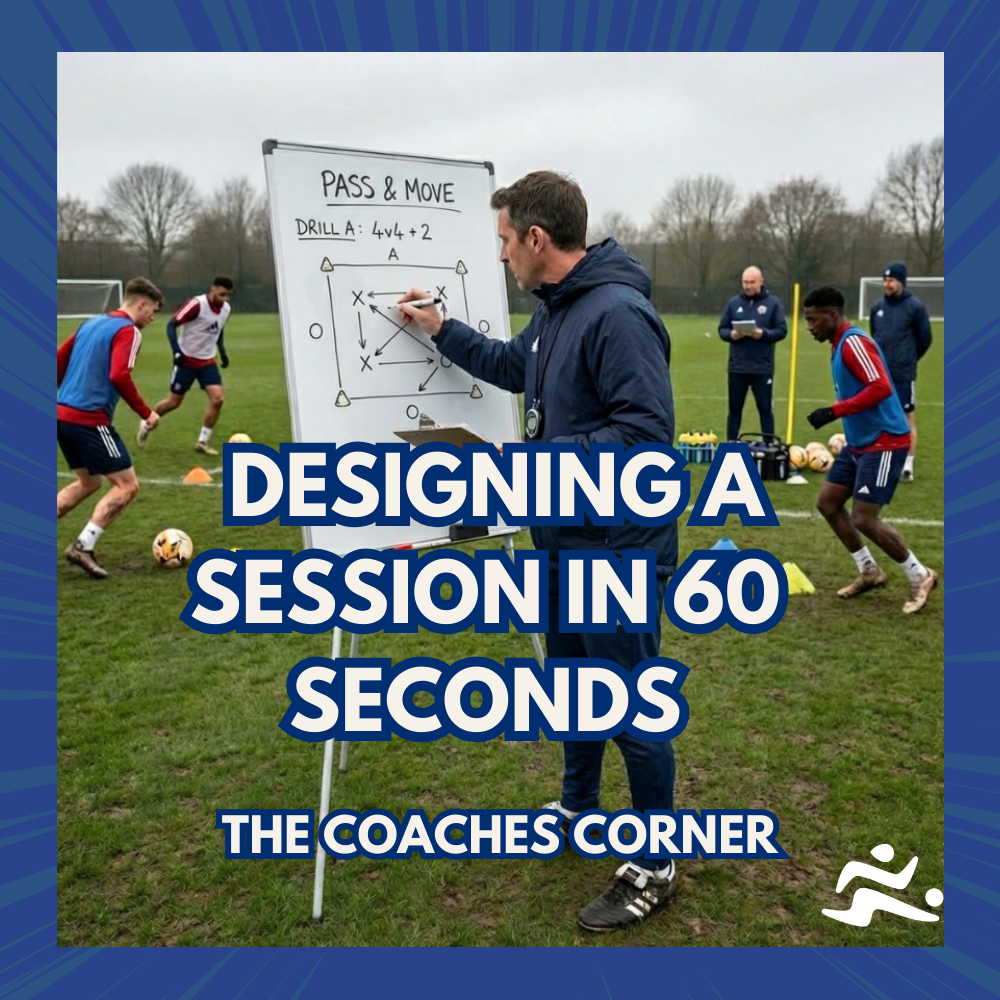
Designing a Football Practice in 60 Seconds: Master Efficiency on the Pitch
Designing a Football Practice in 60 Seconds: Master Efficiency on the Pitch
Did you know an astonishing 30% of youth sports practice time is often lost to disorganisation and ineffective transitions?
Imagine if you could reclaim those precious minutes, turning chaos into fluid development for your players.
What if you had a system that allowed you to conceptualise and outline a robust football practice in what feels like mere seconds?
It's not a fantasy; it's the power of efficient planning, and it's within every coach's reach.
Unlock maximum player development with smart football practice planning.
The Foundation of Rapid Practice Planning
In football coaching, time is your most valuable resource. This guide isn't about literally planning in 60 seconds, but fostering a mindset and framework for incredibly swift, impactful practice design. We aim to maximise every moment on the pitch, ensuring every drill serves a purpose, keeping players engaged and developing. This approach elevates player performance and fosters a love for the game.
Understanding Your Team's Needs and Goals
Before drills, quickly assess your team's strengths and weaknesses. Are they struggling with tackling, routes, or alignment? This rapid diagnostic scan is the critical first step in focused practice design, allowing you to tailor objectives instantly and cut down on irrelevant drills.
Defining Your Practice Objectives Quickly
Every minute of practice needs clear, measurable objectives. Identify one to three key areas for improvement, like "improve ball control" or "better passing." This laser focus immediately dictates drill selection, preventing unfocused chaos and ensuring effective skill acquisition.
The Power of Pre-Planned Templates
Imagine a library of practice templates at your fingertips. Create generic templates for "fundamental skills," "game strategy," or "pre-game walkthroughs." Simply select the most relevant one and slot in specific drills that align with your current objectives, making rapid practice design a tangible reality.
Key Principles for Efficient Football Drills
Efficiency on the football pitch means making every action count. When designing your football drills, maximise player touches, strategic thinking, and physical exertion in the shortest timeframe. This requires dynamic, integrated approaches for superior coaching efficiency.
Maximising Reps with Multi-Tasking Drills
Embrace multi-tasking drills that address several objectives simultaneously. Instead of isolated skills, combine them: catch a pass while navigating cones, then transition into a defensive pursuit. This boosts repetitions and makes drills more game-like, keeping all players active and engaged, crucial for youth football drills and limited practice time.
Seamless Transitions: The Unsung Hero of Efficiency
Seamless transitions are the backbone of efficient practice, often saving more time than any single drill. Plan your practice flow like a choreographed dance: ensure one drill leads directly into the next without equipment changes or lengthy instructions. Appoint assistants to set up stations, minimising downtime and maximising productive minutes.
Player Engagement Through Variety and Purpose
Monotonous drills lead to disengagement. Incorporate variety and clearly communicate the purpose of each drill. Rotate individual skill work, small-group tactics, and full-team concepts. Explain why a drill is important, linking it to game situations, transforming exercises into purposeful learning experiences and boosting motivation for player development.
Leveraging Technology for Quick Practice Design
In the digital age, coaches have powerful tools to drastically cut practice planning time and enhance effectiveness. Embracing technology isn't just for pros; it benefits every level of football coaching, allowing for incredible speed and precision in practice design.
Digital Tools for Instant Drill Access
Digital platforms and apps offer instant access to vast libraries of football drills with diagrams and videos. Tools like Hudl or Google Drive for your custom drills allow you to search by skill or position. You can build entire practice plans by dragging and dropping pre-vetted drills, transforming hours of planning into minutes for efficient football practice management.
Video Analysis for Rapid Feedback Loops
Video analysis tools (even a smartphone camera) provide invaluable rapid feedback. Record drills to review technique and decision-making visually, turning abstract concepts into concrete lessons. Short video review sessions integrated into practice speed up the learning curve, allowing for targeted adjustments and faster skill acquisition.
Communication Apps for Streamlined Logistics
Communication apps like TeamSnap or group messaging streamline logistics: instant notifications for practice changes, announcements, or coordinating with parents. Centralising team communication frees up valuable time from administrative tasks, allowing you to focus on actual coaching and effective practice management.
Crafting a Dynamic 60-Minute Practice
While planning quickly, practice execution needs structure to maximise player development within a 60-minute session. Each segment prepares players, hones skills, and integrates tactical knowledge, crucial for game-day readiness.
The Warm-Up: Setting the Tone Swiftly
A swift, effective warm-up (10-15 minutes) uses dynamic stretches, light cardio, and sport-specific movements. Integrate light ball work or agility ladders that transition smoothly into main drills. This ensures players are physically ready, reduces injury risk, and sets a positive, energetic tone for the entire football training session.
Skill Development Blocks: Focused and Fast
This core segment (20-25 minutes) hones individual and small-group skills. Dedicate time to progressive drills aligned with your objectives, like "improve tackling form." Use stations or small-group rotations to maximise reps and provide personalised coaching, ensuring focused instruction within a compact timeframe for optimal skill acquisition.
Tactical Integration: Game-Like Scenarios
Integrate skills into game-like scenarios (15-20 minutes). This includes 7-on-7 drills or play walkthroughs, mirroring real game situations to force decisions under pressure. Keep coaching points concise, letting players learn by doing. This develops football IQ and team cohesion, preparing players for the mental demands of the game.
Cool-Down and Review: Maximising Retention
The cool-down and review (5-10 minutes) is vital for physical recovery and cognitive retention. Use light stretching and a quick recap and feedback session. Highlight positives, identify areas for improvement, and reinforce daily objectives. Ending on a reflective note ensures learning continues, making your rapid planning truly pay off for player development.
Common Pitfalls and How to Avoid Them
Even with intentions for efficient practice design, common traps can derail efforts. Recognising and avoiding these pitfalls is crucial for maintaining productivity and player satisfaction in football coaching.
Over-Drilling and Player Fatigue
Avoid hammering a single drill for too long, leading to boredom and diminished focus. Build variety into drill selection and limit activities to 8-10 minutes. Observe player energy and adjust intensity, prioritising quality reps over sheer quantity. Dynamic practice management means listening to your players.
Lack of Clear Instruction and Communication
Confusion saps efficiency. Adopt the "KISS" principle: Keep It Short and Simple. Provide concise explanations and demonstrations, then start immediately. Use visual cues and specific, actionable feedback. Clear communication upfront saves minutes of frustration, ensuring smoother practice flow and better skill acquisition.
Ignoring Adaptability: The Weather Wildcard
Always have a "Plan B" for unexpected weather. Can you move indoors, or switch to drills suitable for rain or heat? Pre-formulated contingencies, like a "rainy day" template focusing on strategy, allow you to quickly pivot without losing valuable football training time, ensuring your schedule remains robust.
Real-World Examples of Time-Saving Practices
These scenarios highlight how coaches adapt the "60-second design" philosophy to unique challenges, showcasing efficient football practice planning across different levels.
Youth League: Optimising Limited Pitch Time
Coach Elena optimised one-hour flag football practices with a multi-station approach. Using digital drill libraries and parent volunteers, she rotated players through catching, flag-pulling, and football IQ stations. Pre-set stations and clear communication ensured constant activity and development, making her core practice "designed" in less than a minute each session for effective youth football coaching.
High School Varsity: Balancing Depth and Speed
Coach Mark used technology for 90-minute varsity practices, outlining weekly objectives via a planning app. He instantly populated templates with specific drills for red-zone offense or defensive schemes. Plans sent to assistants via communication apps ensured seamless transitions, allowing for extensive material coverage and rapid-fire reps crucial for game-day readiness.
Frequently Asked Questions About Designing Efficient Football Practices
Coaches often seek ways to make practices more effective and less time-consuming. Here are common inquiries on effective practice management:
What's the absolute minimum I need to plan before practice?
At minimum, identify your 1-3 primary practice objectives and a rough outline of core drills (warm-up, a few skill drills, one team drill) to achieve them. This foundational structure allows for on-the-fly adaptation.
How do I keep players engaged if I'm not doing full-contact drills?
Focus on high-rep, multi-tasking drills that keep everyone moving, even without contact. Incorporate competitive elements, explain the "why" behind each drill, and use frequent positive reinforcement to build enthusiasm for youth football drills.
I only have one assistant coach. How can I manage multiple stations?
Divide practice into two main stations—one for you, one for your assistant. Alternatively, use a station requiring minimal direct coaching (e.g., footwork ladders) while you and your assistant focus on more technical stations, ensuring efficient football training.
What's the best way to handle disruptive players or a lack of focus?
Address disruptive behavior immediately and privately. Re-engage players by changing the drill, increasing pace, or assigning a leadership role. Ensure clear instructions, and sometimes a short break can reset the team's energy and focus for better player development.
How can I make sure my practice plan translates effectively from paper to pitch?
The key is visualisation and simplification. Mentally walk through each drill, imagining player placement and transitions. Keep explanations concise, diagrams clear, and be prepared to adapt to real-time feedback. Flexibility ensures effective football practice planning.
Final Thoughts and Call to Action
Designing a football practice efficiently isn't about rushing; it's about mastering smart planning and maximising every moment for your players. By setting clear objectives, using templates, embracing multi-tasking drills, and leveraging technology, you'll transform your coaching approach. Spend less time scrambling and more time actively coaching, fostering skill development, and instilling a love for the game. These principles empower you to create dynamic, engaging, and highly productive football training sessions.
Ready to revolutionise your football coaching?
Implement these strategies this week, starting with a clear objective for your next practice.
Explore digital drill libraries and create your first practice template.
Watch how quickly your planning time shrinks and your team's performance soars.
The future of efficient football practice management starts now!

How to Defend 1v1 in Football (in Wide Areas)
How to Defend 1v1 in Football (in Wide Areas)
Over 70% of attacking plays in modern football originate from wide areas. A single defensive lapse on the wing can unravel an entire team's strategy, leading to crucial goals conceded. Do you feel exposed when an attacker runs at you on the flanks? Mastering one-on-one defending in wide zones is not just about individual skill. It's the bedrock of an impenetrable defense that wins matches.
Understanding the Crucial Role of 1v1 Defending in Wide Areas in Modern Football
In modern football, wide areas are battlegrounds where individual duels often decide games. Whether you're a full-back or a wide midfielder, knowing how to defend one-on-one against an attacker on the wing is invaluable. This involves positioning, anticipation, body language, and strategic decision-making.
1v1 defending in wide areas refers to specific techniques and mental approaches to stop an opposing player with the ball near the touchline. This is distinct from central defending, which often involves more collective marking. On the wing, you are often isolated, making your decisions paramount.
Its vitality for team success stems from several factors. Wingers are typically creative, direct players with speed and dribbling ability. Neutralising them cuts off a major supply line for attacks and prevents dangerous crosses. Winning these individual duels builds confidence, disrupts opponents, and allows your team to regain possession, potentially launching counter-attacks.
Mastering the Core Principles of Individual Defense on the Flanks
Before specific techniques, grasp the fundamental principles underpinning successful 1v1 defending in wide areas. These building blocks focus on control, patience, and smart decision-making. Think of it as a chess match, limiting your opponent's options.
The Art of Initial Positioning and Approach Angle When Facing an Attacker
Your defensive journey starts before the attacker receives the ball. Initial positioning is critical; be goal-side, between them and your goal. Consider the space around you, like the touchline or central defender cover, and adjust.
The angle of approach is equally important. Approach at a slight angle, not head-on. This influences their direction, guiding them where you want. Avoid rushing straight at them; instead, approach swiftly but slow down within striking distance, preparing your body.
Your body shape should be side-on, chest slightly towards the touchline, with weight evenly distributed or leaning forward. One foot should be slightly ahead as a lead foot for pivoting, stepping, or tackling. This stance prevents the attacker from easily knocking the ball past you.
Controlling the Space: How to Dictate the Attacker's Movement and Force Mistakes
Effective defending is proactive, controlling space to dictate the attacker's choices. In wide areas, your primary objective is to force them wide. The touchline acts as an extra defender. Approaching from an angle that denies central access shepherds them towards the sideline, limiting options for shots or dangerous passes.
Denying central access is paramount. Attackers driving centrally have better goal views and more passing angles. Maintain a body shape that encourages them wide, reducing their threat. Guide them towards the touchline where options diminish, using subtle feints to make this their only viable path. This psychological battle is often won early.
The Importance of a Low Stance and Agility for Quick Reactions and Changes of Direction
Agility is paramount for any wide defender. Your ability to change direction rapidly in confined spaces can be an attacker's undoing. This starts with a low stance; bending your knees and lowering your center of gravity provides a stable base for explosive reactions. Standing upright makes you stiff and slow.
Your footwork should be light and constantly adjusting. Think of a boxer on their toes, ready to move. Short, sharp steps, known as "jockeying," maintain balance and cover short distances without committing. These small movements are crucial for mirroring feints and preventing clear runs. Regular agility drills significantly improve quick changes of direction and a low, athletic stance, enhancing 1v1 defending.
Key Techniques and Actionable Steps for Shutting Down Wingers and Full-Backs
With core principles understood, now focus on practical techniques to become a formidable wide defender. These actionable steps guide you through various stages of a 1v1 encounter.
Timing Your Challenge: When to Engage and When to Jockey for Position Effectively
Over-committing too early is a common mistake. Patience is vital in 1v1 defending. Your primary goal is to delay the attack and force a decision under pressure, away from your goal. Jockeying means maintaining a safe distance, mirroring movements, and preventing opponents from running past or easily turning.
The timing of your challenge is critical. Wait for the opportune moment: a poor touch, momentary loss of control, or when the attacker drops their head. These are your triggers. A well-timed "poke" tackle with the outside of your foot can dispossess without a full slide, allowing possession recovery. Sometimes, simply shepherding the attacker to a less dangerous area is the best defense.
Reading the Attacker's Intent: Identifying Dribblers, Crossers, and Passers Early
Exceptional defenders anticipate, not just react. Reading the attacker's intent involves observing body language and game context. Is their head up for a cross? Or down, focused on dribbling? Are they cutting inside for a shot or driving to the byline?
Observe these cues:
Dribblers: Often have heads down, attempting step-overs. Stay on toes, keep distance, and don't dive in.
Crossers: Lift heads, open bodies to create space for a whip. Close space quickly, forcing an extra touch or preventing the cross.
Passers: Might draw you in before releasing a quick through ball. Be aware of teammates' runs and cut off passing lanes.
Developing anticipation comes with experience, but consciously seeking these cues improves your response.
Using Your Body Effectively: Shielding the Ball and Minimising Attacker Options
Football is a contact sport, and intelligent body usage is a huge advantage. Use your body as a powerful tool. When close, use your arm usage to feel the attacker, maintaining slight contact to gauge movements and keep them at arm's length. This is legal physicality, not fouling; an arm across the chest can unbalance them or prevent easy turns.
After a tackle or if the ball is loose, position your body between the attacker and the ball to shield the ball. This secures possession, allowing time to clear or pass. Strong core strength and balance are essential for effective body usage, helping you win contested balls.
The Power of Communication: How to Coordinate with Teammates for Defensive Support
Even in a 1v1 situation, you're rarely alone. Communication with teammates is critical for effective wide area defending. Your calls can guide a central defender for cover and balance, telling them to drop or shift. A central midfielder can also provide pressure from behind.
Verbal cues like "I've got him," "Show him wide," or "Cover" provide vital information. For instance, yelling "Cover!" when pushing an attacker wide alerts your central defender to a potential ball played behind you. Effective communication creates a unified defensive front, transforming individual duels into a collective effort.
Situational Awareness: Defending Against Different Attacker Types and Game Scenarios
Not all wingers are equal, nor are all game scenarios. Adapting your defending strategy based on the opponent and tactical context marks an intelligent defender.
Combating Pace Merchants: Strategies for Dealing with Fast Wingers Who Love to Run
Facing a lightning-quick winger requires smart play, not just matching speed. Giving space initially might seem counter-intuitive but prevents them from knocking the ball past you. Drop off a yard or two, inviting them to commit.
Channel them into less dangerous areas, forcing them wide or even backward. If they run at full speed, match their run alongside, using your body to shield the ball and force them to slow or change direction. When they slow or take a heavy touch, step in quickly to challenge. Think of defenders who shepherd quick attackers into dead ends.
Neutralising Skillful Dribblers: Tactics for Preventing Them From Turning and Creating Space
Skillful dribblers thrive on close control and quick changes of direction. Against these players, staying tight but not committing is crucial. Deny them time and space for tricks and turns. Keep your lead foot active, mirroring feints, but avoid diving in. Patience is key; wait for them to overplay or take a touch out of reach.
It's a balance between commitment vs. patience. Be ready to step in, but understand they might bait you. Read their hips and shoulders, not just the ball. If they try to turn, use body strength to prevent them from turning fully, keeping them facing away from your goal. Forcing them to keep their back to goal wins the battle.
Defending Against Overlapping Full-Backs: Closing Down Crosses and Through Balls
Modern football often sees full-backs creating dangerous overlaps. This adds complexity. Awareness of runs is paramount; watch the winger and constantly scan for the overlapping full-back. Communication with your wide midfielder or central defender is crucial to alert them.
If the ball goes to the overlapping full-back, immediately close down crosses and through balls. Get tight, adopt your low stance, and block the passing lane. Be in position to block a cross with your body. Anticipate and try to intercept through balls. Sometimes, a tactical foul can break up a dangerous play, though aim to win the ball cleanly.
The Defensive Wide Area Battle: Insights into Different Formations and Team Setups
Your 1v1 defending role changes with your team's formation. As a full-back in a 4-4-2, you might have less cover, increasing individual responsibility. In a 4-3-3, your wide midfielder might track back more, providing an extra defensive layer.
Considerations in a 4-4-2 vs. 4-3-3:
4-4-2: As a full-back, expect isolation. Focus on holding ground and delaying, allowing central defenders to adjust. Your wide midfielder might track the opposition full-back.
4-3-3: Your winger often tracks back diligently, creating a 2v1 in your favor or providing cover, allowing you to be more aggressive.
The role of the winger in defense is crucial. A defensive winger creates numerical superiority. An attack-minded winger might leave you exposed. Understanding your team's tactical setup and communicating with your wide partner is essential.
Common Mistakes to Avoid and Advanced Tips for Elevating Your 1v1 Defending Skills
Even the best defenders make mistakes. Recognising and correcting common errors is key to continuous improvement. Here are pitfalls to avoid and tips to elevate your defending skills.
Overcommitting Too Early: The Pitfalls of Impatience in Wide Area Defense
This is the most frequent and costly mistake. Overcommitting too early means lunging for a tackle or charging without proper timing. This leaves you off-balance and opens space. Attackers easily dribble around you, leaving your goal exposed. Prioritise holding ground and jockeying until the perfect tackle moment. Good defenders rarely make last-ditch tackles.
Losing Body Shape: Maintaining Optimal Balance and Readiness Against Attackers
Your body shape is your foundation. Losing body shape means becoming upright, squaring shoulders, or getting flat-footed. Compromised balance means losing agility for quick changes. This makes you vulnerable to feints. Constantly remind yourself to stay low, side-on, and ready, like a coiled spring.
Neglecting the Support Player: Always Being Aware of Teammates and Opposition Runners
Even in a 1v1, football is a team sport. Neglecting the support player can be disastrous. If you focus only on the ball, an overlapping full-back or striker's run can undo your individual defending. Always scan the pitch for teammates (for cover) and opposition runners (for threats). Use peripheral vision to track movement without fixating on the ball.
Drills and Practice Routines: Specific Exercises to Improve Your Individual Defending
Theory needs practice. Incorporate these drills to sharpen your 1v1 defending skills:
Shuttle Runs and Agility Cones: Set cones in zigzag or square patterns. Practice quick changes, focusing on a low stance and sharp turns. Improves agility and footwork for mirroring attackers.
Mirror Drills: With a partner, stand a few yards apart. Partner dribbles; you mirror movements without touching the ball. Enhances reaction time, balance, and ability to stay tight without committing.
1v1 Wide Area Scenario Drills: Use a small goal or cones. Attacker starts wide, tries to beat you and score/cross. Focus on positioning, body shape, jockeying, and timing challenges. Start by forcing them out or backward, then add goal pressure.
Small-Sided Games with Wide Focus: Play 2v2 or 3v3 on a narrow pitch, forcing more 1v1 situations in wide areas. Emphasise defensive communication and applying drill techniques in game context. Develops decision-making under pressure.
Frequently Asked Questions About Defending 1v1 in Wide Areas
What is the most important thing to remember when defending 1v1 against a fast winger?
The most important thing is to manage space and delay the attack. Don't get too tight too early. Drop off a yard or two, force them wide, and wait for them to slow down or take a heavy touch before making your move. Use your body to guide them away from goal.
Should I always try to tackle the ball in a 1v1 situation?
No, not always. Your primary objective is to prevent a dangerous opportunity and regain possession. Jockeying, forcing the attacker backward, or guiding them into a dead-end (like the touchline) is often safer and more effective than committing to a tackle. Tackle only when confident of winning the ball, typically on a poor touch or when they are off-balance.
How do I prevent a winger from cutting inside and shooting on their stronger foot?
Your initial body shape and approach angle are critical. Position yourself to deny the inside path, encouraging them down the line. Your leading foot and shoulder should point towards the touchline, "showing" them wide. This closes off the dangerous angle for a shot on their stronger foot.
What role does communication play when I'm defending 1v1 in a wide area?
Communication is vital. Shouting "cover" to a central defender or "track back" to a wide midfielder alerts teammates to dangers and ensures support. This helps create numerical superiority against passes or overlaps, turning a perceived 1v1 into a collective effort and minimising isolation.
How can I improve my confidence in 1v1 defending?
Confidence comes from competence and practice. Focus on fundamentals in training: correct body shape, low stance, and controlled jockeying. Gradually increase intensity in 1v1 drills against different attackers. Celebrate small wins, like forcing an attacker backward. Consistent practice and positive self-talk build belief in your ability to shut down any opponent.
Final Whistle: Mastering Wide Area 1v1 Defending for Unbeatable Football Performance
Defending 1v1 in wide areas is a masterclass in tactical intelligence and precise execution. Every decision on the flank directly impacts your team’s defensive solidity. By mastering jockeying, dictating space, and adapting to attacker types, you become a proactive guardian of your goal. Continuously hone your individual skills through dedicated practice and effective communication. Dominate your wide duel, and watch your impact elevate your entire team's performance.
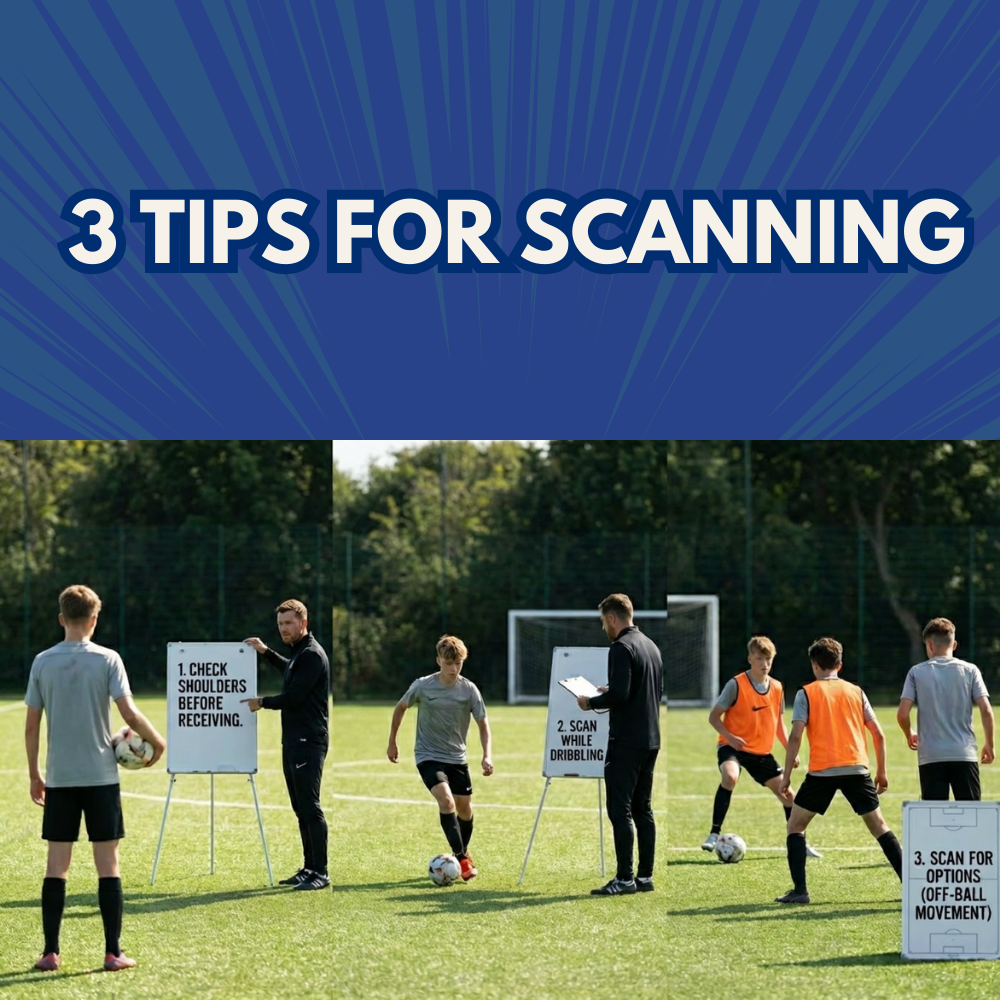
Mastering the Game: 3 Essential Practices for Elevating Your Football Scanning IQ
Mastering the Game: 3 Essential Practices for Elevating Your Football Scanning IQ
Did you know the world's most intelligent footballers aren't just naturally gifted? They actively train their eyes and minds to process information at lightning speed. Imagine seeing the next move, the opening pass, or the approaching defender before anyone else. This isn't magic; it's a developed skill, a high-level "scanning IQ" that transforms ordinary players into game-changers. It’s the secret weapon separating good players from truly great ones, enabling split-second decisions that win matches.
The Undeniable Power of Scanning IQ in Modern Football
In fast-paced football, gathering and interpreting environmental information is paramount, known as "Scanning IQ." It means constantly looking around, quickly assessing teammates, opponents, and the ball, even without possession. This builds a mental map of the pitch, allowing anticipation and optimal decisions under pressure, directly enhancing game intelligence.
Players with high football scanning IQ identify missed opportunities, release perfect passes, and evade pressure proactively. It's about cognitive processing and visual awareness, not just athletic prowess. Improving this skill significantly enhances individual performance, team cohesion, and leads to more successful outcomes. It's the silent force behind every great assist, tackle, and intelligent run.
What Exactly is Football Scanning IQ? Understanding the Core Concept
Football Scanning IQ refers to a player's proficiency in actively observing and processing visual information during a match. This involves quick, repetitive head movements – "checking your shoulders" – to understand the dynamic game landscape. A high Scanning IQ means accurately perceiving teammate locations, opponent movements, available space, and ball trajectory within fractions of a second. This constant information flow directly feeds into optimal decision-making skills.
Why Enhancing Scanning IQ is Non-Negotiable for Aspiring Footballers
The modern game demands tactical intelligence and situational awareness alongside athleticism. Tighter spaces shrink decision-making windows. Inadequate scanning leads to dispossession and missed opportunities. Conversely, a high Scanning IQ allows players to orchestrate play, protect the ball, exploit weaknesses, and contribute to fluid attacking styles. For aspiring footballers, improving scanning is a fundamental requirement to reach full potential.
Practice 1: Mastering the Art of Pre-Scan – Seeing the Pitch Before Receiving the Ball
The first crucial practice for elevating your football scanning IQ is pre-scanning: gathering vital information before you touch the ball. Elite players constantly scan their surroundings in the moments leading up to receiving a pass, forming a mental picture of their next action. This proactive approach ensures speed, precision, and confidence, often surprising opponents and unlocking new attacking possibilities.
The Importance of Constant Head Movement: Look Before You Leap
Constant head movement is the physical manifestation of pre-scanning, regularly checking your shoulders and surroundings, even when the ball is distant. This deliberate, cyclical action – scanning every 2-3 seconds – builds a constantly updated mental map of the game state. Without continuous feedback, your mental map quickly becomes outdated, leading to poor decisions. Regular head scanning becomes a natural reflex, providing crucial awareness of opponents, teammates, and open spaces.
Developing the Habit: Drills for Proactive Information Gathering
Integrating pre-scanning into your game requires specific training. Simple drills are highly effective:
1. The "Look Around" Cone Drill: Dribble through cones. Instruct players to call out a number/color/name held up at the side, before their next touch. This forces head-up scanning while maintaining control. Increase complexity with multiple or moving targets.
2. Shadow Play Scanning: In a small group passing drill, one player without the ball is the "scanner." Their job is to constantly check shoulders and verbally call "man on," "clear," or "space" to the player about to receive. This internalises the habit and awareness. Rotate roles frequently.
3. The "Check & Receive" Game: Play a small-sided game (e.g., 3v3). Before any player receives a pass, they must visually scan their surroundings. Failure to scan results in a turnover. This punitive measure reinforces the habit and enhances player performance by instilling discipline.
Case Study: The Midfield Maestro's Vision
Legendary midfielders, like Xavi or Pirlo, always seem to have time due to superior pre-scanning. Before receiving a pass, their heads were up, surveying the entire pitch, knowing defender and teammate positions and crucial spaces. By ball arrival, they had multiple options planned. This isn't innate; it's a cognitive skill honed through deliberate practice, making them ultimate decision-makers.
Practice 2: Developing Peripheral Vision and Situational Awareness – The Unseen Advantage
While head movement is essential, a high football scanning IQ also uses peripheral vision and comprehensive situational awareness. Peripheral vision perceives objects outside direct sight, offering a holistic game view, while situational awareness synthesises all visual data. This unseen advantage enables players to anticipate, react quicker, and exploit subtle openings, leading to truly smart football.
Training the Eyes: Expanding Your Field of Vision
Developing peripheral vision means processing dynamic information effectively at the edges of your sight, crucial in tight spaces for monitoring multiple threats. While physical visual field expansion is impossible, players can train their brains to interpret peripheral signals more effectively. This involves drills dividing attention between a central focus and peripheral events, enhancing overall football vision.
Practical Drills for Enhanced Peripheral Awareness
Specific training methods significantly improve a player's ability to utilise their peripheral vision and boost overall situational awareness:
1. The "Numbers Game" Drill: Two players pass, with numbered cones slightly out of direct sight on either side. As they pass, they call out numbers seen peripherally, engaging peripheral vision while focusing on the ball.
2. "Head Up" Dribbling & Decision Making: Dribble through a grid with passive/active defenders. Players must use peripheral vision to identify defenders and make quick decisions (pass, change direction, protect ball) without fixating. This links football vision to practical choices.
3. Small-Sided Games with "Awareness Cues": Play small-sided games (e.g., 5v5). If a player receives the ball and identifies an "off-screen" teammate or opponent using peripheral vision, they gain an advantage. This incentivises active peripheral scanning and holistic awareness, including identifying threats or passes two-three steps away.
Insight: The Defensive Midfielder's Radar
A great defensive midfielder operates like a radar, constantly aware of the entire midfield battle, opposition attackers, and forward runs, without fixating on the ball. They use peripheral vision to track multiple players, anticipating passes, danger, or possession wins. This comprehensive situational awareness enables intercepts, covers, and counter-attacks with effortless grace. This game intelligence is developed through training focused on expansive visual perception.
Practice 3: Implementing Game-Realistic Drills – Bridging Practice to Match Performance
The final step for improving football scanning IQ is transferring isolated skills to real match environments. Game-realistic drills bridge this gap, integrating scanning into scenarios mimicking actual play. This ensures scanning becomes an instinctive, unconscious habit, not a forced action, thereby enhancing decision-making under pressure and overall player performance.
Integrating Cognitive Load: Replicating Match Intensity
To truly enhance scanning IQ, training must simulate match cognitive load, adding pressure, fatigue, and multiple decision points. Drills must make scanning necessary for success, involving quick transitions, defensive pressure, and limited ball time. By replicating match intensity, players learn rapid information processing under duress, solidifying their decision-making skills and improving overall football training effectiveness.
Actionable Steps for Match-Specific Scanning Drills
Here are several visual scanning drills that can be incorporated into regular football training to make scanning a natural part of a player's game:
1. The "Traffic Light" Small-Sided Game: Coach holds colored cones: Green (play normally), Yellow (one touch), Red (pass immediately). Players must scan for signals and adjust decisions rapidly, simulating processing multiple information types.
2. Overload/Underload Scenarios: Drills with numerical advantages (e.g., 4v2, then 2v4). Overloaded team uses superior scanning to exploit advantage and maintain possession; underloaded team scans aggressively to close space and win the ball. This trains situational awareness in dynamic scenarios.
3. Transition Games with Gates/Goals: Design games where teams attack small goals but must transition quickly from defense to attack or vice-versa. Players must constantly scan during transitions to identify open teammates, track opposition runs, and switch focus.
4. Blind-Sided Receiving Drills: Players receive passes from behind, forcing them to turn and scan quickly for their next move. This mimics realistic scenarios where immediate midfield survey is needed to find an attacking option.
Expert Insight: The Art of Anticipation and Timing
Ultimately, a high scanning IQ leads to superior anticipation and timing, hallmarks of elite footballers. Consistent scanning allows players to read the game instinctively, anticipating opposition movement, ball trajectory, and advantageous spaces. This isn't just seeing; it's understanding game flow and making predictions. This deeper football training develops cognitive processing, directly impacting a player's ability to influence outcomes, actively shaping the game rather than just reacting.
Frequently Asked Questions About Improving Football Scanning IQ
1. What is the biggest mistake players make regarding scanning in football?
The most common mistake is not scanning enough or scanning too late, often only lifting their heads after receiving the ball. This misses the crucial window for making the best decision. The key is proactive, constant mental mapping before the ball arrives.
2. How often should a football player be scanning during a match?
Elite players typically scan every 2-3 seconds, sometimes more, depending on intensity and position. This equates to 600-800 purposeful head movements per 90-minute match, emphasising consistent, quick, and focused glances.
3. Can scanning ability truly be taught or is it an innate talent?
Absolutely, scanning ability can be taught and significantly improved. While some players may have natural spatial awareness, consistent training, specific drills, and a focus on cognitive development can enhance any player's scanning IQ. It's a trainable skill, not just a talent.
4. At what age should football players start focusing on improving their scanning?
It's never too early. For younger players (U8-U12), it can begin with simple "head up" games. As players progress through teenage years, structured drills and conscious coaching become vital for developing advanced game intelligence.
5. Are there any off-pitch exercises or tools that can help with scanning IQ?
Yes, vision training apps or specialised light boards can improve reaction time and peripheral vision. Activities like juggling with eyes up, or memory games, can aid cognitive processing and visual awareness. However, the most effective training always involves the ball in a game-like environment.
Final Thoughts: Elevating Your Game Through Intelligent Vision
Improving your football scanning IQ is not a quick fix; it's a fundamental shift in how you perceive and interact with the game. By dedicating time to mastering the art of pre-scan, developing comprehensive peripheral vision and situational awareness, and consistently implementing game-realistic drills, you're becoming a smarter player. This journey transforms you from someone who reacts to someone who anticipates, from someone who sees the immediate to someone who understands the unfolding narrative of the pitch. Embrace these three practices to unlock a new dimension in your game, making passes and influencing matches in profound ways. Commit to consistent effort and watch your game intelligence propel your performance to unprecedented heights, painting masterpieces with every touch.

5 Benefits Why You MUST Come to England’s St George’s Park With Us…
With the 2026 FIFA World Cup taking place this year, this is THE perfect opportunity to experience how and where the England players will be preparing to bring football home!
5 Reasons Why You MUST Come to England's St George's Park with Us...
Do you ever wonder what it truly takes to reach peak performance? Imagine a place where champions are forged, where every blade of grass whispers tales of triumph, and where the future of English football is meticulously crafted. What if you could step onto those hallowed grounds, not just as a spectator, but as an active participant? Soaking in an environment designed for excellence, could this experience redefine your approach to success? Join us to discover the unparalleled inspiration and practical insights awaiting you.
What is St George's Park, and Why Does it Matter So Much?
St George's Park, nestled in the heart of the English countryside in Burton-upon-Trent, isn't just a football facility; it's the official home of English football and the National Football Centre. This sprawling, state-of-the-art complex is the training base for all 28 England national teams, from senior men's and women's squads to youth development teams, fostering future talent and elevating coaching standards.
More than just pitches and gyms, St George's Park embodies a vision: to create a world-class environment for elite performance, coaching education, and sports science. Since its official opening in 2012, it has become a beacon of inspiration, symbolizing the Football Association's (FA) commitment to excellence and innovation. It's a living, breathing testament to the power of investment in infrastructure and expertise, transforming the landscape of English football.
For small business owners and non-technical readers, the principles at play here translate directly. Imagine a dedicated hub for your industry where best practices are honed, innovative strategies developed, and every resource geared towards achieving the highest standards. That's what St George's Park is for football, and understanding its operational philosophy can provide profound insights into fostering a culture of excellence within your own organization and for business growth.
The Unrivaled Benefits: Why You Must Visit St George's Park with Us
Visiting St George's Park is an extraordinary experience in itself, but joining us transforms it into a truly immersive and unforgettable journey. We don't just take you there; we guide you through the heart of this incredible institution, ensuring you gain maximum insight and inspiration. Here are five compelling reasons why you absolutely must come to England's St George's Park with us:
1. Experience World-Class Facilities and Training Excellence
Imagine stepping onto a pristine pitch, precisely identical to the one Wembley Stadium boasts. St George's Park features 13 outdoor pitches, including a replica Wembley surface, elite indoor 3G and Futsal pitches, and a dedicated goalkeeper training area. Beyond the playing fields, the site boasts cutting-edge sports science and medical facilities, including hydrotherapy suites and performance analysis laboratories.
When you visit with us, you won't just see these facilities from a distance. We arrange exclusive access and insights, allowing you to walk through the very spaces where England's heroes train. You'll gain a tangible understanding of what true elite training demands, from the precision of the pitches to the sophisticated recovery methods. For a small business owner, this means observing a meticulously designed operational environment, understanding how every detail contributes to a singular goal: peak performance.
Our guided tour ensures you don't miss the subtle nuances, the architectural choices, and the technological integrations that make these facilities truly world-class. You'll witness firsthand the relentless pursuit of perfection that underpins every aspect of St George's Park, providing a powerful perspective on how to set and achieve high standards within your own ventures. This tour offers invaluable leadership insights.
2. Immerse in the Heart of English Football Heritage
St George's Park isn't just a training ground; it's a living monument to the rich history and vibrant future of English football. It's where the Football Association (FA) centrally manages its development programs and where the dreams of aspiring players and coaches converge. When you come with us, you're not just visiting a place; you're stepping into the very soul of English football.
Imagine walking the same corridors as Gareth Southgate, Sarina Wiegman, Harry Kane, or Leah Williamson. Picture the strategic meetings held in its conference rooms, the tactical blueprints drawn in its analysis suites, and the moments of camaraderie shared by national team players. The atmosphere is charged with ambition, dedication, and the collective spirit of a nation united by its love for the beautiful game.
This immersion offers more than just fan excitement. For an entrepreneur or team leader, witnessing this heritage in action provides a powerful lesson in brand legacy, organizational vision, and the enduring power of a shared national identity. It’s about understanding how a rich history can inspire future success and how a clear vision can unite diverse talents towards a common goal. This deep dive into football's cultural significance offers unique insights into fostering passion and loyalty within any team or community.
3. Unlock Elite Coaching Insights and Development Opportunities
St George's Park is the epicentre of football coaching education in England, home to FA Education and a hub for advanced coaching qualifications and workshops. While you might not be attending a formal UEFA Pro License course, visiting with us offers an unparalleled opportunity to glean insights from this world-renowned coaching environment.
We facilitate behind-the-scenes glimpses into how coaching methodologies are developed, implemented, and refined at the highest level. You'll gain an appreciation for the scientific approach to player development, the psychological aspects of team building, and the tactical innovations that keep English football competitive on the global stage. Our experts provide simplified explanations and highlight key takeaways, making complex coaching principles accessible and relatable.
For small business owners and leaders, this translates directly into actionable lessons in effective team management, talent nurturing, and strategic development. Observing how elite coaches identify potential, cultivate skills, and foster a winning mentality can provide invaluable frameworks for developing your staff and achieving your business objectives. It's an immersive masterclass in leadership, communication, and performance management, all within the dynamic context of professional sport.
4. Forge Powerful Connections and Elevate Team Dynamics
St George's Park is a melting pot of individuals united by their passion for football and excellence. It regularly hosts national and international teams, coaching conferences, and corporate events, creating a unique environment for networking and collaboration. Joining us opens doors to these vibrant interactions and enhances your ability to connect with like-minded individuals.
Whether you're a coach seeking to expand your professional network, a business owner looking for inspiration, or a team leader aiming to build stronger bonds within your staff, our curated experience fosters these opportunities. We design elements of our visit to encourage interaction, discussion, and shared learning among our group, creating a supportive community of enthusiasts and professionals for unparalleled team building.
Furthermore, St George's Park offers an exceptional backdrop for corporate team building and leadership retreats. Imagine running team challenges on world-class pitches, holding strategic planning sessions in inspiring environments, or participating in bespoke workshops focused on communication and collaboration. The sheer prestige and purpose-driven atmosphere of the park naturally elevates any team-building exercise, leaving participants feeling inspired and more cohesive.
5. Ignite Inspiration and Fuel Ambition for Future Success
Beyond the facilities and the football, St George's Park is a place of profound inspiration. It's a testament to what can be achieved with vision, dedication, and relentless pursuit of excellence. For anyone, regardless of age or profession, stepping into this environment can be a deeply motivating experience, sparking new ideas and fueling ambitions.
Visiting with us ensures you not only observe but also internalize the ethos of this remarkable place. We highlight the stories of perseverance, the commitment to innovation, and the shared vision that drives every aspect of St George's Park. For young athletes, it’s a glimpse into the pinnacle of their sport, showing them a clear path to achieving their dreams. For business owners, it’s a powerful reminder that with the right infrastructure, strategy, and team, even the loftiest goals are attainable.
The lessons learned here extend far beyond the football pitch. They are about creating a culture of continuous improvement, fostering resilience, and understanding the importance of meticulous preparation. Coming with us means you'll leave not just with memories, but with a renewed sense of purpose and practical takeaways you can apply to your own personal and professional life. It’s an investment in your own future success, drawing energy and wisdom from the heart of sporting excellence.
Frequently Asked Questions About St George's Park
Here are some common questions prospective visitors often have about St George's Park:
Q: What exactly is St George's Park? A: St George's Park is the official National Football Centre and training base for all of England's 28 national football teams. It features world-class training pitches, sports science facilities, and is a hub for coaching education, all dedicated to developing English football talent and elite performance.
Q: Can anyone visit St George's Park, or is it only for professional teams? A: While it is primarily a professional training facility, certain areas and events are accessible to the public. Visiting with a dedicated tour operator like us allows for a more comprehensive and guided experience, often including behind-the-scenes access not available to casual visitors.
Q: What kind of training or educational opportunities are available at St George's Park? A: St George's Park is home to FA Education, offering a wide range of coaching courses from grassroots to elite levels. For visitors not attending formal courses, our guided tours provide insights into these coaching philosophies and the high-performance environment, enhancing leadership insights.
Q: Is St George's Park suitable for corporate events or team building activities for businesses? A: Absolutely. Its world-class football facilities, inspiring atmosphere, and expert-led programs make it an ideal location for corporate team building, leadership training, and strategic planning retreats. The environment naturally fosters collaboration and high performance, promoting business growth.
Q: What makes visiting St George's Park with "Us" special compared to visiting independently? A: Visiting with us provides a curated, in-depth experience. We offer expert guidance, exclusive insights, and often facilitate unique access and networking opportunities that are not typically available to individual visitors. We handle all logistics, ensuring a seamless and enriching journey focused on maximizing your learning and inspiration from this National Football Centre.
Your Journey to Greatness Begins Here
St George's Park is more than just a destination; it's an experience that can redefine your understanding of excellence. It will inspire your ambitions and equip you with invaluable insights applicable to any field. Whether you're a football enthusiast, a dedicated coach, a small business owner, or a team leader, the lessons and inspiration awaiting you are truly transformative. Don't just read about greatness; come and immerse yourself in it. Reach out to us today to secure your place on an unforgettable expedition to the heart of English football.

How to Manage the Bench 'Fairly' in Grassroots Football: A Coach's Guide to Equitable Playtime and Player Development
How to Manage the Bench 'Fairly' in Grassroots Football: A Coach's Guide to Equitable Playtime and Player Development
Does the thought of managing substitutions fill you with dread? Are you constantly navigating the delicate balance between winning games and ensuring every young player feels valued? In grassroots football, where development often outweighs immediate results, the "bench" can become a source of anxiety, frustration, or even conflict if not handled with care and intention. But what if there was a way to manage playing time that not only felt fair to everyone involved but also actively fostered skill, resilience, and a deeper love for the game?
The Heart of Grassroots Football: What Fair Bench Management Truly Means
Grassroots football is the foundational layer of the sport, where young athletes learn the joy of playing, develop fundamental skills, and build character. It's about participation, personal growth, and creating a positive experience that keeps children engaged. Central to this mission is bench management and ensuring equitable playtime for all participants.
Understanding the 'What': Why Fair Bench Management Matters
Fair bench management in youth football isn't just about splitting minutes equally. It’s a comprehensive approach prioritizing every child's development, sense of belonging, and overall enjoyment. Every player, regardless of current skill, deserves opportunities to learn, improve, and contribute on the field.
Imagine a dedicated young defender who consistently sits on the bench. Their motivation will dwindle, questioning their value to the team and the sport. This isn't just a personal setback; it's a loss for the team and the broader football community.
The 'Why': More Than Just Game Time – Building Character and Skill
The decision of who plays profoundly impacts a player's journey. Fair and thoughtful player rotation is a powerful tool for player development, fostering crucial life skills and a lifelong passion for football. Consistent playtime builds confidence, encouraging players to take risks and try new moves.
When every child gets meaningful time on the pitch, they gain invaluable experience. They learn to make decisions under pressure, adapt to game situations, and understand their team role. This holistic growth cultivates resilient individuals who understand the value of team morale and collective effort.
Building Your Fair Play Philosophy: Principles for Equitable Player Rotation
Successful bench management in grassroots football isn't arbitrary; it stems from a well-defined philosophy. Coaches must intentionally build a framework that guides their decisions, ensuring consistency and transparency. This philosophy should be rooted in development, inclusion, and enjoyment.
Developing a Clear Bench Management Policy
Establishing a clear, written policy regarding playing time is the first step towards fairness. This isn't about rigid rules, but guidelines everyone understands. A robust policy should outline how playing time will be allocated, considering factors like attendance, effort, attitude, and developmental stage.
For younger age groups (e.g., U6-U10), emphasize near-equal playing time. As players get older and move into competitive tiers, the policy might introduce meritocratic elements, but always with a strong developmental component.
Communication is Key: Setting Expectations Early and Often
Even the most perfectly crafted policy is useless if not communicated effectively. From the first team meeting, coaches should clearly articulate their bench management philosophy to both players and parents. Emphasize the focus on player development and team cohesion over winning.
This proactive communication can preempt many potential issues and build trust. Regular check-ins throughout the season are vital. Transparency is your greatest ally in building understanding around playing time decisions.
Balancing Development with Competition: The Dual Challenge
One of the trickiest aspects of grassroots football coaching is finding the equilibrium between developing individual skills and competing effectively. While development should always be the priority, completely ignoring competition isn't realistic or beneficial.
The key is to manage the bench so all players experience both. This means being strategic with substitutions. The overarching goal is for every child to feel challenged, supported, and to understand their valuable contribution.
Practical Strategies for Effective and Fair Bench Rotation
Once a clear philosophy is established, coaches need actionable strategies to put their fair bench management principles into practice. These techniques ensure equitable playtime while maximizing player development and maintaining high team morale.
Implementing a Rotational Playtime System
A structured approach to player rotation removes guesswork and promotes transparency.
Fixed Quarter/Half Rotation: For younger ages, this is often simplest. Every player plays at least one full quarter or half, ensuring significant game time. Coaches can rotate players in different positions during these segments.
Match-Specific Rotation: As players mature, a more dynamic approach can be introduced. This involves planning rotations before the game, considering opponent strength, fatigue, and individual developmental goals. Using a simple spreadsheet helps coaches track playing time, ensuring no player consistently gets less time over a season. This also serves as a tangible record for accountability.
Player Grouping and Positional Flexibility
Instead of a "starting 11" and "substitutes," coaches can consider players in groups. This allows for more fluid rotation and ensures all players gain experience in different roles. Encouraging positional flexibility is key. This enhances players' understanding of the game and their versatility.
Utilizing Training Sessions for Skill Development
Game day is only part of the development process; training sessions are where the bulk of skill development happens. Coaches should design practices to be inclusive and challenging for all players. Players who might receive less game time should get extra attention and specific drills to work on weaknesses.
This reinforces that their development is paramount and hard work in training translates to future opportunities on the pitch. It prevents players from feeling marginalized.
Managing Game Day Substitutions Strategically and Ethically
Game day substitutions require both strategy and empathy. Coaches should make changes with a clear purpose, whether for tactical reasons, fresh legs, or to ensure promised playing time. Communicate these changes clearly to the players involved.
Avoid last-minute, rushed substitutions. Plan ahead so players remain engaged. The goal is to make every player feel valued, prepared, and excited for their opportunity. Never use substitutions as punishment; discussions about behavior belong off the field.
Overcoming Common Bench Management Challenges
Even with the best intentions and strategies, coaches in grassroots football will face challenges when it comes to managing the bench fairly. Addressing these issues proactively and empathetically is crucial for a positive team environment and player retention.
Addressing Parental Concerns and Expectations
Parents are passionate about their children in sports; this can lead to concerns about playing time. Coaches should view these concerns as opportunities for education and communication. Reiterate the team’s player development philosophy and explain how the bench management policy benefits all players long-term.
Provide examples of how players are growing through varied game experiences. Suggest ways parents can support their child's development off the field, reinforcing that contributions extend beyond minutes played.
Motivating Benched Players and Maintaining Team Morale
Keeping players engaged and motivated when not on the pitch is a key coaching skill. The bench should never feel like punishment. Coaches can involve substitutes by asking them to observe play, identify patterns, or suggest adjustments.
They can be tasked with cheering, retrieving balls, or providing water. Recognizing and praising their contributions, whether from the sideline or a brief cameo, significantly boosts team morale.
Dealing with Unfairness Perceptions: Transparency and Consistency
Perceptions of unfairness quickly erode team cohesion. When players or parents believe playing time decisions are arbitrary or biased, it creates resentment. The best defense is absolute transparency and consistency. Stick to your stated bench management policy.
If an exception is made, be prepared to explain why, clearly and logically. Avoid favoritism, even if unconscious. Treat every player with the same respect and provide equal opportunities to learn and contribute.
The Role of Assistant Coaches in Bench Management
Assistant coaches are invaluable assets in bench management. They can help track playing time, warm up substitutes, keep benched players engaged, and communicate upcoming changes. Delegating these responsibilities ensures no player is overlooked and transitions are smooth.
Empowering assistant coaches to engage with substitutes, offer specific feedback, or run small warm-up drills makes benched players feel more involved and prepared. This shared responsibility benefits the entire team.
The Long-Term Impact: Cultivating a Positive Football Culture
Effective and fair bench management in grassroots football has ripple effects that extend far beyond a single game. It lays the groundwork for a robust and positive sporting environment, shaping young athletes both on and off the pitch. The ultimate goal is to build a lasting and beneficial football culture.
Fostering Team Cohesion and Mutual Respect
When every player feels valued and knows they will get their chance, it fosters strong team cohesion. Instead of internal competition over minutes, players learn to support each other and celebrate successes. They develop mutual respect, understanding that everyone contributes to the team's goals.
This environment reduces jealousy and encourages camaraderie. True cohesion is seen when a starting player is just as enthusiastic about a substitute's goal as their own, built on fair play and shared effort.
Developing Resilient and Passionate Young Athletes
Learning to handle being on the bench, waiting for an opportunity, and then performing, is a crucial life lesson in resilience. Children learn patience, perseverance, and emotional management. They understand hard work and a positive attitude lead to rewards.
When players feel supported and given fair chances, their passion for the game deepens. This intrinsic motivation keeps children involved in sports long-term, contributing to their physical and mental well-being.
Measuring Success Beyond the Scoreboard: Player Growth
In grassroots football, success should not be solely measured by wins or goals. A more meaningful metric is player growth. Are individual players improving skills and confidence? Do they understand the game better and enjoy themselves? These are the questions coaches should be asking.
By prioritizing fair bench management and equitable playtime, coaches significantly contribute to these developmental outcomes. This broader definition of success ensures focus remains on holistic development, rather than chasing short-term results.
Frequently Asked Questions (FAQs) About Bench Management
Coaches, parents, and players often have common questions regarding fair playing time in grassroots football. Here are some answers to provide clarity and guidance.
How Do I Explain My Bench Policy to Parents Effectively?
Hold an initial team meeting to discuss your bench management philosophy, emphasizing player development. Provide a written summary and be open to questions. Reiterate that consistent attendance and a positive attitude are key factors.
What If a Player Consistently Underperforms? How Do I Handle Their Playtime?
Underperformance is a coaching opportunity. Work individually with the player in training, providing constructive feedback and drills. Ensure they still receive meaningful minutes, framing it as a journey of growth, not exclusion.
Is It Ever Okay to Play a Stronger Player More Than Others?
In true grassroots football (especially U6-U12), emphasis should lean heavily towards equitable playtime. If a stronger player gets more time in competitive older leagues, it should be transparent, with a clear developmental rationale, and ensure all others still meet minimum playtime requirements.
How Can I Keep Substitutes Engaged During a Game?
Assign specific tasks, like observing opponents or tracking movements. Encourage positive cheering. Have an assistant coach run small warm-up drills to keep them ready. Engage them in tactical discussions, acknowledging their presence and contribution.
What’s the Best Way to Introduce a New Player to the Team's Rotation Strategy?
Provide new players and their parents with your bench management policy immediately. Explain the team's philosophy of fair play and player development. Integrate them gradually, ensuring they understand their role and opportunities.
Final Whistle: Building a Fair and Flourishing Grassroots Team
Empowering Every Young Footballer to Thrive
Managing the bench fairly in grassroots football is one of the most challenging yet rewarding aspects of coaching. It demands thoughtful planning, transparent communication, and an unwavering commitment to the holistic development of every young athlete. It’s about consistently applying a philosophy rooted in fair play, equitable playtime, and a genuine desire to foster a lifelong love for the beautiful game.
When coaches prioritise individual growth, communicate openly, and implement fair player rotation strategies, the results are profound. Teams built on these principles develop stronger bonds, deeper respect, and greater resilience, with victories extending beyond the scoreline. Embrace the challenge of fair bench management. Define your policy, communicate it consistently, and always put your young footballers' development first to cultivate a positive football culture that empowers every child to thrive in youth football.
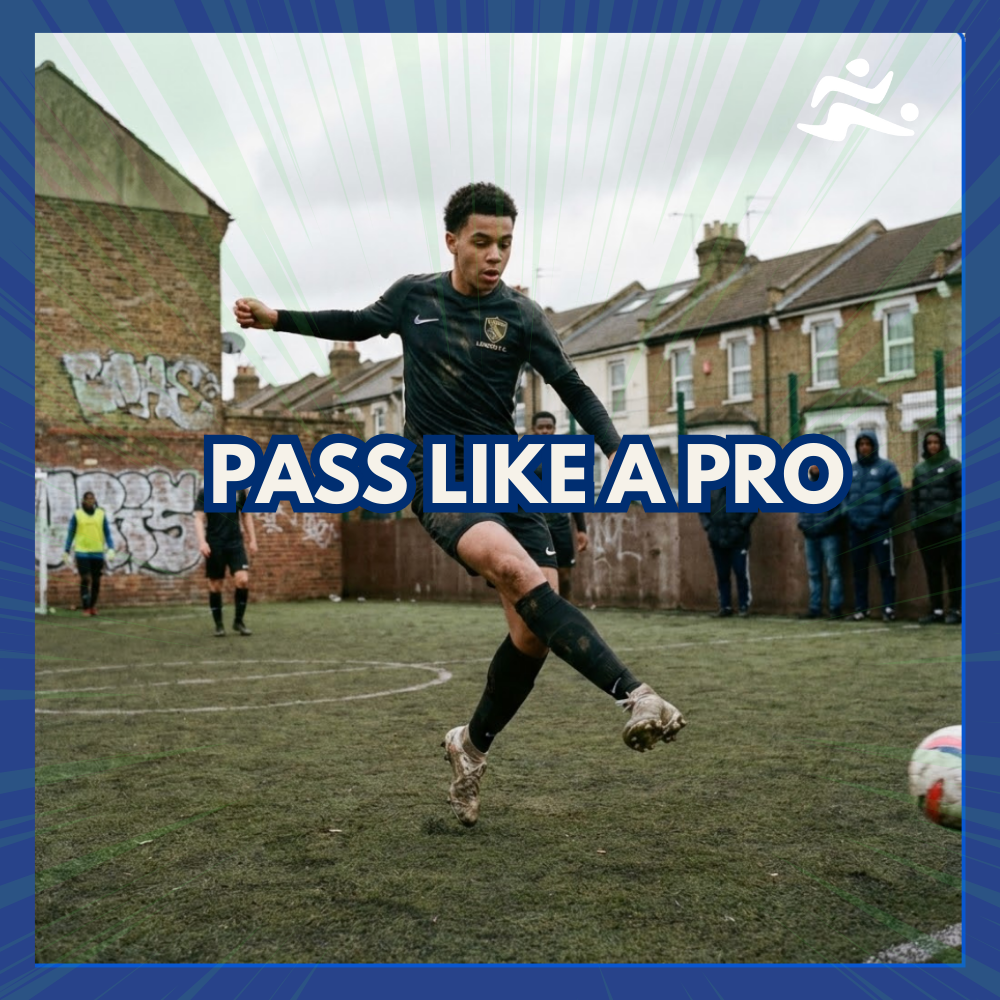
Unlocking the Beautiful Game: Mastering the Coolest Passing Tricks in Football
Has a perfectly weighted pass ever left you breathless, dissecting an entire defense in one sublime motion? Did you know that over 70% of goals in professional football originate from a sequence of three or more passes? Imagine the sheer power of not just moving the ball, but dictating play, creating impossible angles, and leaving opponents bewildered. This isn't just about kicking; it's about artistry, vision, and the kind of magic that transforms a simple game into a dazzling spectacle.
Welcome to the captivating world of advanced football passing, where skill meets strategy to redefine how the game is played. For any aspiring player, coach, or even just an avid fan, understanding these intricate passing tricks offers a deeper appreciation of football's tactical genius and individual brilliance. This comprehensive guide will take you through the 'what' and 'why' of the most captivating passing techniques, offering insights into how these moves are executed and, crucially, how they elevate team performance and individual flair. Get ready to not only learn about these passes but to understand the mindset and practice needed to bring them to your own game.
Understanding the Art of Football Passing: More Than Just Kicking
At its heart, football is a game of possession and movement. While scoring goals is the ultimate objective, the journey to the net is almost always paved by successful passes. These 'coolest passing tricks' aren't just for show; they are sophisticated tools designed to break down rigid defenses, exploit fractions of space, and create scoring opportunities out of seemingly impossible situations.
The Core Philosophy of Effective Ball Distribution
Effective ball distribution isn't merely about connecting passes; it's about controlling the tempo, creating attacking patterns, and disrupting the opponent's defensive shape. Every pass has a purpose, delivered with specific weight and direction to a teammate's advantage. This core philosophy underpinning all advanced passing techniques, where every trick is a calculated risk designed for maximum reward.
Why Precision Passing Redefines Team Play and Offensive Threat
Precision passing elevates a team from good to great. When passes are consistently accurate, well-weighted, and delivered with vision, it builds confidence, fosters fluid movement, and transforms individual players into a cohesive unit. Such pinpoint delivery not only creates direct scoring chances but also forces opponents to spread out, opening more space for attackers, making a team incredibly difficult to defend against.
Mastering the Fundamentals Before Daring the Dazzling Passes
Before attempting audacious no-look passes or elegant backheels, a strong foundation in basic passing is essential. The 'coolest' tricks are merely advanced applications of fundamental principles: proper body positioning, strike technique, and an acute understanding of timing and weight. Without these building blocks, any trick pass will likely result in a misplaced ball and a lost opportunity.
Essential Techniques for Building a Strong Passing Foundation
To lay a solid foundation, focus on these critical elements:
1. Body Shape and Balance: Always position your body correctly, facing your target with your non-kicking foot beside the ball. Maintain balance throughout the kicking motion for accuracy.
2. Foot Contact: Use the inside of your foot for accuracy and control, and the instep for power on longer passes. Practice hitting the ball consistently in its center for ground passes, or slightly underneath for loft.
3. Weight of Pass: Deliver the pass with just the right amount of pace—not too hard for control, not too soft for interception. This requires thousands of repetitions and constant feedback.
4. Follow Through: After striking the ball, your kicking foot should follow through towards your target. This generates power and directs the ball's trajectory precisely.
5. Communication: Verbal and non-verbal communication with teammates is vital. A simple call or glance informs your receiver, allowing them to anticipate and react effectively. A good passer is always talking and observing.
Developing Vision and Spatial Awareness for Superior Play
Beyond technical mechanics, influential passers possess exceptional vision and spatial awareness. This means seeing the entire pitch: teammates' runs, defenders' positions, and opening or closing pockets of space. It's about being two or three steps ahead.
Peripheral vision is critical. Practice scanning the pitch before receiving the ball, building a mental picture of changing dynamics. This 'head up' approach allows for quick, informed decisions. Anticipation, predicting where players will be, enhances this. Developing heightened awareness comes from constant practice, game experience, and analysing how top players read the game.
Unlocking the Arsenal: Iconic Passing Tricks Every Player Should Know
With the groundwork firm, let's explore exciting football passing tricks. These are strategic weapons adding deception, speed, and creativity, designed to overcome defensive challenges or exploit momentary lapses in concentration. Each serves a unique purpose in advanced passing techniques.
The Mesmerising Through Ball: Slicing Through Defensive Lines
The through ball is arguably the most impactful pass, played into space behind the defensive line for an attacking teammate to run onto, often leading to a one-on-one. Its beauty lies in timing and weight—too early/hard, goalkeeper; too late/soft, defender. It requires exquisite vision and precision. Lionel Messi is a virtuoso, finding non-existent angles.
Actionable Tip: Practice playing the ball just beyond the last defender, aiming for your teammate's path rather than directly at their feet. Focus on timing relative to their sprint.
The Elegant Backheel Pass: Surprise and Deception on the Pitch
The backheel pass is a fantastic tool for surprising opponents and maintaining momentum in tight spaces, especially when facing away from your target. It's about deception—defenders rarely expect the ball to go opposite to the player's body movement. Often used in crowded penalty areas or along the touchline, a well-executed backheel creates vital space, leaving defenders flat-footed.
Relatable Example: A striker receiving a ball with their back to goal, then subtly flicking it back into the path of an onrushing midfielder for a shot. Ronaldinho famously showcased its flair and effectiveness.
The Audacious Rabona Pass: Style Meets Substance in Tricky Situations
The rabona is visually spectacular, involving wrapping one leg behind the standing leg to strike the ball. Typically used when a player needs to cross or pass with their stronger foot but the ball is on their weaker foot side, or for showmanship. It can maintain dangerous attacking positions or create unexpected crosses, requiring immense coordination, balance, and confidence.
Insight: While flashy, a rabona is strategically useful when a player is off-balance or needs to quickly change the angle of attack without much body adjustment, for instance, a right-footed cross from the left wing.
The Enigmatic No-Look Pass: The Ultimate Illusion of Intent
The no-look pass is a masterclass in deception. The passer feigns intent by looking one way while passing the ball in another, entirely different direction. This relies on misleading opponents with body language and eye contact, freezing defenders and opening crucial passing lanes. It demands exceptional peripheral vision and pinpoint accuracy. Ronaldinho and Paul Pogba have mastered this magic.
Expert-level Explanation: Its effectiveness manipulates a defender's predictive algorithms. By creating a false read, the defender commits to a trajectory the ball never takes, giving the receiver a critical extra second of space and time.
The Incisive Chip Pass: Lifting the Ball Over Impending Obstacles
A chip pass involves striking the ball underneath with an open foot, causing it to ascend quickly and drop sharply, usually over an opponent or into a small space. It bypasses low defenses, sends the ball over a defender's head, or chips a shot. Key elements are perfect height and spin for precise drop, requiring finesse and a delicate touch.
The Weighty Lob Pass: Delivering the Ball with Perfect Trajectory
Similar to the chip but for longer distances, the lob pass sends the ball high with a controlled trajectory. Used to switch play, bypass multiple defensive lines, or clear danger. The 'weight' is paramount: powerful enough to reach, soft enough to control. A well-executed lob changes game dynamics, opening vast areas for attack.
The Strategic Genius Behind Advanced Passing Techniques
These football passing tricks are strategic decisions made instantly, exploiting tactical vulnerabilities and controlling game flow. Understanding the 'why' is as important as the 'how' for maximising their impact on offensive threat and team play.
Reading the Game: Anticipating Opponent Movements and Exploiting Weaknesses
Great passers read the game, anticipating both teammates' and opponents' movements. This involves scanning the pitch, processing defensive lines, marking, and team shape. A skillful passer exploits a defender's imbalance or lapse with a trick pass, like a no-look pass targeting a channel when a defender commits elsewhere.
Creating Space: How Clever Passing Draws Defenders Out of Position
Football thrives on creating and exploiting space. Trick passes are excellent tools for this. An unexpected pass can draw defenders from their zones, opening channels for teammates. A backheel in a tight area, for instance, can shift several defenders' focus, creating acres of space for a teammate. It disrupts defensive structures, forcing reactions, and opening the pitch.
The Power of Misdirection: Using Tricks to Control the Flow of Play
Misdirection is potent, and trick passes are its ultimate expression. Deceiving opponents about a pass's direction or recipient controls game tempo. This can slow a press, speed an attack, or buy critical seconds. Surprise forces defenders to pause, creating a mental lag attackers capitalise on. This control allows elite teams to dominate possession and dictate terms.
Training Drills to Elevate Your Passing Game to the Next Level
Learning these tricks demands relentless, focused practice. Incorporating specific training drills into your routine builds muscle memory, improves precision, and boosts confidence for executing these advanced passing techniques under pressure. Consistency is key for achieving passing mastery.
Repetition and Precision: Practices for Perfecting Passing Mechanics
1. Cone Passing Practices: Set cones in patterns. Practice different passes (inside foot, instep, chipped) to specific cones, focusing on hitting the target with appropriate weight. Gradually increase distance and complexity.
2. Wall Passing: Pass against a wall, focusing on receiving and immediately returning. This improves first touch, reaction, and quick release needed for trick passes. Experiment with backheels and chips.
3. Passing Gates: Set up small "gates" with cones. Practice passing through these narrow gates from various angles and distances. This hones precision and the ability to thread a pass through tight spaces.
Game-Situational Practices: Applying Tricks Under Pressure
1. Rondo (Piggy in the Middle): Excellent for quick, accurate passing in tight spaces, forcing rapid decision-making. Incorporate no-look passes or quick backheels when space is limited.
2. Small-Sided Games with Constraints: Play 3v2 or 4v3. Add rules like "must pass with a backheel every third pass" or "a goal only counts if scored from a through ball." This encourages trick passes in game contexts.
3. Blind Passing Practices: A player closes eyes briefly before receiving, relying on cues before passing. This develops spatial awareness and vision for no-look passes.
Improving Communication and Timing with Teammates
1. Movement and Pass Practices: In pairs/small groups, one player runs, the other passes into their path. Focus on varying runs and passes. Constant verbal communication ("call for the ball!") is vital.
2. "Follow Your Pass" Practices: After passing, immediately move to a new position, expecting a return pass or opening space. This teaches thinking ahead and fluid attacking patterns, like a backheel then a sprint.
3. Vision Practices: Before receiving, players call out a coach's finger count or identify an open teammate. This forces head-up scanning, enhancing peripheral vision crucial for all advanced passes.
Frequently Asked Questions About Football Passing Tricks
What's the most effective passing trick for beginners?
For beginners, mastering the weighted through ball is incredibly effective and foundational. It teaches crucial elements like vision, timing, and precision, transferable to all advanced passes. Practice passes into space for a teammate to run onto, focusing on power and direction so they don't break stride.
How can I improve my passing vision in a game?
Improve passing vision by consistently practicing scanning the pitch before receiving the ball. Lift your head to observe player positions, opponent movements, and available space. In training, incorporate drills where you identify targets before passing. Actively watching professional matches, focusing on top midfielders, also trains your eye.
Are trick passes always practical, or are they just for show?
While some, like the Rabona, have showmanship, trick passes are generally highly practical tools for specific situations. They create surprise, overcome pressure, or use a player's stronger foot when awkward. The key is knowing when to deploy them strategically, not just for flair. When effective, they are game-changing.
What's the difference between a through ball and a lob pass?
A through ball is a ground or low pass into space behind the defensive line for a run, aiming to penetrate directly. A lob pass sends the ball high with controlled trajectory, bypassing multiple lines, switching play, or clearing. Both move the ball past defenders, but through ball emphasizes ground penetration, and lob pass emphasizes aerial clearance and redirection.
How much practice is needed to master these passing tricks?
Mastering these passing tricks requires thousands of repetitions and dedicated practice over an extended period. It's about consistent execution under varying game conditions and pressure. Regular training sessions focused on specific practices, combined with small-sided games, are essential. Patience, perseverance, and learning from mistakes are key; mastery is a gradual process.
Final Thoughts: Elevating Your Game Through Passing Mastery
The journey to mastering the coolest football passing tricks is a rewarding one, transforming a player into an artist of the beautiful game. These advanced passing techniques enhance team cohesion, unlock stubborn defenses, and provide moments of magic. Each trick is a testament to the blend of skill, vision, and audacity that propels the game forward.
True passing mastery begins with a solid foundation in fundamentals, built through endless repetition. The strategic application—knowing when and why to deploy them—becomes paramount, reading the game and using misdirection. So, step onto the pitch with purpose. Observe masters, dedicate yourself to consistent practice, and embrace elevating your game.
Incorporate these insights and training drills today, and you'll not only enhance your performance but also contribute to a more captivating and dynamic style of play for your entire team. The power to dictate the game, one incredible pass at a time, is now within your reach. Unleash your full potential and become a master of the beautiful game!
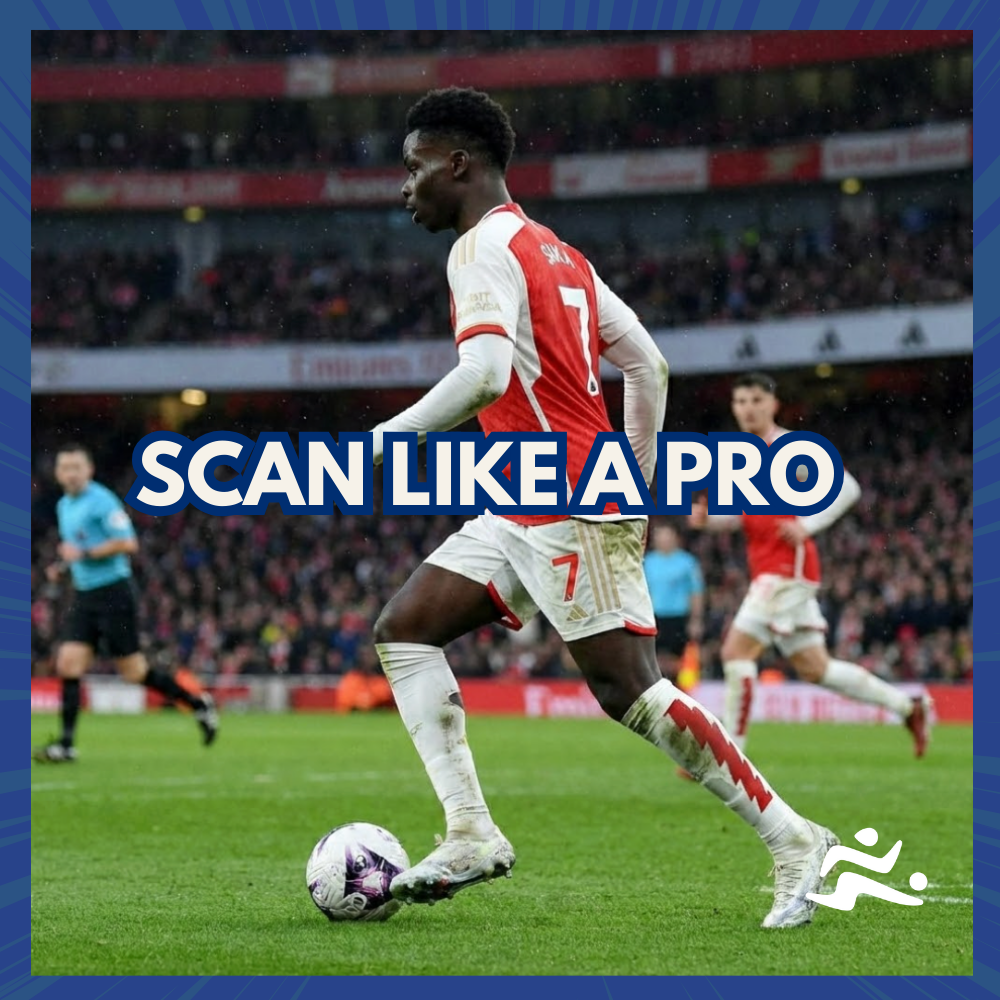
How to Scan Like a Pro in Your Football Match
How to Scan Like De Bruyne in Your Football Match
Imagine seeing the entire pitch unfold before you, anticipating plays, and finding teammates in acres of space that no one else spotted. What if you could receive the ball knowing exactly your next two or three moves, making every touch count? Top professional footballers are not just physically gifted; they possess an extraordinary mental edge. This edge often comes down to one crucial, yet often overlooked skill: scanning. If you want to elevate your game from good to genuinely impactful, mastering the art of scanning is your secret weapon.
Understanding the De Bruyne Effect: What is Scanning in Football?
At its core, scanning in football is looking around your surroundings on the pitch, primarily over your shoulders, before and after receiving the ball. It’s about constantly gathering visual information: teammates, opponents, and available space. Kevin De Bruyne, the midfield maestro, epitomises this skill; his impossible passes are a direct result of relentless, effective scanning.
This concept is vital for anyone looking to improve. It’s not just looking up; it’s purposeful observation. This constant data input allows quicker, more informed decisions, drastically increasing effectiveness on the ball and off-ball awareness.
Why Mastering Scanning Transforms Your Game
Mastering scanning is compelling, especially for players who struggle with decision-making under pressure. Strong scanning habits unlock key advantages that fundamentally change your performance.
Firstly, improved decision-making is significant. Scanning provides context for the right choice: pass, dribble, or protect the ball. It empowers choosing the best option.
Secondly, scanning enhances spatial awareness. You become familiar with open space for yourself and teammates. De Bruyne finds pockets of space even when marked, knowing where defenders aren't.
Thirdly, it impacts passing accuracy and range. Knowing your target's position, body orientation, and marking allows a more precise pass.
Finally, scanning is crucial for player safety and ball retention. Aware of pressure, you can shield the ball, turn from danger, or play a quick one-touch pass. This reduces turnovers and maintains possession.
The Science Behind De Bruyne's Vision: How Elite Players Scan
Scanning like De Bruyne involves perception, attention, and memory. Elite footballers perform many head turns, but it's the quality and timing that truly matter.
Top players scan more effectively in "critical moments," such as before receiving or during transitions. Their scanning is goal-directed, seeking specific information: closing defenders, teammate runs, open space.
De Bruyne's genius lies in rapid information processing and execution under pressure. His brain developed incredible pattern recognition, quickly identifying formations, weaknesses, and opportunities, making him seem a step ahead.
Elite scanners also use peripheral vision effectively. While eyes focus on a specific area, their brains process visual field edges. This broad awareness contributes to exceptional tactical understanding.
Building Your Scanning Habit: Practical Drills and Exercises
Transforming scanning into an ingrained habit requires deliberate practice. Consistent effort will significantly improve your pitch awareness and decision-making.
1. The "Head Check" Drill: In passing drills, check both shoulders before the ball reaches you. Actively identify something. One last quick scan as the ball approaches. Repeat every time.
2. The "Number Game" Rondo: In a rondo, place numbered cones. Before receiving, players scan and shout out a visible number. This forces active, specific scanning while maintaining possession.
3. Vision Cones/Flags: During dribbling or passing, place colored cones. Coach calls a color; glance at it before your next action. Improves peripheral vision and quick information processing.
4. "Picture This" Practice: In training games, freeze before receiving. Look around, mentally "picture" your next move, then execute. Links scanning with immediate decision-making.
Reading the Game: Anticipating Play Like a Pro
Scanning is vital for anticipating play. De Bruyne often knows what will happen before anyone else, due to pattern recognition and tactical understanding fueled by consistent scanning.
To anticipate, see the game as patterns, not just individuals. If a full-back pushes high, anticipate an overlap. If defenders converge, anticipate an opening.
Key elements for anticipation: Body Language: Observe opponent/teammate orientation for subtle cues. Space Creation: Look for developing spaces as players move in/out of position. Ball Trajectory: Scan while the ball is in the air to gather info on landing and options. Team Shape: Assess your team's and opponent's tactical setup. This macro-level understanding helps decisions, enhancing tactical awareness.
Communicating Your Vision: Applying Scanning to Team Play
Scanning's true power is unleashed collectively. De Bruyne creates opportunities through his vision and subsequent communication.
Verbal Communication: Identify space or threats, then use short calls: "Man on!" "Time!" "Turn!" This transmits information, guiding teammates and preventing turnovers. Crucial for team awareness. Non-Verbal Communication: Your body orientation after a scan signals intentions. Opening your body towards an open wing prompts a pass there. Shielding the ball signals support needed. Playing the Right Pass: The ultimate communication is the pass. A perfectly weighted through ball or quick switch, directed by your scan, communicates your vision to the entire team.
Overcoming Common Scanning Obstacles on the Pitch
Implementing scanning consistently presents challenges. Understanding these "potholes" allows you to overcome them.
1. Ball Fixation: Staring at the ball misses crucial info. The fix: Force yourself to lift your head and scan before and after ball release. 2. Physical Fatigue: Fatigue reduces mental sharpness. The fix: Maintain fitness. Practice scanning when tired to build resilience. 3. Pressure and Panic: Intense pressure leads to impulsive reactions. The fix: Practice composure drills under pressure, forcing quick scans to find an escape. 4. Lack of Direction: Scanning without purpose. The fix: Develop a "scan checklist": "Opponent left? Right? Teammate open? Space behind?" 5. Environmental Factors: Poor lighting/crowded pitch makes scanning hard. The fix: Adjust body position for better viewing. Utilise peripheral vision.
Your 7-Day Scanning Transformation Plan
This actionable 7-day plan helps embed scanning into your football habits. Consistency is key!
Day 1: Awareness & Intention: Consciously decide to scan. Perform one head check over your shoulder before every ball received. Day 2: Focused Observation: In passing drills, actively identify one specific thing during your scan (e.g., furthest cone) before the ball arrives. Day 3: Introducing Pressure: In small-sided games, prioritise scanning for "man on" or blind-side defenders. Day 4: Peripheral Vision & Space: During dribbling, use peripheral vision to spot targets. In passing, find the largest open space, enhancing spatial awareness. Day 5: Game Situation Application: In games, actively scan during transitions. Look for furthest attackers or potential through balls. Day 6: Post-Scan Decision Making: Link your scan to your decision. Ask: "What did my scan tell me, and how does it influence this pass?" Day 7: Review & Refine: Reflect. Identify one specific area for next week's improvement. Celebrate improved pitch awareness.
Advanced Scanning Techniques: Beyond the Basics
Once fundamental scanning is habitual, explore advanced techniques that truly set players like De Bruyne apart.
1. Predictive Scanning: Scan for potential threats/opportunities, not just current ones. See two steps ahead based on play flow. 2. "Off-Ball" Scanning Loops: Maintain constant scanning even without possession. Assess defensive positions, pressing traps, or spaces to move into. Critical for off-ball awareness. 3. Information Prioritisation: Instinctively know what information is most critical in a given situation to avoid overload. 4. Deception Scanning: Glance one way to feign intention, then pass the opposite, using information from an earlier, subtle scan. 5. Micro-Scans: Incredibly quick, almost imperceptible glances to confirm info or pick up tiny, crucial details efficiently.
Visual Cues and Decision-Making: Stealing De Bruyne's Playbook
De Bruyne's ability to scan and execute is a masterclass in reading visual cues for high-quality decision-making. Incorporate elements into your game.
1. Defender's Body Orientation: A defender facing their own goal might be unaware of your run (opportunity). A square defender is ready to react (dribbling riskier). 2. Teammate's Signals: Scan for teammates pointing to space or subtle hand signals, building telepathic understanding and team awareness. 3. Gap Recognition: Actively look for "half-spaces" – channels between defenders – that appear when a defender steps out. 4. The "Look Away" Pass: Scan one way to deceive, then execute a pinpoint pass in the opposite direction, using earlier scan info. Requires excellent football vision. 5. Understanding Defensive Shapes: Quickly identify opposition formation (flat back four, high line). This macro-level info dictates your next move, exploiting weaknesses.
Frequently Asked Questions About Scanning in Football
1. How often should I scan during a football match?
Elite players scan very frequently, hundreds of times per game. For midfielders, aim for every 3-5 seconds. Make it a continuous habit, constantly updating your mental map of the pitch. Focus on quality and purpose.
2. Is scanning only for midfielders?
Absolutely not! It's critical for every position. Defenders need it for incoming attackers, strikers for space, wingers for runs. Goalkeepers scan the entire pitch to organise defense and initiate attacks. It’s a universal football skill.
3. What's the difference between scanning and just looking around?
Simply looking around is passive; scanning is active and purposeful. When you scan, you actively search for specific information: opponents, teammates, open space, threats, or opportunities. It involves conscious information gathering for informed decisions.
4. Can scanning improve my passing accuracy?
Yes, significantly! Effective scanning means you know exactly where your target teammate is, their body orientation, and if they have space. This allows you to select the most appropriate pass and deliver it with greater precision, aiding their next action.
5. How long does it take to see improvements in scanning?
You can see noticeable improvements in awareness and decision-making within a few weeks of consistent, deliberate practice. The foundational habit can be built quickly. Committing to a specific plan and reinforcing it will yield faster results.
Final Thoughts
The ability to scan like Kevin De Bruyne isn't an innate talent reserved for a select few. It's a fundamental football skill, honed through deliberate practice and a deep understanding of its impact on the game. By consistently gathering information, you empower yourself to make quicker, smarter decisions, create space, and enhance both your individual performance and your team's collective intelligence. Embrace the drills, be patient, and commit to making scanning a non-negotiable part of your footballing DNA.
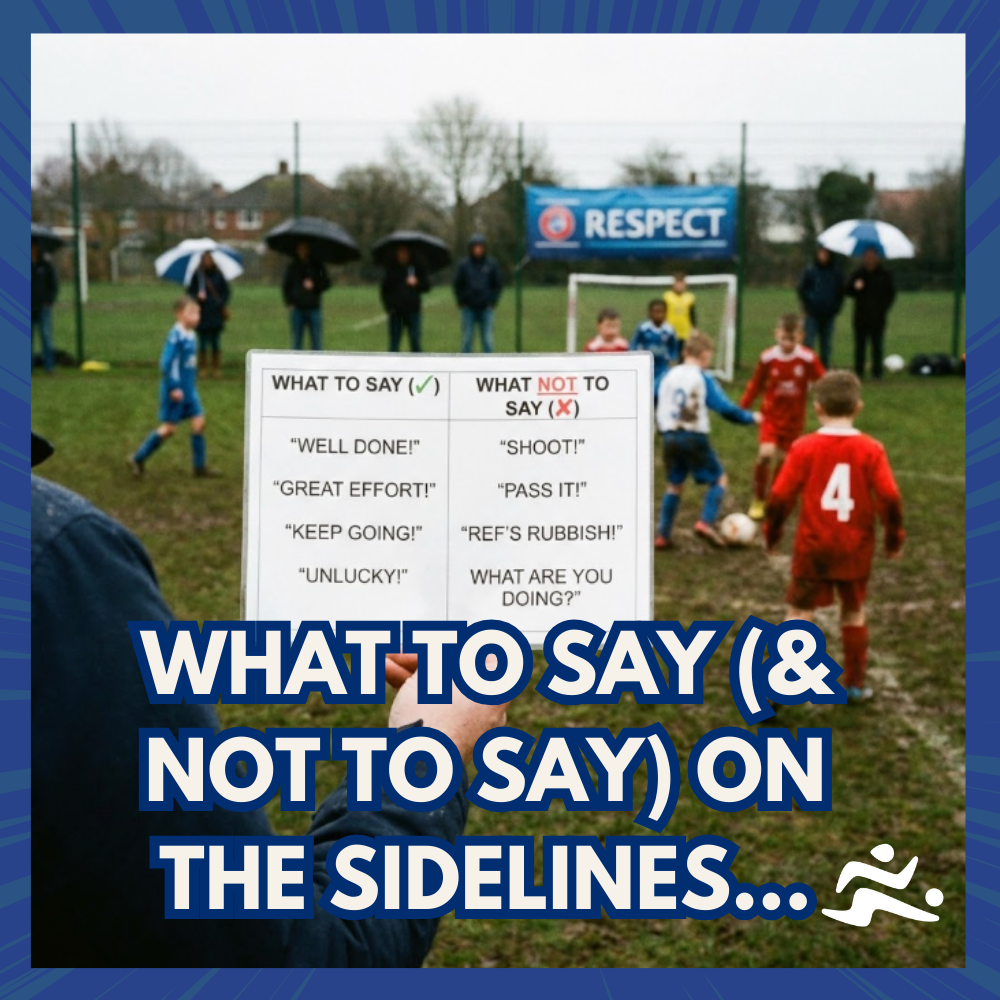
What To Say and Not to Say On The Sidelines of Your Child's Football Match
What To Say and Not to Say On The Sidelines of Your Child's Football Match
Did you know that 70% of children stop playing organised sports by the age of 13? Often, it's not due to a lack of talent or interest, but rather the pressure and negative experiences associated with the game. As parents, our presence on the sidelines is meant to be supportive, yet our words and actions can inadvertently create an environment of anxiety instead of joy. What if every comment you made could either fuel your child's passion or subtly chip away at their love for football? The truth is, your sideline demeanour holds immense power, shaping not just their performance but their entire sporting journey.
For many parents, watching their child play football evokes a mix of pride, excitement, and anxiety. We want them to succeed and enjoy the game, learning valuable life lessons. However, the sidelines of a youth football match can be tricky. Understanding what to say and not to say actively fosters a positive environment, boosting their confidence and enduring love for sports.
This comprehensive guide will unpack the profound impact of parental sideline behaviour, offering practical insights and actionable advice to transform you into the ultimate supporter for your young footballer. We’ll explore the 'what' behind effective communication and delve into the 'why' it truly matters, equipping you with tools for positive, growth-oriented match experiences.
Understanding the Critical Role of Parental Support in Youth Sports
A deep dive into why your presence and words on the sidelines significantly shape your child’s football journey and overall well-being, influencing everything from their confidence to their long-term engagement with the sport.
The Unseen Influence of Parental Presence at Your Child's Games
Parents often underestimate their profound impact on children during competitive football matches. Our children are acutely aware of our presence, seeking approval and comfort. Every cheer, sigh, or shouted instruction from the football sidelines registers powerfully, shaping their confidence. This psychological impact can be a double-edged sword, fostering either immense confidence or immense pressure.
If a young player makes a mistake and hears a frustrated groan, they might fear repeating errors instead of learning. This fear, amplified by parental reactions, stifles creativity and risk-taking vital for player development. Conversely, a supportive cheer for effort teaches resilience. Your parental sideline behaviour constantly shapes their self-perception and relationship with the sport.
Why Your Sideline Demeanour Shapes Their Sporting Future
Your sideline behaviour profoundly impacts your child's sporting future, not just a single game. Research shows children often quit sports due to excessive parental pressure or negative atmospheres. When games become chores rather than fun, children disengage. Your demeanour sets the tone: does it convey that performance defines their worth, or that effort and enjoyment are paramount?
Parents who shout instructions or criticise teach that winning is paramount, breeding fear and resentment. Conversely, calm, encouraging parents focusing on teamwork and sportsmanship foster a healthy perspective on competition. Children learn resilience and that playing joy outweighs the score, cultivating a lifelong love for sports.
The Golden Rules of Positive Sideline Communication for Parents
Establishing fundamental principles that foster a supportive and encouraging environment for every young player on the field, ensuring that your words contribute positively to their game day experience and long-term love for football.
Embracing the Role of Encourager, Not Critic, from the Spectator Zone
A powerful shift for parents on the youth football sidelines is embracing encouragement over criticism. Your role is an unconditional fan; the coach handles technical instruction. Focus on celebrating effort, highlighting positive actions, and showing enthusiasm. A simple "Great effort!" or "Keep going!" means the world, regardless of the outcome.
Imagine Leo's difficult pass goes out of bounds. Instead of criticism, his father claps, shouting, "Nice try, Leo! Keep your head up!" This small gesture communicates support, reinforcing that trying is valuable. Such positive reinforcement builds a child's self-esteem and courage, encouraging risk-taking and skill development without fear of judgment. Your positive presence becomes their safety net.
Prioritising Effort and Enjoyment Over Outcome and Performance
In youth sports, parents often fixate on scores and statistics, but effort and enjoyment are paramount for young players. Prioritising winning over process creates immense pressure, tying a child's worth to performance. Instead, shift focus to praising observable effort: "You worked so hard today!" or "I loved watching you run!"
Maya's parents critique her performance, while Sofia's focus on her fun and enjoyment. Maya dreads games, weighed by expectation, but Sofia loves football. This comparison highlights how parental focus creates different pathways. Celebrating effort and participation fosters intrinsic motivation, teaching perseverance and satisfaction beyond the scoreboard, preventing burnout.
What to Absolutely Say: Empowering Your Young Footballer
A comprehensive guide to constructive and uplifting phrases that build confidence and a lasting love for the beautiful game, ensuring your words serve as a powerful source of encouragement and positive reinforcement for your child.
Actionable Phrases That Build Confidence and Resilience on the Pitch
Your words have incredible power. Here are some of the most effective and positive phrases you can use on the sidelines to genuinely empower your child, building their confidence and fostering resilience:
1. "Great effort!" or "Nice try!" - Acknowledges exertion regardless of outcome.
2. "Keep working!" or "Don't give up!" - Encourages perseverance, showing belief.
3. "I love watching you play!" or "You're having so much fun out there!" - Focuses on enjoyment, reinforcing joy.
4. "Good run!" or "Nice pass, [teammate's name]!" - Praises specific actions, promotes team spirit.
5. "You've got this!" or "Believe in yourself!" - Powerful affirmations for self-belief.
6. "What a save!" or "Fantastic defending!" - Specific praise for defensive actions.
Using these phrases consistently helps to create a psychological safety net for your child. They learn that even if they make mistakes, your support is unwavering, and their effort is always valued. This foundation of unconditional encouragement is vital for youth sports development and a healthy competitive mindset.
Responding Positively to Mistakes and Learning Opportunities During the Match
Mistakes are crucial for learning in football. How parents react to errors facilitates or hinders this process. When your child makes a miskick or loses possession, it's a learning opportunity, not a catastrophe. Your response should reflect this understanding.
Instead of groaning, remain neutral or offer quick encouragement. A nod or clap communicates "It's okay, keep playing." During the game, focus should be on the next play, not dwelling on errors or fearing your reaction. For example, a calm "Shake it off, next time!" empowers them. This teaches resilience and self-correction, showing your support isn't conditional on perfection.
What to Definitely NOT Say: Avoiding Common Sideline Pitfalls
Identifying detrimental comments and behaviours that can undermine your child's experience, confidence, and passion for football, ensuring you avoid unintentionally creating stress or negativity on game day.
Common Sideline Comments That Harm Player Development and Self-Esteem
Just as some phrases build up, others can inadvertently tear down. Here are comments and behaviours that parents should actively avoid on the youth football sidelines, as they seriously harm a child's self-esteem and enjoyment:
1. "Shoot!" or "Pass it!" (Giving instructions) - Confuses children, hinders independent thinking.
2. "What was that?!" or "You should have [done something else]!" (Criticism) - Shames child, increases fear of failure.
3. "Why aren't you running faster?" or "You're not trying hard enough!" (Questioning effort/motivation) - Demotivating, makes children feel inadequate.
4. "Look at [teammate's name], they're always in position!" (Comparing to other players) - Fosters jealousy, detracts from their journey.
5. "Don't cry!" or "Toughen up!" (Dismissing emotions) - Teaches suppressing feelings.
6. "You're always doing that!" (Generalising mistakes) - Discourages improvement, implies errors are chronic.
Avoiding these types of comments helps create a pressure-free environment where your child feels safe to experiment, make mistakes, and ultimately, grow their love for football.
Steering Clear of Criticising Referees, Coaches, or Opposing Players
Beyond addressing your child, managing comments about others is crucial. Criticising referees, coaches, or opposing players from the sidelines is unsportsmanlike and detrimental. Openly disparaging officials models disrespect for authority and rules, which your child will absorb.
Questioning the coach's decisions or badmouthing opposing players sends negative messages, creating a hostile environment. Your child learns from your behaviour. Model composure and respect; address concerns privately with coaches or officials. A positive, respectful demeanour fosters a better experience for all, teaching invaluable lessons of sportsmanship and fair play.
Practical Frameworks for Cultivating a Positive Youth Football Environment
Strategies and mindsets for parents to foster an atmosphere where children thrive, learn, and truly enjoy their football experience, extending positive reinforcement beyond just game day itself.
The "3-2-1 Rule" for Post-Game Conversations with Your Child
The conversation immediately after a game is crucial. Instead of launching into a critique, try implementing the "3-2-1 Rule" for a constructive and positive debrief. This simple framework helps your child feel heard, valued, and encouraged:
1. 3 things you liked: Compliment three specific efforts or attitudes. E.g., "Loved your defensive run."
2. 2 questions: Ask two open-ended questions for their reflection. E.g., "What was most fun?"
3. 1 piece of encouragement: End with an uplifting statement. E.g., "Proud of your effort."
This framework shifts the focus from parental critique to child-led reflection and positive reinforcement, making the post-game experience a bonding moment rather than a performance review. It respects their autonomy and nurtures their love for the game, reinforcing that your support is unconditional.
Setting Pre-Game Expectations: Focusing on Effort and Fun, Not Just Winning
Pre-game moments are crucial for reducing pressure. Setting pre-game expectations should focus on effort, sportsmanship, and fun, not just winning or performance. A simple conversation en route to the field can set a powerful, positive tone.
Instead of "Score goals!", say: "Try your best, be a good teammate, and have fun!" This shifts focus from results to process and enjoyment. Remind them the game is for learning and connecting with friends. This helps children relax, play freely, and reinforces their value isn't score-dependent, cultivating a healthy attitude towards competition.
Beyond the Game: Nurturing a Healthy Relationship with Sports
Understanding how parental attitudes off the pitch contribute to a child's holistic growth and sustained interest in football, fostering a balanced perspective that values overall well-being and life lessons.
The Importance of Debriefing and Active Listening After the Final Whistle
Beyond the "3-2-1 Rule," debriefing and active listening after the final whistle are crucial for a healthy sports relationship. Once emotions settle, invite your child to share their experience, but only if they desire. This isn't for lecturing; practice active listening with empathy and understanding.
Ask, "How did you feel?" or "What did you try?" If frustrated, validate feelings without critique: "It sounds tough. It's okay." This empowers them to process emotions, develop skills, and see setbacks as part of learning. Your supportive listening reinforces love beyond football pitch performance.
Modelling Good Sportsmanship and Respect for All Participants
Parents are primary role models for sportsmanship and respect. We must embody these values, not just preach them. Applaud both teams' good plays, appreciate coaches and officials, and avoid negative comments. A polite "Well played!" for an opponent's goal teaches appreciation for skill, regardless of allegiance.
Children learn more from observation. Constant referee complaints teach blame; excessive boasting or sulking teaches poor grace. By consistently demonstrating positive sideline etiquette, you teach invaluable life lessons: respect for rules and authority, empathy, and grace in victory and defeat. These lessons are more enduring than any scoreline.
Frequently Asked Questions About Sideline Etiquette in Youth Football
Addressing common parental dilemmas and providing clear, actionable advice for a positive youth sports experience, ensuring clarity on challenging situations and promoting best practices for parental sideline behaviour.
Is it ever okay to critique my child's performance during the game?
No, critiquing your child during the game is usually inappropriate; that's the coach's role. Your criticism adds confusion, anxiety, and impacts confidence. Save constructive feedback for a calm post-game discussion, only if initiated by your child. During the match, offer only positive encouragement.
How can I encourage my child if they are having a bad game?
For a tough game, focus on effort and resilience, not performance. Use phrases like "Keep working hard!" or "I love watching your effort!" These are more effective than critiques. Remind them bad games happen, and trying and having fun are key. Your unwavering positive support is essential.
What should I do if other parents are being overly aggressive on the sidelines?
Focus on modelling appropriate behaviour; avoid engaging aggressive parents. If their conduct is disruptive, move seats. If it persists, discreetly inform a team official or league representative after the game. Never confront them during the match, as this escalates the situation.
Should I talk to the coach if I have concerns about playing time or strategy?
Address concerns with the coach, but at the right time. Avoid approaching them before, during, or immediately after a game. Schedule a private meeting. Express concerns constructively, ask clarifying questions, and listen to their perspective. Collaborate for your child's best interest, avoiding demands or critiques.
How do I teach my child to deal with a loss without putting too much pressure on them?
After a loss, validate disappointment without dwelling. Shift focus to learning, effort, or fun. Use the "3-2-1 Rule." Emphasise that wins and losses are part of sports; real victory is in improvement, teamwork, and enjoyment. Every game offers growth, and your pride isn't scoreboard-tied.
Final Thoughts: Becoming Your Child's Best Sideline Supporter
The sidelines of your child's football match are a crucial stage for their sporting journey. Your words and demeanour hold immense power, either fostering a lifelong love for the game or contributing to burnout. By being an unwavering encourager, prioritising effort and enjoyment, and choosing carefully what to say and not to say, you create an environment for them to thrive. Remember, the goal is nurturing confident, resilient individuals who value teamwork and sportsmanship. Be their ultimate fan and consistent source of encouragement, transforming their game day and overall growth.
Why I Ban the Term "Weak Foot" in My Football Sessions
Why I Ban the Term "Weak Foot" in My Football Sessions
Imagine a world where half of your potential is immediately labeled as deficient, almost before you even try. What if a single phrase, often used without a second thought, inadvertently limits a young player's growth and confidence on the football pitch? Could a common term silently undermine a fundamental aspect of their development, preventing them from unlocking their full athletic prowess? Let's explore why.
Understanding the "Weak Foot" Mentality: What's the Harm?
In the vibrant world of football, the term "weak foot" is commonly used to distinguish a player's dominant and less-favored foot. For me, as a coach, this seemingly innocuous phrase carries a heavy burden, often becoming a significant barrier to a player's true potential. It's a term I've consciously banned from my training sessions for very good reason, prioritising comprehensive football development.

A Hero's Welcome: Go Football Academy Recognised by the EFL & Sage!
I have some incredibly exciting news to share! I was recently honoured with recognition through the Sage Heroes of the EFL initiative. As the official accounting software partner of the English Football League, Sage runs this campaign to highlight the small businesses and dedicated individuals who form the backbone of local communities and support our beloved football clubs.