
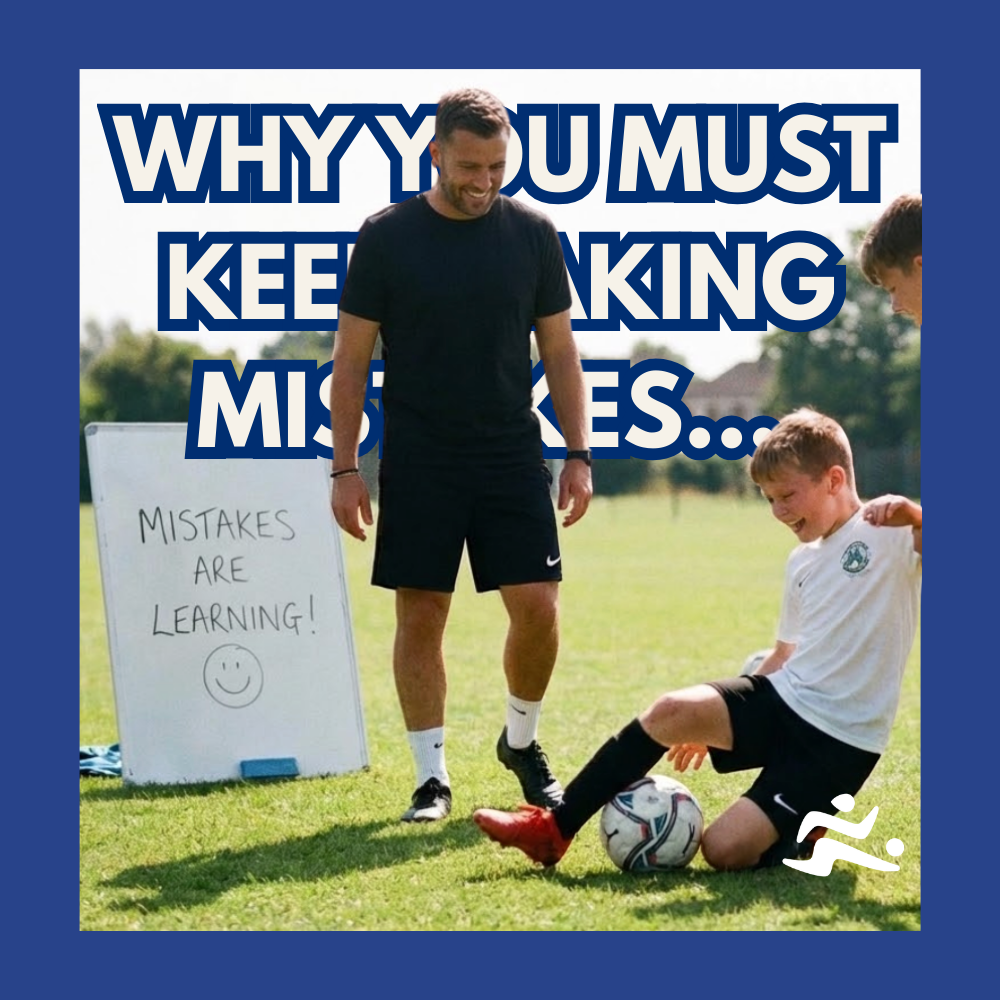
Why Making Mistakes is Vital for Football Player Development
Why Making Mistakes is Vital for Football Player Development
What if the secret to becoming an elite football player isn't about flawlessly executing every pass, tackle, or shot? What if the path to unparalleled skill and unwavering mental toughness is paved not with perfect performances, but with lessons learned from every misstep on the pitch? The truth is, mistakes are not just inevitable in football player development; they are the most powerful catalysts for growth. They shape a player's journey from raw talent to a refined master of the beautiful game.
Football is dynamic and unpredictable, where errors are a constant companion, from a misplaced pass to a missed tackle. However, viewing these moments as invaluable feedback, not failures, unlocks transformative potential for player development. This shifts focus from perfection to continuous learning. Embracing mistakes accelerates technical mastery, fortifies mental resilience, and achieves highest potential.
Understanding the Transformative Power of Error in Football
Beyond Perfection: The Unrealistic Pursuit of an Error-Free Game
In football, an unspoken expectation for error-free performance often exists, especially among young players. This pursuit of perfection is fundamentally flawed and counterproductive, breeding a fear of failure. It leads players to play safe, avoid creative risks, and stifle their natural talent.
Imagine a midfielder always opting for simple backward passes, avoiding potential turnovers. While this avoids mistakes, it also prevents game-changing plays and true football player development. Growth comes from stepping outside comfort zones, where mistakes increase, but so does potential for significant learning.
The Brain's Learning Mechanism: How Mistakes Rewire for Success
The human brain excels at learning from errors. When a player makes a mistake, the brain registers a discrepancy, triggering a powerful learning process. Neuroscientists show mistakes, followed by reflection and correction, activate neural pathways to consolidate new information and refine motor skills.
For a striker practicing a shot, each miss provides feedback—wrong body position, off-contact, incomplete follow-through. This feedback loop enables micro-adjustments, rewiring neural connections. This iterative process improves technical skills and tactical decision-making, making mistakes vital data points for improvement.
The Psychological Edge: Building Resilience Through Adversity
Developing Mental Toughness: Bouncing Back from On-Field Blunders
Football is a mental game, demanding exceptional mental toughness from players. This attribute develops not through flawless performances, but by making mistakes and learning to recover from them. Consider a young goalkeeper letting in an easily saveable goal in a crucial match.
A truly resilient player quickly processes the error, acknowledging what went wrong, then mentally "resets" for the next play. This "short memory" for errors, bouncing back with focus, is a hallmark of top performers. Coaches cultivate this by encouraging immediate self-correction and positive self-talk.
Confidence and Risk-Taking: The Courage to Try New Things
Fear of mistakes significantly inhibits a player's potential, leading to conservative play. This cautious approach stifles creativity, limits tactical innovation, and prevents players from discovering true capabilities. A player afraid to attempt a daring through-ball might never realise their potential as a playmaker.
Conversely, an environment where mistakes are accepted fosters confidence and encourages risk-taking. Players feel safe to experiment with ambitious passes or audacious dribbles. Each failure provides invaluable data, teaching about timing, spacing, and opponent reactions. This iterative process builds genuine confidence in their capacity to learn and adapt.
Tactical and Technical Growth: Refining Skills on the Pitch
Learning from Positional Errors: Improving Game Awareness and Strategy
Tactical understanding in football requires constant information processing. Positional errors are common in developing players, offering rich learning opportunities. Imagine a central defender repeatedly out of position, exploiting a gap. This is a tactical lapse, not just technical.
A good coach uses this mistake as a teaching moment, explaining why it was an error and how to correct it. The player learns better spatial awareness, communication cues, and strategic positioning. These insights, forged from game mistakes, are often more impactful than theoretical sessions for football player development.
Perfecting Technical Execution: The Repetition and Correction Cycle
Technical skills in football—passing, shooting, dribbling—are refined through a continuous cycle of repetition and correction, which inherently involves making mistakes. Consider a striker perfecting their finishing, taking hundreds of shots, many of which miss or lack power. Each is a technical error.
Each error provides immediate feedback: leaning back, wrong foot contact, incomplete follow-through. This self-correction, often coach-guided, leads to incremental improvements. The framework is simple: Observe -> Correct -> Practice -> Master. This process, driven by identifying and rectifying mistakes, builds muscle memory and technical proficiency under pressure.
Real-World Examples and Actionable Strategies for Players and Coaches
Iconic Players Who Learned from Their Setbacks and Failures
Even the greatest footballers, like Lionel Messi, faced significant setbacks, enduring heartbreaking defeats in major finals with Argentina. These moments fueled his desire to return stronger, showcasing incredible resilience.
Similarly, Cristiano Ronaldo, critisied for early free-kick technique, transformed it through constant practice and adapting his approach. These elite athletes exemplify how accepting and learning from mistakes is fundamental to achieving and maintaining peak performance in football.
Creating a "Mistake-Positive" Environment in Training Sessions
For coaches, fostering a "mistake-positive" environment where players feel safe to err is paramount. Instead of immediate criticism, coaches should treat mistakes as teachable moments. Implementing "safe zones" in drills, where experimentation is encouraged and consequences are minimised, is an actionable step.
For players, adopting a "growth mindset" is crucial. View errors as data points for player development. Ask: "What could I have done differently?" Seek feedback from coaches and teammates. Regular debriefing sessions, focusing on improvement rather than blame, transforms a team's learning culture, unlocking creative and technical potential.
The Role of Feedback: Turning Errors into Constructive Insights
Effective feedback bridges making a mistake and learning from it. Simply pointing out an error without context helps little. For feedback to be constructive, it needs to be specific, timely, and actionable. "You were too far inside; next time, stay wide to cover the overlapping run," provides clear guidance.
Players must be open to receiving feedback as a tool for growth, not criticism. Proactively asking "What could I have done better?" shows a proactive approach. Encouraging peer-to-peer feedback fosters collaboration. When feedback loops are positive, mistakes quickly convert into concrete insights, accelerating the player's development curve.
Common Misconceptions About Mistakes in Football Development
Dispelling the Myth: "Elite Players Don't Make Many Mistakes"
A pervasive myth in football is that elite players play an error-free game. While top professionals show consistency, they still make numerous mistakes. The key difference isn't absence of errors, but the type of errors, how quickly they learn, and how effectively they recover.
Elite players' mistakes are often subtle, like a slightly under-hit pass. Crucially, they adapt and correct mid-game. A top midfielder's risky pass that fails prompts quick strategy adjustment. Their superior tactical awareness and mental resilience allow them to mitigate error impact, recovering possession or preventing escalation.
Mistakes vs. Laziness: Distinguishing Between Intentional Errors and Poor Effort
It's crucial to differentiate genuine mistakes—part of learning—from errors stemming from lack of effort or focus. A player attempting a difficult pass that fails makes an execution mistake with positive intent. This offers valuable learning opportunity for football player development.
Conversely, failing to track back due to jogging, or misplacing a simple pass from lack of concentration, exhibits poor effort. Expert coaches understand this distinction. Technical/tactical errors with honest effort need constructive feedback. Errors from laziness demand accountability and reinforcing team standards.
Frequently Asked Questions About Mistakes in Football Development
How can a coach encourage players to take risks without fear of making mistakes?
Coaches should explicitly state experimentation is encouraged, especially in training. Implement drills with low consequences for errors and provide positive reinforcement for brave attempts, regardless of outcome. Emphasise learning and growth over flawless execution to build player confidence.
Is there a point where mistakes become too frequent or detrimental?
Yes, a consistent pattern of the same fundamental errors can signal deeper issues like lack of foundational technical skill, poor tactical understanding, or overwhelming pressure. Coaches must intervene with targeted training, breaking down skills, or addressing psychological factors.
How do professional academies incorporate learning from errors?
Professional academies use video analysis and data to systematically review mistakes with players, often one-on-one, identifying patterns. Training sessions are then tailored to address weaknesses, gradually increasing pressure to simulate real game situations and enhance football player development.
What's the best way for a player to recover mentally after a significant mistake during a game?
The "short memory" approach is crucial. Acknowledge the mistake, take a deep breath, and consciously shift focus to the next play using a mental cue. Remind yourself one mistake doesn't define the performance and focus on making a positive impact on the next action.
Can watching replays of my own mistakes actually help me improve?
Absolutely. Video analysis is a powerful tool for learning from mistakes. It allows objective identification of specific errors (e.g., body positioning, decision-making) and their consequences. Reviewing with a coach provides expert insights and actionable steps for faster, more targeted improvement.
Final Thoughts: The Unseen Architect of Football Excellence
In the relentless pursuit of football excellence, the path isn't a flawless ascent. The true narrative of every great player is punctuated by countless errors and misjudgments. These are not roadblocks, but unseen architects building skill, resilience, and tactical intelligence.
Embracing mistakes means adopting a robust learning mindset. Every misplaced pass, missed tackle, or strategic miscalculation is a golden opportunity to gather data, adapt, and return stronger. For players, this means shedding fear and daring to experiment; for coaches, fostering an environment where learning triumphs over perfection.
So, as you step onto the pitch, or watch from the sidelines, remember that the true measure of player development isn't how few mistakes are made. It's about how much is learned from each one, fueling your journey. Embrace the errors, analyse them keenly, and let them build your resilience. The greatest triumphs often begin with the courage to make a mistake. Unleash your potential by understanding the power of imperfection in football.

Designing a Football Practice in 60 Seconds: Master Efficiency on the Pitch
Designing a Football Practice in 60 Seconds: Master Efficiency on the Pitch
Did you know an astonishing 30% of youth sports practice time is often lost to disorganisation and ineffective transitions?
Imagine if you could reclaim those precious minutes, turning chaos into fluid development for your players.
What if you had a system that allowed you to conceptualise and outline a robust football practice in what feels like mere seconds?
It's not a fantasy; it's the power of efficient planning, and it's within every coach's reach.
Unlock maximum player development with smart football practice planning.
The Foundation of Rapid Practice Planning
In football coaching, time is your most valuable resource. This guide isn't about literally planning in 60 seconds, but fostering a mindset and framework for incredibly swift, impactful practice design. We aim to maximise every moment on the pitch, ensuring every drill serves a purpose, keeping players engaged and developing. This approach elevates player performance and fosters a love for the game.
Understanding Your Team's Needs and Goals
Before drills, quickly assess your team's strengths and weaknesses. Are they struggling with tackling, routes, or alignment? This rapid diagnostic scan is the critical first step in focused practice design, allowing you to tailor objectives instantly and cut down on irrelevant drills.
Defining Your Practice Objectives Quickly
Every minute of practice needs clear, measurable objectives. Identify one to three key areas for improvement, like "improve ball control" or "better passing." This laser focus immediately dictates drill selection, preventing unfocused chaos and ensuring effective skill acquisition.
The Power of Pre-Planned Templates
Imagine a library of practice templates at your fingertips. Create generic templates for "fundamental skills," "game strategy," or "pre-game walkthroughs." Simply select the most relevant one and slot in specific drills that align with your current objectives, making rapid practice design a tangible reality.
Key Principles for Efficient Football Drills
Efficiency on the football pitch means making every action count. When designing your football drills, maximise player touches, strategic thinking, and physical exertion in the shortest timeframe. This requires dynamic, integrated approaches for superior coaching efficiency.
Maximising Reps with Multi-Tasking Drills
Embrace multi-tasking drills that address several objectives simultaneously. Instead of isolated skills, combine them: catch a pass while navigating cones, then transition into a defensive pursuit. This boosts repetitions and makes drills more game-like, keeping all players active and engaged, crucial for youth football drills and limited practice time.
Seamless Transitions: The Unsung Hero of Efficiency
Seamless transitions are the backbone of efficient practice, often saving more time than any single drill. Plan your practice flow like a choreographed dance: ensure one drill leads directly into the next without equipment changes or lengthy instructions. Appoint assistants to set up stations, minimising downtime and maximising productive minutes.
Player Engagement Through Variety and Purpose
Monotonous drills lead to disengagement. Incorporate variety and clearly communicate the purpose of each drill. Rotate individual skill work, small-group tactics, and full-team concepts. Explain why a drill is important, linking it to game situations, transforming exercises into purposeful learning experiences and boosting motivation for player development.
Leveraging Technology for Quick Practice Design
In the digital age, coaches have powerful tools to drastically cut practice planning time and enhance effectiveness. Embracing technology isn't just for pros; it benefits every level of football coaching, allowing for incredible speed and precision in practice design.
Digital Tools for Instant Drill Access
Digital platforms and apps offer instant access to vast libraries of football drills with diagrams and videos. Tools like Hudl or Google Drive for your custom drills allow you to search by skill or position. You can build entire practice plans by dragging and dropping pre-vetted drills, transforming hours of planning into minutes for efficient football practice management.
Video Analysis for Rapid Feedback Loops
Video analysis tools (even a smartphone camera) provide invaluable rapid feedback. Record drills to review technique and decision-making visually, turning abstract concepts into concrete lessons. Short video review sessions integrated into practice speed up the learning curve, allowing for targeted adjustments and faster skill acquisition.
Communication Apps for Streamlined Logistics
Communication apps like TeamSnap or group messaging streamline logistics: instant notifications for practice changes, announcements, or coordinating with parents. Centralising team communication frees up valuable time from administrative tasks, allowing you to focus on actual coaching and effective practice management.
Crafting a Dynamic 60-Minute Practice
While planning quickly, practice execution needs structure to maximise player development within a 60-minute session. Each segment prepares players, hones skills, and integrates tactical knowledge, crucial for game-day readiness.
The Warm-Up: Setting the Tone Swiftly
A swift, effective warm-up (10-15 minutes) uses dynamic stretches, light cardio, and sport-specific movements. Integrate light ball work or agility ladders that transition smoothly into main drills. This ensures players are physically ready, reduces injury risk, and sets a positive, energetic tone for the entire football training session.
Skill Development Blocks: Focused and Fast
This core segment (20-25 minutes) hones individual and small-group skills. Dedicate time to progressive drills aligned with your objectives, like "improve tackling form." Use stations or small-group rotations to maximise reps and provide personalised coaching, ensuring focused instruction within a compact timeframe for optimal skill acquisition.
Tactical Integration: Game-Like Scenarios
Integrate skills into game-like scenarios (15-20 minutes). This includes 7-on-7 drills or play walkthroughs, mirroring real game situations to force decisions under pressure. Keep coaching points concise, letting players learn by doing. This develops football IQ and team cohesion, preparing players for the mental demands of the game.
Cool-Down and Review: Maximising Retention
The cool-down and review (5-10 minutes) is vital for physical recovery and cognitive retention. Use light stretching and a quick recap and feedback session. Highlight positives, identify areas for improvement, and reinforce daily objectives. Ending on a reflective note ensures learning continues, making your rapid planning truly pay off for player development.
Common Pitfalls and How to Avoid Them
Even with intentions for efficient practice design, common traps can derail efforts. Recognising and avoiding these pitfalls is crucial for maintaining productivity and player satisfaction in football coaching.
Over-Drilling and Player Fatigue
Avoid hammering a single drill for too long, leading to boredom and diminished focus. Build variety into drill selection and limit activities to 8-10 minutes. Observe player energy and adjust intensity, prioritising quality reps over sheer quantity. Dynamic practice management means listening to your players.
Lack of Clear Instruction and Communication
Confusion saps efficiency. Adopt the "KISS" principle: Keep It Short and Simple. Provide concise explanations and demonstrations, then start immediately. Use visual cues and specific, actionable feedback. Clear communication upfront saves minutes of frustration, ensuring smoother practice flow and better skill acquisition.
Ignoring Adaptability: The Weather Wildcard
Always have a "Plan B" for unexpected weather. Can you move indoors, or switch to drills suitable for rain or heat? Pre-formulated contingencies, like a "rainy day" template focusing on strategy, allow you to quickly pivot without losing valuable football training time, ensuring your schedule remains robust.
Real-World Examples of Time-Saving Practices
These scenarios highlight how coaches adapt the "60-second design" philosophy to unique challenges, showcasing efficient football practice planning across different levels.
Youth League: Optimising Limited Pitch Time
Coach Elena optimised one-hour flag football practices with a multi-station approach. Using digital drill libraries and parent volunteers, she rotated players through catching, flag-pulling, and football IQ stations. Pre-set stations and clear communication ensured constant activity and development, making her core practice "designed" in less than a minute each session for effective youth football coaching.
High School Varsity: Balancing Depth and Speed
Coach Mark used technology for 90-minute varsity practices, outlining weekly objectives via a planning app. He instantly populated templates with specific drills for red-zone offense or defensive schemes. Plans sent to assistants via communication apps ensured seamless transitions, allowing for extensive material coverage and rapid-fire reps crucial for game-day readiness.
Frequently Asked Questions About Designing Efficient Football Practices
Coaches often seek ways to make practices more effective and less time-consuming. Here are common inquiries on effective practice management:
What's the absolute minimum I need to plan before practice?
At minimum, identify your 1-3 primary practice objectives and a rough outline of core drills (warm-up, a few skill drills, one team drill) to achieve them. This foundational structure allows for on-the-fly adaptation.
How do I keep players engaged if I'm not doing full-contact drills?
Focus on high-rep, multi-tasking drills that keep everyone moving, even without contact. Incorporate competitive elements, explain the "why" behind each drill, and use frequent positive reinforcement to build enthusiasm for youth football drills.
I only have one assistant coach. How can I manage multiple stations?
Divide practice into two main stations—one for you, one for your assistant. Alternatively, use a station requiring minimal direct coaching (e.g., footwork ladders) while you and your assistant focus on more technical stations, ensuring efficient football training.
What's the best way to handle disruptive players or a lack of focus?
Address disruptive behavior immediately and privately. Re-engage players by changing the drill, increasing pace, or assigning a leadership role. Ensure clear instructions, and sometimes a short break can reset the team's energy and focus for better player development.
How can I make sure my practice plan translates effectively from paper to pitch?
The key is visualisation and simplification. Mentally walk through each drill, imagining player placement and transitions. Keep explanations concise, diagrams clear, and be prepared to adapt to real-time feedback. Flexibility ensures effective football practice planning.
Final Thoughts and Call to Action
Designing a football practice efficiently isn't about rushing; it's about mastering smart planning and maximising every moment for your players. By setting clear objectives, using templates, embracing multi-tasking drills, and leveraging technology, you'll transform your coaching approach. Spend less time scrambling and more time actively coaching, fostering skill development, and instilling a love for the game. These principles empower you to create dynamic, engaging, and highly productive football training sessions.
Ready to revolutionise your football coaching?
Implement these strategies this week, starting with a clear objective for your next practice.
Explore digital drill libraries and create your first practice template.
Watch how quickly your planning time shrinks and your team's performance soars.
The future of efficient football practice management starts now!

How to Manage the Bench 'Fairly' in Grassroots Football: A Coach's Guide to Equitable Playtime and Player Development
How to Manage the Bench 'Fairly' in Grassroots Football: A Coach's Guide to Equitable Playtime and Player Development
Does the thought of managing substitutions fill you with dread? Are you constantly navigating the delicate balance between winning games and ensuring every young player feels valued? In grassroots football, where development often outweighs immediate results, the "bench" can become a source of anxiety, frustration, or even conflict if not handled with care and intention. But what if there was a way to manage playing time that not only felt fair to everyone involved but also actively fostered skill, resilience, and a deeper love for the game?
The Heart of Grassroots Football: What Fair Bench Management Truly Means
Grassroots football is the foundational layer of the sport, where young athletes learn the joy of playing, develop fundamental skills, and build character. It's about participation, personal growth, and creating a positive experience that keeps children engaged. Central to this mission is bench management and ensuring equitable playtime for all participants.
Understanding the 'What': Why Fair Bench Management Matters
Fair bench management in youth football isn't just about splitting minutes equally. It’s a comprehensive approach prioritizing every child's development, sense of belonging, and overall enjoyment. Every player, regardless of current skill, deserves opportunities to learn, improve, and contribute on the field.
Imagine a dedicated young defender who consistently sits on the bench. Their motivation will dwindle, questioning their value to the team and the sport. This isn't just a personal setback; it's a loss for the team and the broader football community.
The 'Why': More Than Just Game Time – Building Character and Skill
The decision of who plays profoundly impacts a player's journey. Fair and thoughtful player rotation is a powerful tool for player development, fostering crucial life skills and a lifelong passion for football. Consistent playtime builds confidence, encouraging players to take risks and try new moves.
When every child gets meaningful time on the pitch, they gain invaluable experience. They learn to make decisions under pressure, adapt to game situations, and understand their team role. This holistic growth cultivates resilient individuals who understand the value of team morale and collective effort.
Building Your Fair Play Philosophy: Principles for Equitable Player Rotation
Successful bench management in grassroots football isn't arbitrary; it stems from a well-defined philosophy. Coaches must intentionally build a framework that guides their decisions, ensuring consistency and transparency. This philosophy should be rooted in development, inclusion, and enjoyment.
Developing a Clear Bench Management Policy
Establishing a clear, written policy regarding playing time is the first step towards fairness. This isn't about rigid rules, but guidelines everyone understands. A robust policy should outline how playing time will be allocated, considering factors like attendance, effort, attitude, and developmental stage.
For younger age groups (e.g., U6-U10), emphasize near-equal playing time. As players get older and move into competitive tiers, the policy might introduce meritocratic elements, but always with a strong developmental component.
Communication is Key: Setting Expectations Early and Often
Even the most perfectly crafted policy is useless if not communicated effectively. From the first team meeting, coaches should clearly articulate their bench management philosophy to both players and parents. Emphasize the focus on player development and team cohesion over winning.
This proactive communication can preempt many potential issues and build trust. Regular check-ins throughout the season are vital. Transparency is your greatest ally in building understanding around playing time decisions.
Balancing Development with Competition: The Dual Challenge
One of the trickiest aspects of grassroots football coaching is finding the equilibrium between developing individual skills and competing effectively. While development should always be the priority, completely ignoring competition isn't realistic or beneficial.
The key is to manage the bench so all players experience both. This means being strategic with substitutions. The overarching goal is for every child to feel challenged, supported, and to understand their valuable contribution.
Practical Strategies for Effective and Fair Bench Rotation
Once a clear philosophy is established, coaches need actionable strategies to put their fair bench management principles into practice. These techniques ensure equitable playtime while maximizing player development and maintaining high team morale.
Implementing a Rotational Playtime System
A structured approach to player rotation removes guesswork and promotes transparency.
Fixed Quarter/Half Rotation: For younger ages, this is often simplest. Every player plays at least one full quarter or half, ensuring significant game time. Coaches can rotate players in different positions during these segments.
Match-Specific Rotation: As players mature, a more dynamic approach can be introduced. This involves planning rotations before the game, considering opponent strength, fatigue, and individual developmental goals. Using a simple spreadsheet helps coaches track playing time, ensuring no player consistently gets less time over a season. This also serves as a tangible record for accountability.
Player Grouping and Positional Flexibility
Instead of a "starting 11" and "substitutes," coaches can consider players in groups. This allows for more fluid rotation and ensures all players gain experience in different roles. Encouraging positional flexibility is key. This enhances players' understanding of the game and their versatility.
Utilizing Training Sessions for Skill Development
Game day is only part of the development process; training sessions are where the bulk of skill development happens. Coaches should design practices to be inclusive and challenging for all players. Players who might receive less game time should get extra attention and specific drills to work on weaknesses.
This reinforces that their development is paramount and hard work in training translates to future opportunities on the pitch. It prevents players from feeling marginalized.
Managing Game Day Substitutions Strategically and Ethically
Game day substitutions require both strategy and empathy. Coaches should make changes with a clear purpose, whether for tactical reasons, fresh legs, or to ensure promised playing time. Communicate these changes clearly to the players involved.
Avoid last-minute, rushed substitutions. Plan ahead so players remain engaged. The goal is to make every player feel valued, prepared, and excited for their opportunity. Never use substitutions as punishment; discussions about behavior belong off the field.
Overcoming Common Bench Management Challenges
Even with the best intentions and strategies, coaches in grassroots football will face challenges when it comes to managing the bench fairly. Addressing these issues proactively and empathetically is crucial for a positive team environment and player retention.
Addressing Parental Concerns and Expectations
Parents are passionate about their children in sports; this can lead to concerns about playing time. Coaches should view these concerns as opportunities for education and communication. Reiterate the team’s player development philosophy and explain how the bench management policy benefits all players long-term.
Provide examples of how players are growing through varied game experiences. Suggest ways parents can support their child's development off the field, reinforcing that contributions extend beyond minutes played.
Motivating Benched Players and Maintaining Team Morale
Keeping players engaged and motivated when not on the pitch is a key coaching skill. The bench should never feel like punishment. Coaches can involve substitutes by asking them to observe play, identify patterns, or suggest adjustments.
They can be tasked with cheering, retrieving balls, or providing water. Recognizing and praising their contributions, whether from the sideline or a brief cameo, significantly boosts team morale.
Dealing with Unfairness Perceptions: Transparency and Consistency
Perceptions of unfairness quickly erode team cohesion. When players or parents believe playing time decisions are arbitrary or biased, it creates resentment. The best defense is absolute transparency and consistency. Stick to your stated bench management policy.
If an exception is made, be prepared to explain why, clearly and logically. Avoid favoritism, even if unconscious. Treat every player with the same respect and provide equal opportunities to learn and contribute.
The Role of Assistant Coaches in Bench Management
Assistant coaches are invaluable assets in bench management. They can help track playing time, warm up substitutes, keep benched players engaged, and communicate upcoming changes. Delegating these responsibilities ensures no player is overlooked and transitions are smooth.
Empowering assistant coaches to engage with substitutes, offer specific feedback, or run small warm-up drills makes benched players feel more involved and prepared. This shared responsibility benefits the entire team.
The Long-Term Impact: Cultivating a Positive Football Culture
Effective and fair bench management in grassroots football has ripple effects that extend far beyond a single game. It lays the groundwork for a robust and positive sporting environment, shaping young athletes both on and off the pitch. The ultimate goal is to build a lasting and beneficial football culture.
Fostering Team Cohesion and Mutual Respect
When every player feels valued and knows they will get their chance, it fosters strong team cohesion. Instead of internal competition over minutes, players learn to support each other and celebrate successes. They develop mutual respect, understanding that everyone contributes to the team's goals.
This environment reduces jealousy and encourages camaraderie. True cohesion is seen when a starting player is just as enthusiastic about a substitute's goal as their own, built on fair play and shared effort.
Developing Resilient and Passionate Young Athletes
Learning to handle being on the bench, waiting for an opportunity, and then performing, is a crucial life lesson in resilience. Children learn patience, perseverance, and emotional management. They understand hard work and a positive attitude lead to rewards.
When players feel supported and given fair chances, their passion for the game deepens. This intrinsic motivation keeps children involved in sports long-term, contributing to their physical and mental well-being.
Measuring Success Beyond the Scoreboard: Player Growth
In grassroots football, success should not be solely measured by wins or goals. A more meaningful metric is player growth. Are individual players improving skills and confidence? Do they understand the game better and enjoy themselves? These are the questions coaches should be asking.
By prioritizing fair bench management and equitable playtime, coaches significantly contribute to these developmental outcomes. This broader definition of success ensures focus remains on holistic development, rather than chasing short-term results.
Frequently Asked Questions (FAQs) About Bench Management
Coaches, parents, and players often have common questions regarding fair playing time in grassroots football. Here are some answers to provide clarity and guidance.
How Do I Explain My Bench Policy to Parents Effectively?
Hold an initial team meeting to discuss your bench management philosophy, emphasizing player development. Provide a written summary and be open to questions. Reiterate that consistent attendance and a positive attitude are key factors.
What If a Player Consistently Underperforms? How Do I Handle Their Playtime?
Underperformance is a coaching opportunity. Work individually with the player in training, providing constructive feedback and drills. Ensure they still receive meaningful minutes, framing it as a journey of growth, not exclusion.
Is It Ever Okay to Play a Stronger Player More Than Others?
In true grassroots football (especially U6-U12), emphasis should lean heavily towards equitable playtime. If a stronger player gets more time in competitive older leagues, it should be transparent, with a clear developmental rationale, and ensure all others still meet minimum playtime requirements.
How Can I Keep Substitutes Engaged During a Game?
Assign specific tasks, like observing opponents or tracking movements. Encourage positive cheering. Have an assistant coach run small warm-up drills to keep them ready. Engage them in tactical discussions, acknowledging their presence and contribution.
What’s the Best Way to Introduce a New Player to the Team's Rotation Strategy?
Provide new players and their parents with your bench management policy immediately. Explain the team's philosophy of fair play and player development. Integrate them gradually, ensuring they understand their role and opportunities.
Final Whistle: Building a Fair and Flourishing Grassroots Team
Empowering Every Young Footballer to Thrive
Managing the bench fairly in grassroots football is one of the most challenging yet rewarding aspects of coaching. It demands thoughtful planning, transparent communication, and an unwavering commitment to the holistic development of every young athlete. It’s about consistently applying a philosophy rooted in fair play, equitable playtime, and a genuine desire to foster a lifelong love for the beautiful game.
When coaches prioritise individual growth, communicate openly, and implement fair player rotation strategies, the results are profound. Teams built on these principles develop stronger bonds, deeper respect, and greater resilience, with victories extending beyond the scoreline. Embrace the challenge of fair bench management. Define your policy, communicate it consistently, and always put your young footballers' development first to cultivate a positive football culture that empowers every child to thrive in youth football.