Designing a Football Practice in 60 Seconds: Master Efficiency on the Pitch
Did you know an astonishing 30% of youth sports practice time is often lost to disorganisation and ineffective transitions?
Imagine if you could reclaim those precious minutes, turning chaos into fluid development for your players.
What if you had a system that allowed you to conceptualise and outline a robust football practice in what feels like mere seconds?
It's not a fantasy; it's the power of efficient planning, and it's within every coach's reach.
Unlock maximum player development with smart football practice planning.
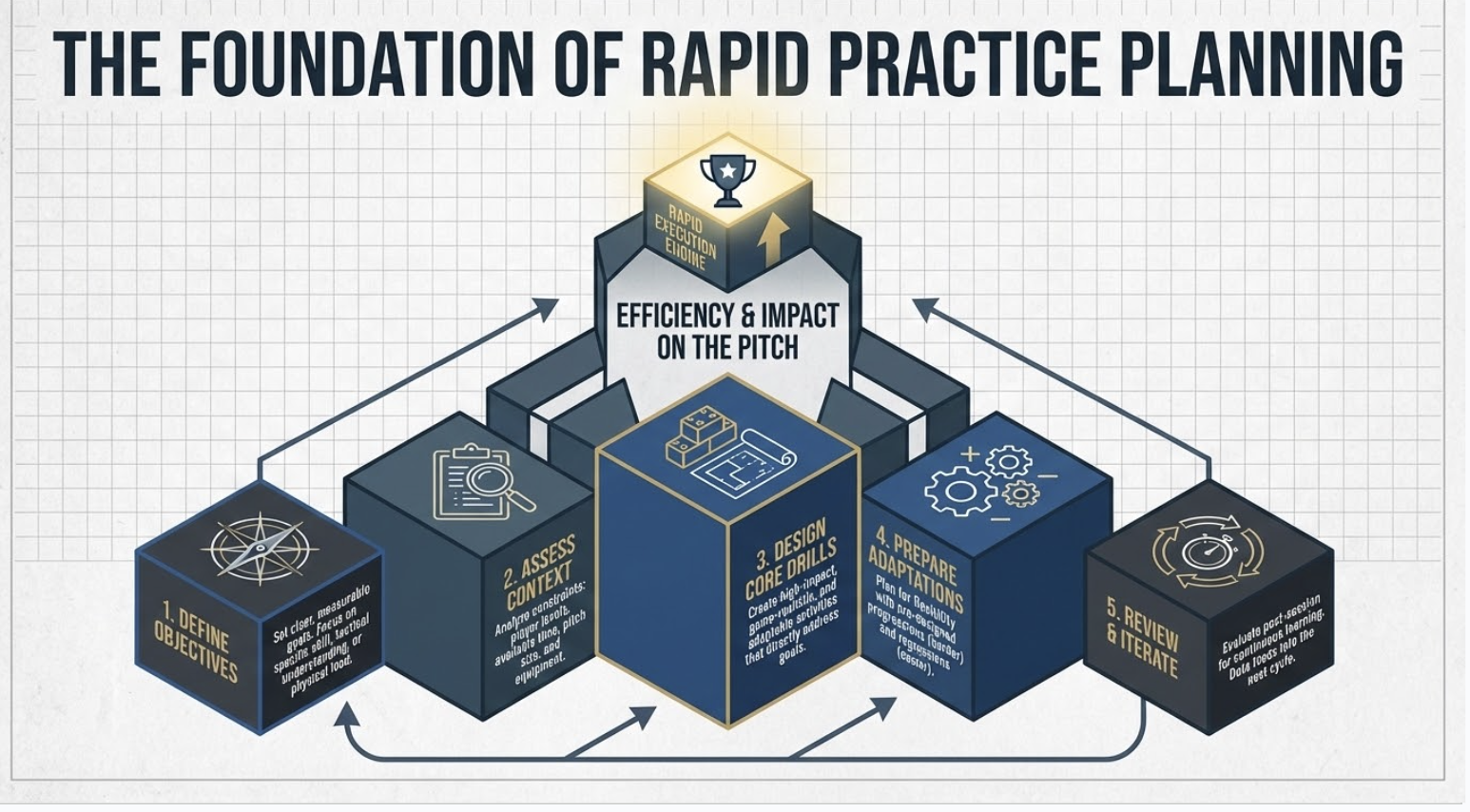
The Foundation of Rapid Practice Planning
In football coaching, time is your most valuable resource. This guide isn't about literally planning in 60 seconds, but fostering a mindset and framework for incredibly swift, impactful practice design. We aim to maximise every moment on the pitch, ensuring every drill serves a purpose, keeping players engaged and developing. This approach elevates player performance and fosters a love for the game.
Understanding Your Team's Needs and Goals
Before drills, quickly assess your team's strengths and weaknesses. Are they struggling with tackling, routes, or alignment? This rapid diagnostic scan is the critical first step in focused practice design, allowing you to tailor objectives instantly and cut down on irrelevant drills.
Defining Your Practice Objectives Quickly
Every minute of practice needs clear, measurable objectives. Identify one to three key areas for improvement, like "improve ball control" or "better passing." This laser focus immediately dictates drill selection, preventing unfocused chaos and ensuring effective skill acquisition.
The Power of Pre-Planned Templates
Imagine a library of practice templates at your fingertips. Create generic templates for "fundamental skills," "game strategy," or "pre-game walkthroughs." Simply select the most relevant one and slot in specific drills that align with your current objectives, making rapid practice design a tangible reality.
Key Principles for Efficient Football Drills
Efficiency on the football pitch means making every action count. When designing your football drills, maximise player touches, strategic thinking, and physical exertion in the shortest timeframe. This requires dynamic, integrated approaches for superior coaching efficiency.
Maximising Reps with Multi-Tasking Drills
Embrace multi-tasking drills that address several objectives simultaneously. Instead of isolated skills, combine them: catch a pass while navigating cones, then transition into a defensive pursuit. This boosts repetitions and makes drills more game-like, keeping all players active and engaged, crucial for youth football drills and limited practice time.
Seamless Transitions: The Unsung Hero of Efficiency
Seamless transitions are the backbone of efficient practice, often saving more time than any single drill. Plan your practice flow like a choreographed dance: ensure one drill leads directly into the next without equipment changes or lengthy instructions. Appoint assistants to set up stations, minimising downtime and maximising productive minutes.
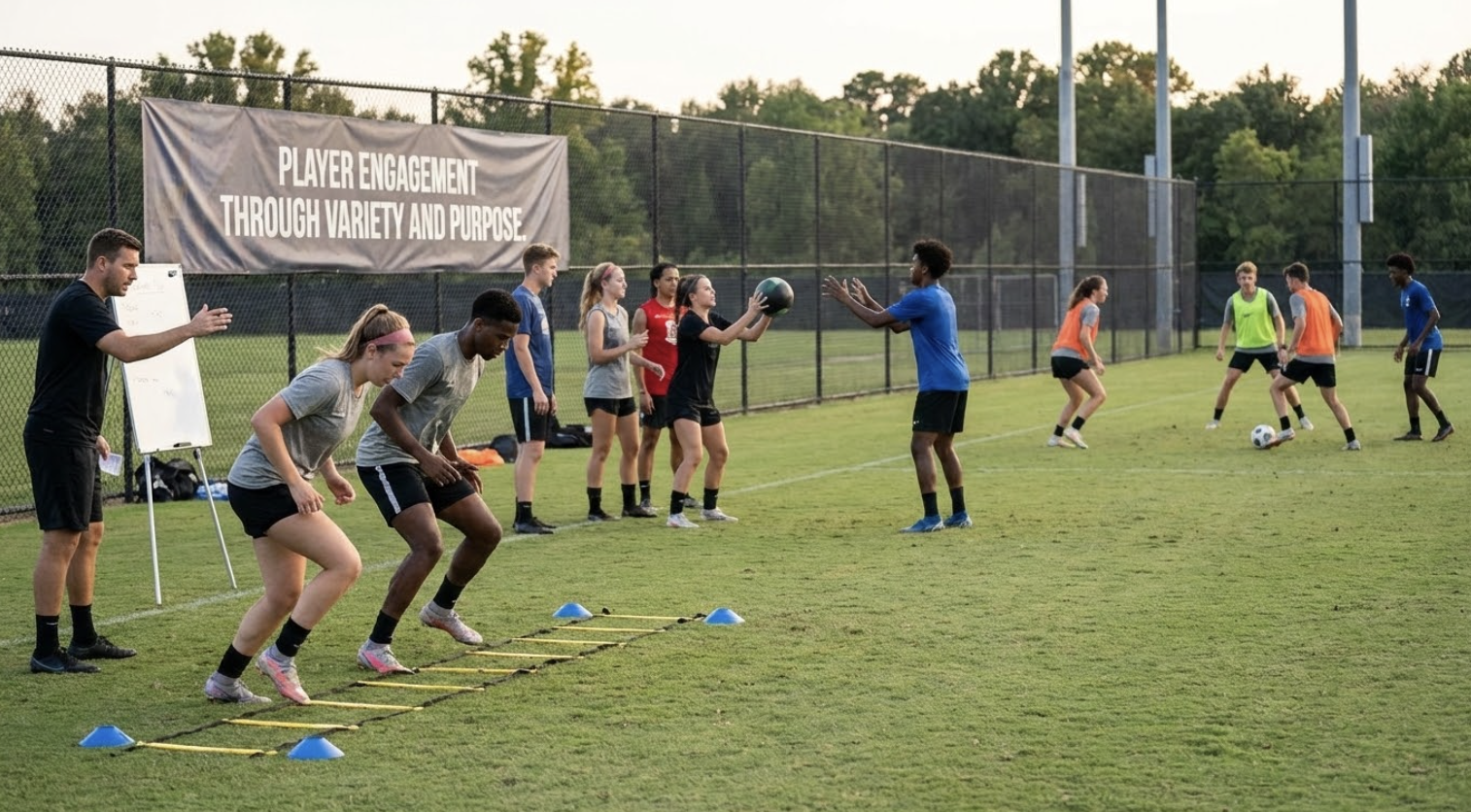
Player Engagement Through Variety and Purpose
Monotonous drills lead to disengagement. Incorporate variety and clearly communicate the purpose of each drill. Rotate individual skill work, small-group tactics, and full-team concepts. Explain *why* a drill is important, linking it to game situations, transforming exercises into purposeful learning experiences and boosting motivation for player development.
Leveraging Technology for Quick Practice Design
In the digital age, coaches have powerful tools to drastically cut practice planning time and enhance effectiveness. Embracing technology isn't just for pros; it benefits every level of football coaching, allowing for incredible speed and precision in practice design.
Digital Tools for Instant Drill Access
Digital platforms and apps offer instant access to vast libraries of football drills with diagrams and videos. Tools like Hudl or Google Drive for your custom drills allow you to search by skill or position. You can build entire practice plans by dragging and dropping pre-vetted drills, transforming hours of planning into minutes for efficient football practice management.
Video Analysis for Rapid Feedback Loops
Video analysis tools (even a smartphone camera) provide invaluable rapid feedback. Record drills to review technique and decision-making visually, turning abstract concepts into concrete lessons. Short video review sessions integrated into practice speed up the learning curve, allowing for targeted adjustments and faster skill acquisition.
Communication Apps for Streamlined Logistics
Communication apps like TeamSnap or group messaging streamline logistics: instant notifications for practice changes, announcements, or coordinating with parents. Centralising team communication frees up valuable time from administrative tasks, allowing you to focus on actual coaching and effective practice management.
Crafting a Dynamic 60-Minute Practice
While planning quickly, practice execution needs structure to maximise player development within a 60-minute session. Each segment prepares players, hones skills, and integrates tactical knowledge, crucial for game-day readiness.
The Warm-Up: Setting the Tone Swiftly
A swift, effective warm-up (10-15 minutes) uses dynamic stretches, light cardio, and sport-specific movements. Integrate light ball work or agility ladders that transition smoothly into main drills. This ensures players are physically ready, reduces injury risk, and sets a positive, energetic tone for the entire football training session.
Skill Development Blocks: Focused and Fast
This core segment (20-25 minutes) hones individual and small-group skills. Dedicate time to progressive drills aligned with your objectives, like "improve tackling form." Use stations or small-group rotations to maximise reps and provide personalised coaching, ensuring focused instruction within a compact timeframe for optimal skill acquisition.
Tactical Integration: Game-Like Scenarios
Integrate skills into game-like scenarios (15-20 minutes). This includes 7-on-7 drills or play walkthroughs, mirroring real game situations to force decisions under pressure. Keep coaching points concise, letting players learn by doing. This develops football IQ and team cohesion, preparing players for the mental demands of the game.
Cool-Down and Review: Maximising Retention
The cool-down and review (5-10 minutes) is vital for physical recovery and cognitive retention. Use light stretching and a quick recap and feedback session. Highlight positives, identify areas for improvement, and reinforce daily objectives. Ending on a reflective note ensures learning continues, making your rapid planning truly pay off for player development.
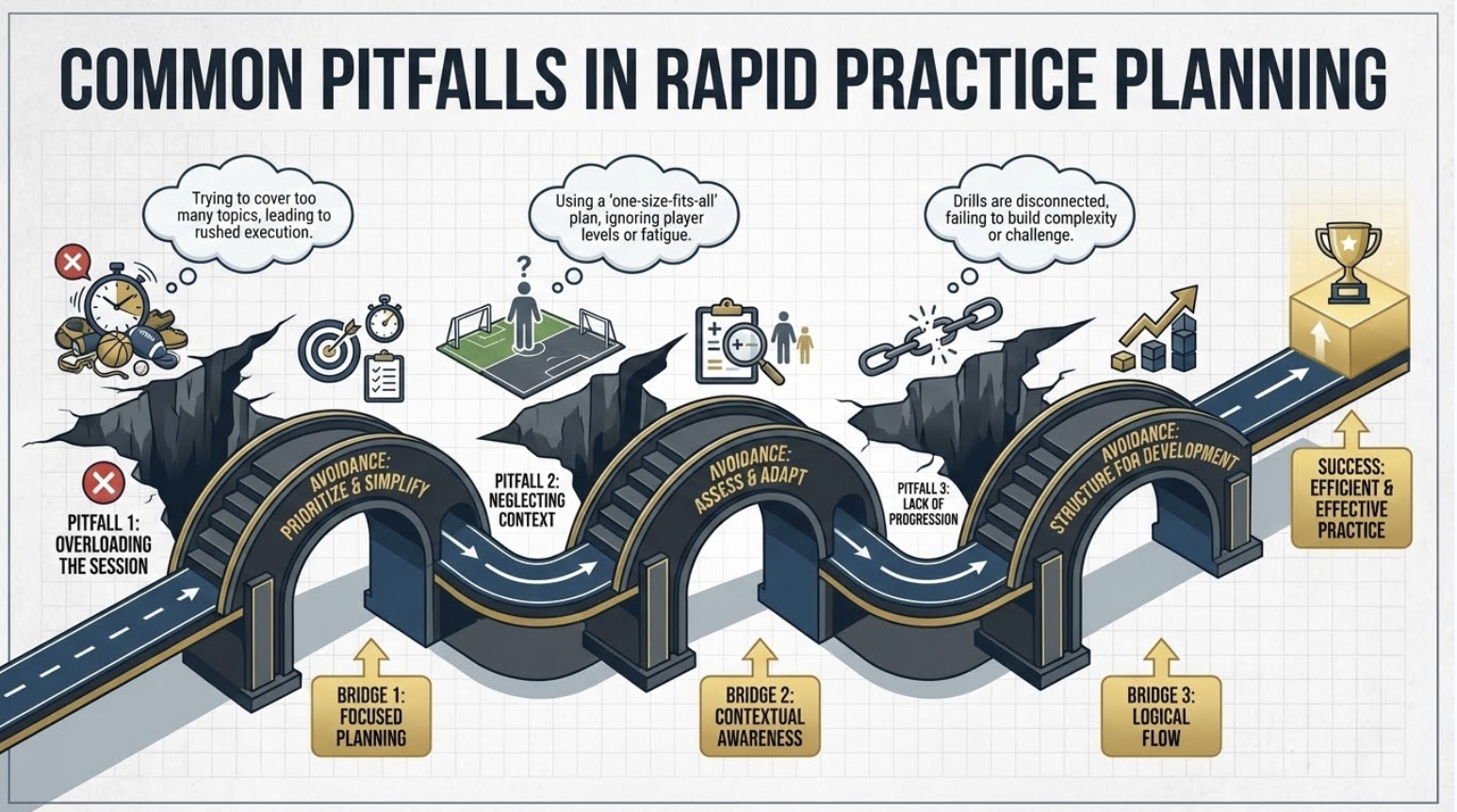
Common Pitfalls and How to Avoid Them
Even with intentions for efficient practice design, common traps can derail efforts. Recognising and avoiding these pitfalls is crucial for maintaining productivity and player satisfaction in football coaching.
Over-Drilling and Player Fatigue
Avoid hammering a single drill for too long, leading to boredom and diminished focus. Build variety into drill selection and limit activities to 8-10 minutes. Observe player energy and adjust intensity, prioritising quality reps over sheer quantity. Dynamic practice management means listening to your players.
Lack of Clear Instruction and Communication
Confusion saps efficiency. Adopt the "KISS" principle: Keep It Short and Simple. Provide concise explanations and demonstrations, then start immediately. Use visual cues and specific, actionable feedback. Clear communication upfront saves minutes of frustration, ensuring smoother practice flow and better skill acquisition.
Ignoring Adaptability: The Weather Wildcard
Always have a "Plan B" for unexpected weather. Can you move indoors, or switch to drills suitable for rain or heat? Pre-formulated contingencies, like a "rainy day" template focusing on strategy, allow you to quickly pivot without losing valuable football training time, ensuring your schedule remains robust.
Frequently Asked Questions About Designing Efficient Football Practices
Coaches often seek ways to make practices more effective and less time-consuming. Here are common inquiries on effective practice management:
What's the absolute minimum I need to plan before practice?
At minimum, identify your 1-3 primary practice objectives and a rough outline of core drills (warm-up, a few skill drills, one team drill) to achieve them. This foundational structure allows for on-the-fly adaptation.
How do I keep players engaged if I'm not doing full-contact drills?
Focus on high-rep, multi-tasking drills that keep everyone moving, even without contact. Incorporate competitive elements, explain the "why" behind each drill, and use frequent positive reinforcement to build enthusiasm for youth football drills.
I only have one assistant coach. How can I manage multiple stations?
Divide practice into two main stations—one for you, one for your assistant. Alternatively, use a station requiring minimal direct coaching (e.g., footwork ladders) while you and your assistant focus on more technical stations, ensuring efficient football training.
What's the best way to handle disruptive players or a lack of focus?
Address disruptive behavior immediately and privately. Re-engage players by changing the drill, increasing pace, or assigning a leadership role. Ensure clear instructions, and sometimes a short break can reset the team's energy and focus for better player development.
How can I make sure my practice plan translates effectively from paper to pitch?
The key is visualisation and simplification. Mentally walk through each drill, imagining player placement and transitions. Keep explanations concise, diagrams clear, and be prepared to adapt to real-time feedback. Flexibility ensures effective football practice planning.
Final Thoughts and Call to Action
Designing a football practice efficiently isn't about rushing; it's about mastering smart planning and maximising every moment for your players. By setting clear objectives, using templates, embracing multi-tasking drills, and leveraging technology, you'll transform your coaching approach. Spend less time scrambling and more time actively coaching, fostering skill development, and instilling a love for the game. These principles empower you to create dynamic, engaging, and highly productive football training sessions.
Ready to revolutionise your football coaching?
Implement these strategies this week, starting with a clear objective for your next practice.
Watch how quickly your planning time shrinks and your team's performance soars.
The future of efficient football practice management starts now!
Thanks for reading, if you liked this blog, you may also like:
How to Defend 1v1 in Football (in Wide Areas)
Mastering the Game: 3 Essential Practices for Elevating Your Football Scanning IQ
5 Benefits Why You MUST Come to England’s St George’s Park With Us…
Unlocking the Beautiful Game: Mastering the Coolest Passing Tricks in Football