How to Manage the Bench 'Fairly' in Grassroots Football: A Coach's Guide to Equitable Playtime and Player Development
Does the thought of managing substitutions fill you with dread? Are you constantly navigating the delicate balance between winning games and ensuring every young player feels valued? In grassroots football, where development often outweighs immediate results, the "bench" can become a source of anxiety, frustration, or even conflict if not handled with care and intention. But what if there was a way to manage playing time that not only felt fair to everyone involved but also actively fostered skill, resilience, and a deeper love for the game?
The Heart of Grassroots Football: What Fair Bench Management Truly Means
Grassroots football is the foundational layer of the sport, where young players learn the joy of playing, develop fundamental skills, and build character. It's about participation, personal growth, and creating a positive experience that keeps children engaged. Central to this mission is bench management and ensuring equitable playtime for all participants.
Understanding the 'What': Why Fair Bench Management Matters
Fair bench management in youth football isn't just about splitting minutes equally. It’s a comprehensive approach prioritising every child's development, sense of belonging, and overall enjoyment. Every player, regardless of current skill, deserves opportunities to learn, improve, and contribute on the field.
Imagine a dedicated young defender who consistently sits on the bench. Their motivation will dwindle, questioning their value to the team and the sport. This isn't just a personal setback; it's a loss for the team and the broader football community.

The 'Why': More Than Just Game Time – Building Character and Skill
The decision of who plays profoundly impacts a player's journey. Fair and thoughtful player rotation is a powerful tool for player development, fostering crucial life skills and a lifelong passion for football. Consistent playtime builds confidence, encouraging players to take risks and try new moves.
When every child gets meaningful time on the pitch, they gain invaluable experience. They learn to make decisions under pressure, adapt to game situations, and understand their team role. This holistic growth cultivates resilient individuals who understand the value of team morale and collective effort.
Building Your Fair Play Philosophy: Principles for Equitable Player Rotation
Successful bench management in grassroots football isn't arbitrary; it stems from a well-defined philosophy. Coaches must intentionally build a framework that guides their decisions, ensuring consistency and transparency. This philosophy should be rooted in development, inclusion, and enjoyment.
Developing a Clear Bench Management Policy
Establishing a clear, written policy regarding playing time is the first step towards fairness. This isn't about rigid rules, but guidelines everyone understands. A robust policy should outline how playing time will be allocated, considering factors like attendance, effort, attitude, and developmental stage.
For younger age groups (e.g., U6-U10), emphasise near-equal playing time. As players get older and move into competitive tiers, the policy might introduce meritocratic elements, but always with a strong developmental component.
Communication is Key: Setting Expectations Early and Often
Even the most perfectly crafted policy is useless if not communicated effectively. From the first team meeting, coaches should clearly articulate their bench management philosophy to both players and parents. Emphasise the focus on player development and team cohesion over winning.
This proactive communication can preempt many potential issues and build trust. Regular check-ins throughout the season are vital. Transparency is your greatest ally in building understanding around playing time decisions.
Balancing Development with Competition: The Dual Challenge
One of the trickiest aspects of grassroots football coaching is finding the equilibrium between developing individual skills and competing effectively. While development should always be the priority, completely ignoring competition isn't realistic or beneficial.
The key is to manage the bench so all players experience both. This means being strategic with substitutions. The overarching goal is for every child to feel challenged, supported, and to understand their valuable contribution.
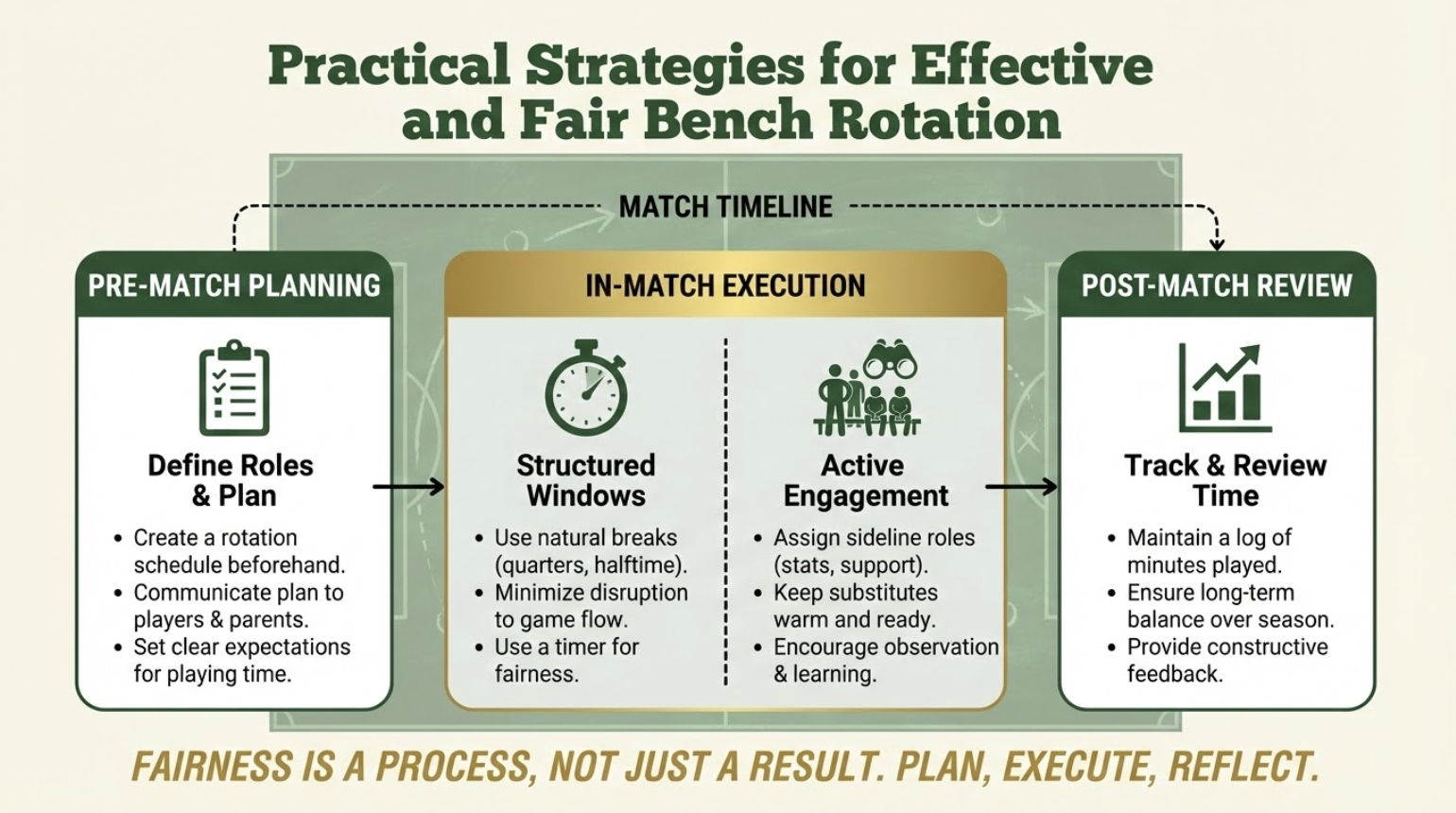
Practical Strategies for Effective and Fair Bench Rotation
Once a clear philosophy is established, coaches need actionable strategies to put their fair bench management principles into practice. These techniques ensure equitable playtime while maximising player development and maintaining high team morale.
Implementing a Rotational Playtime System
A structured approach to player rotation removes guesswork and promotes transparency.
Fixed Quarter/Half Rotation: For younger ages, this is often simplest. Every player plays at least one full quarter or half, ensuring significant game time. Coaches can rotate players in different positions during these segments.
Match-Specific Rotation: As players mature, a more dynamic approach can be introduced. This involves planning rotations before the game, considering opponent strength, fatigue, and individual developmental goals. Using a simple spreadsheet helps coaches track playing time, ensuring no player consistently gets less time over a season. This also serves as a tangible record for accountability.
Player Grouping and Positional Flexibility
Instead of a "starting 11" and "substitutes," coaches can consider players in groups. This allows for more fluid rotation and ensures all players gain experience in different roles. Encouraging positional flexibility is key. This enhances players' understanding of the game and their versatility.
Utilising Training Sessions for Skill Development
Game day is only part of the development process; training sessions are where the bulk of skill development happens. Coaches should design practices to be inclusive and challenging for all players. Players who might receive less game time should get extra attention and specific drills to work on weaknesses.
This reinforces that their development is paramount and hard work in training translates to future opportunities on the pitch. It prevents players from feeling marginalised.
Managing Game Day Substitutions Strategically and Ethically
Game day substitutions require both strategy and empathy. Coaches should make changes with a clear purpose, whether for tactical reasons, fresh legs, or to ensure promised playing time. Communicate these changes clearly to the players involved.
Avoid last-minute, rushed substitutions. Plan ahead so players remain engaged. The goal is to make every player feel valued, prepared, and excited for their opportunity. Never use substitutions as punishment; discussions about behavior belong off the field.
Overcoming Common Bench Management Challenges
Even with the best intentions and strategies, coaches in grassroots football will face challenges when it comes to managing the bench fairly. Addressing these issues proactively and empathetically is crucial for a positive team environment and player retention.
Addressing Parental Concerns and Expectations
Parents are passionate about their children in sports; this can lead to concerns about playing time. Coaches should view these concerns as opportunities for education and communication. Reiterate the team’s player development philosophy and explain how the bench management policy benefits all players long-term.
Provide examples of how players are growing through varied game experiences. Suggest ways parents can support their child's development off the field, reinforcing that contributions extend beyond minutes played.

Motivating Benched Players and Maintaining Team Morale
Keeping players engaged and motivated when not on the pitch is a key coaching skill. The bench should never feel like punishment. Coaches can involve substitutes by asking them to observe play, identify patterns, or suggest adjustments.
They can be tasked with cheering, retrieving balls, or providing water. Recognising and praising their contributions, whether from the sideline or a brief cameo, significantly boosts team morale.
Dealing with Unfairness Perceptions: Transparency and Consistency
Perceptions of unfairness quickly erode team cohesion. When players or parents believe playing time decisions are arbitrary or biased, it creates resentment. The best defense is absolute transparency and consistency. Stick to your stated bench management policy.
If an exception is made, be prepared to explain why, clearly and logically. Avoid favoritism, even if unconscious. Treat every player with the same respect and provide equal opportunities to learn and contribute.
The Role of Assistant Coaches in Bench Management
Assistant coaches are invaluable assets in bench management. They can help track playing time, warm up substitutes, keep benched players engaged, and communicate upcoming changes. Delegating these responsibilities ensures no player is overlooked and transitions are smooth.
Empowering assistant coaches to engage with substitutes, offer specific feedback, or run small warm-up drills makes benched players feel more involved and prepared. This shared responsibility benefits the entire team.
The Long-Term Impact: Cultivating a Positive Football Culture
Effective and fair bench management in grassroots football has ripple effects that extend far beyond a single game. It lays the groundwork for a robust and positive sporting environment, shaping young players both on and off the pitch. The ultimate goal is to build a lasting and beneficial football culture.
Fostering Team Cohesion and Mutual Respect
When every player feels valued and knows they will get their chance, it fosters strong team cohesion. Instead of internal competition over minutes, players learn to support each other and celebrate successes. They develop mutual respect, understanding that everyone contributes to the team's goals.
This environment reduces jealousy and encourages camaraderie. True cohesion is seen when a starting player is just as enthusiastic about a substitute's goal as their own, built on fair play and shared effort.
Developing Resilient and Passionate Young Players
Learning to handle being on the bench, waiting for an opportunity, and then performing, is a crucial life lesson in resilience. Children learn patience, perseverance, and emotional management. They understand hard work and a positive attitude lead to rewards.
When players feel supported and given fair chances, their passion for the game deepens. This intrinsic motivation keeps children involved in sports long-term, contributing to their physical and mental well-being.
Measuring Success Beyond the Scoreboard: Player Growth
In grassroots football, success should not be solely measured by wins or goals. A more meaningful metric is player growth. Are individual players improving skills and confidence? Do they understand the game better and enjoy themselves? These are the questions coaches should be asking.
By prioritising fair bench management and equitable playtime, coaches significantly contribute to these developmental outcomes. This broader definition of success ensures focus remains on holistic development, rather than chasing short-term results.
Frequently Asked Questions (FAQs) About Bench Management
Coaches, parents, and players often have common questions regarding fair playing time in grassroots football. Here are some answers to provide clarity and guidance.
How Do I Explain My Bench Policy to Parents Effectively?
Hold an initial team meeting to discuss your bench management philosophy, emphasising player development. Provide a written summary and be open to questions. Reiterate that consistent attendance and a positive attitude are key factors.
What If a Player Consistently Underperforms? How Do I Handle Their Playtime?
Underperformance is a coaching opportunity. Work individually with the player in training, providing constructive feedback and drills. Ensure they still receive meaningful minutes, framing it as a journey of growth, not exclusion.
Is It Ever Okay to Play a Stronger Player More Than Others?
In true grassroots football (especially U6-U12), emphasis should lean heavily towards equitable playtime. If a stronger player gets more time in competitive older leagues, it should be transparent, with a clear developmental rationale, and ensure all others still meet minimum playtime requirements.
How Can I Keep Substitutes Engaged During a Game?
Assign specific tasks, like observing opponents or tracking movements. Encourage positive cheering. Have an assistant coach run small warm-up drills to keep them ready. Engage them in tactical discussions, acknowledging their presence and contribution.
What’s the Best Way to Introduce a New Player to the Team's Rotation Strategy?
Provide new players and their parents with your bench management policy immediately. Explain the team's philosophy of fair play and player development. Integrate them gradually, ensuring they understand their role and opportunities.
Final Whistle: Building a Fair and Flourishing Grassroots Team
Empowering Every Young Footballer to Thrive
Managing the bench fairly in grassroots football is one of the most challenging yet rewarding aspects of coaching. It demands thoughtful planning, transparent communication, and an unwavering commitment to the holistic development of every young player. It’s about consistently applying a philosophy rooted in fair play, equitable playtime, and a genuine desire to foster a lifelong love for the beautiful game.
When coaches prioritise individual growth, communicate openly, and implement fair player rotation strategies, the results are profound. Teams built on these principles develop stronger bonds, deeper respect, and greater resilience, with victories extending beyond the scoreline. Embrace the challenge of fair bench management. Define your policy, communicate it consistently, and always put your young footballers' development first to cultivate a positive football culture that empowers every child to thrive in youth football.
Thanks for reading, if you enjoyed this blog, you may also like:
The Power of the Small Win: Why Celebrating Progress is Key to Success
Why I Ban the Term "Weak Foot" in My Football Sessions
What To Say and Not to Say On The Sidelines of Your Child's Football Match
Stop the Self-Doubt: Give Your Teen the Power to Crush Limiting Beliefs