

What is the first touch problem, and how does a young player fix it?
The short answer. Most young players use their first touch to stop the ball, when it should set up the next move. The fix is to look before the ball arrives, open the body and take it with the back foot. Short daily practice against a wall builds the habit.
The pass is good. Your child gets to it first, the ball hits their foot and stops dead. By the time they look up, a defender is on them and the chance has gone.
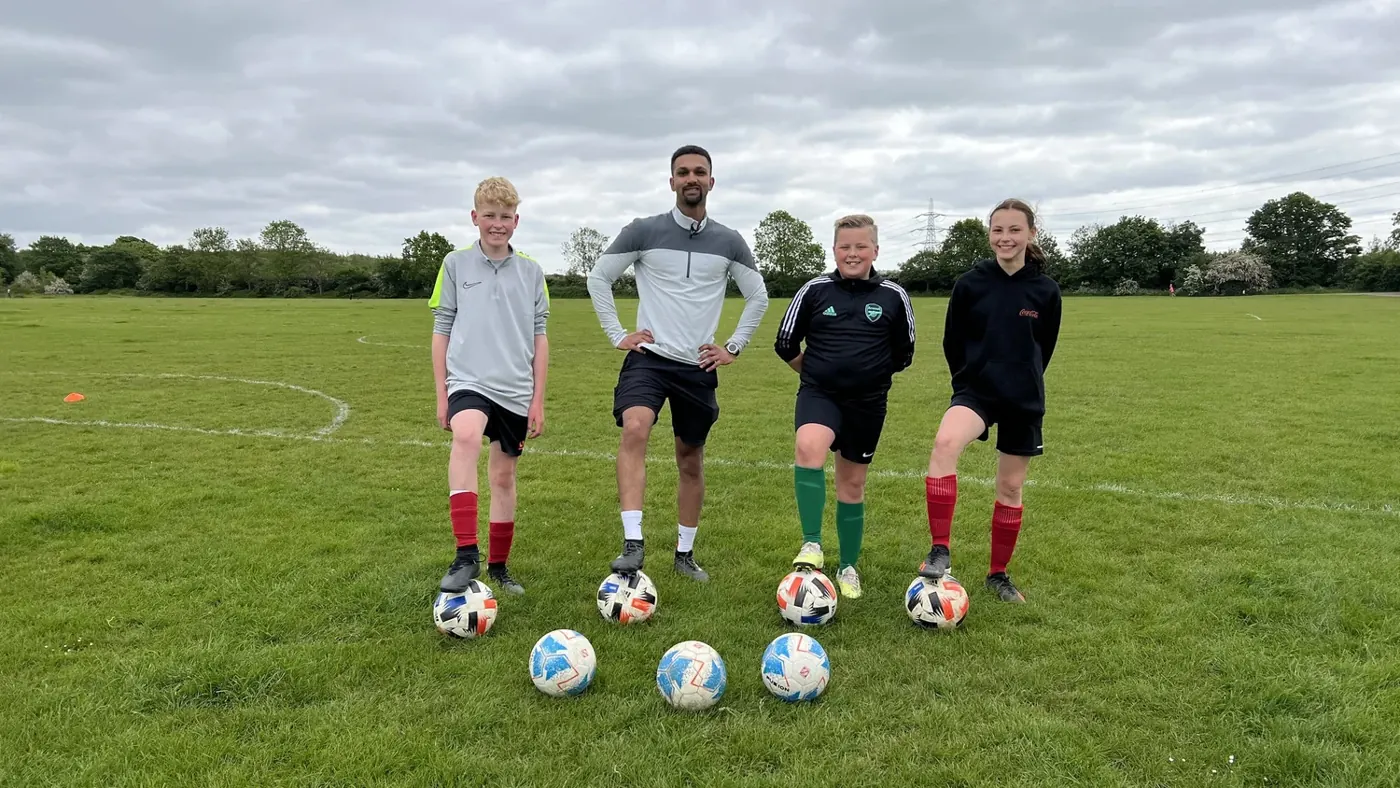
I see this every week with young players across Leighton Buzzard and Milton Keynes. Most of them can control a ball. Very few use that first touch to set up what comes next.
That gap is the first touch problem, and most players carry it right through their teens. Here is what it looks like, why it sticks, and how to fix it.
What is a first touch for?
A first touch is for setting up the next move. Most young players use it to stop the ball instead.
Ask most young players what a first touch is for, and they will say "to control the ball". That answer is the problem.
To most children, control means the ball is still. In a match, a still ball under your feet invites pressure. The defender has a target and your child has no room.
A good first touch does a different job. It moves the ball into space and away from the nearest defender. It also sets up the pass, shot or dribble that follows.
So I teach players to think "set", not "stop". The first touch should make the second touch easy.
Why do most players never fix it?
Nothing forces them to. Most practice is unopposed, and younger players can get away with a poor touch on a small pitch.
The habit starts young and it rarely gets challenged. I think there are a few reasons for that.
- Most practice is unopposed. A player passing in pairs has all the time in the world.
- Younger players get away with it. On a small pitch, pace or size buys back the lost second.
- It is not exciting. Nobody posts a clip of a tidy touch out of their feet.
- Nobody counts it. Goals and assists get noticed, while a poor touch just looks like bad luck.
Then the pitch gets bigger and the game gets faster. In the early teens, defenders close down sooner and that spare second disappears.
This is the stage when parents tell me their child "has lost confidence on the ball". In most cases the touch was always the weak point. The game has only now caught up with it.
How can you spot a poor first touch?
Watch only the moment your child receives the ball. A ball that stops under the feet, extra touches and a head that stays down are the main signs.
You do not need a coaching badge to see this. Watch your child for ten minutes at the next match. Ignore everything except the moment they receive the ball.
Look for these signs:
- The ball stops under their feet, so they have to step back to play it.
- They need three touches where one or two would do.
- Their head goes down as the ball arrives and stays down.
- They take every ball with the same foot, even when it is awkward.
- Their touch goes back towards the defender, not away.
- They stand flat-footed and wait for the pass to reach them.
One or two of these is normal for any young player. If you see four or five most weeks, the first touch is holding them back.
The fix starts before the ball arrives
Here is the part most players miss. A first touch is a decision, and nobody decides well without information.
A player who watches the ball all the way in knows nothing about the space around them. So the touch goes wherever feels comfortable, which usually means straight under the feet.
The best receivers look away from the ball before it reaches them. A quick glance over each shoulder tells them where the pressure is and where the space is.
Coaches call this scanning, and it is the first habit I work on. I have written a full guide on how to scan like a pro if you want the detail.
Body shape and the back foot
Next comes how your child stands. A player who faces the passer square on can see only half the pitch. They also have one way to go, which is back where the ball came from.
I ask players to open their body, so they stand side on to the ball. From there they can see the passer and the space behind them at once.
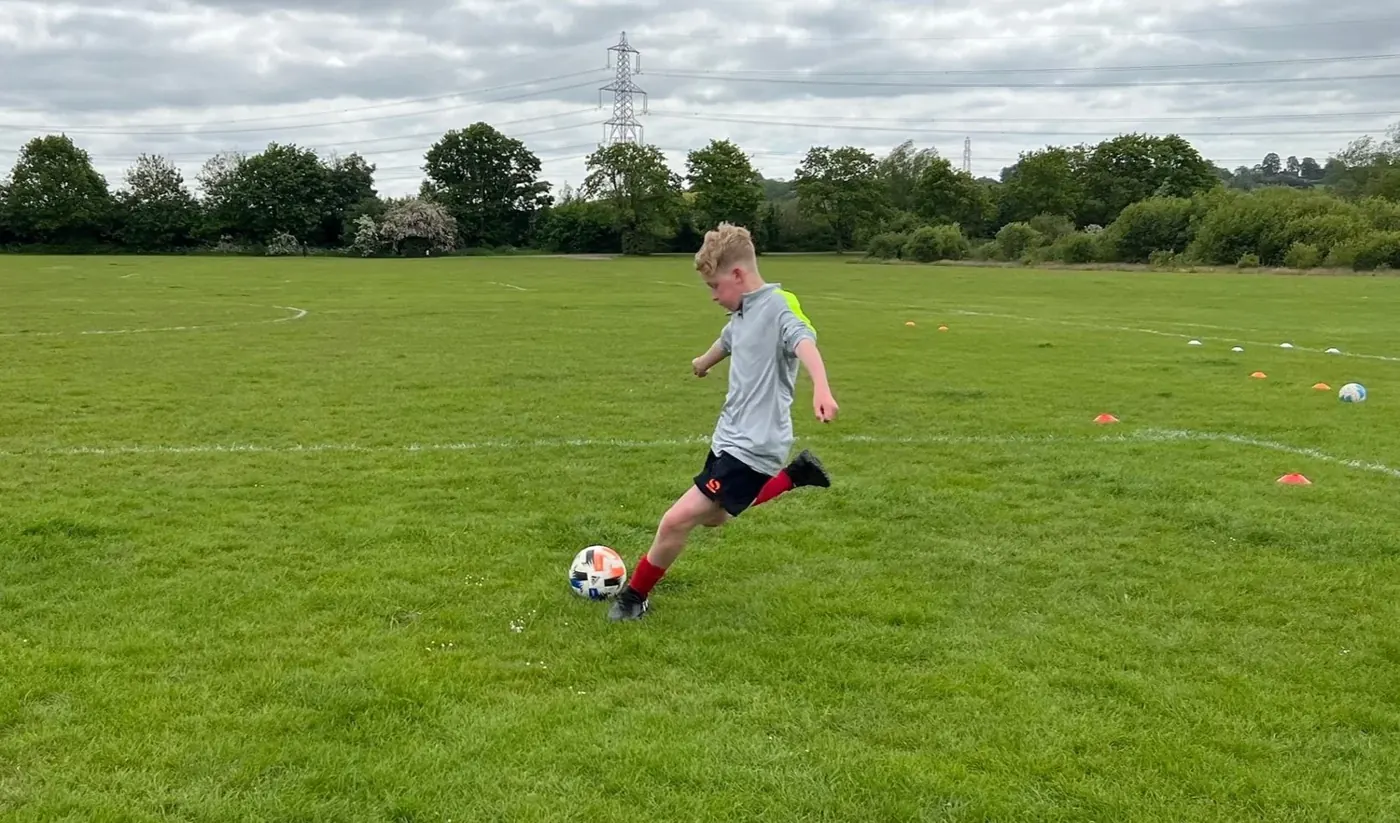
Then they let the ball run across them and take it with the back foot. That is the foot furthest from the passer. After one touch they are facing forward with the ball moving.
Three small details help:
- Stay on your toes as the ball travels, never on your heels.
- Move towards the pass instead of waiting for it.
- Keep the ankle firm and the leg relaxed, so the ball does not bounce off.
It feels strange at first. Most players need a few weeks before it shows up in matches without thinking.
Which part of the foot should they use?
All of them, and on both feet.
Many young players own one touch, with the inside of the strong foot. That works when the pass is perfect and nobody is near. It fails the rest of the time.
A complete first touch uses the inside, the outside and the sole. It also copes with a bouncing ball, using the laces, thigh or chest to bring it down. Each surface sends the ball somewhere different, which gives your child more ways out of trouble.
The other half of this is the second foot. A player who can receive on one side only is easy to read and easy to press. I explain my approach in why I ban the term "weak foot".
How can your child practise first touch at home?
Your child needs a ball, a wall and about ten minutes a day. First touch responds well to short, regular practice.
Build it up in this order:
- Two touches, strong foot. Set the ball to the side, then pass.
- Two touches, other foot. Same idea, and expect it to be messy.
- Set with one foot and pass with the other.
- Receive on the back foot and turn away from the wall.
- Glance over a shoulder before every touch.
- Hit the wall harder, so the ball comes back faster.
Quality matters more than speed here. Twenty careful repetitions beat a hundred rushed ones.
If your child enjoys a challenge, try the 5-minute wall-ball challenge. It keeps the session short enough to fit in before school or after homework.
One caution. If the wall work brings on pain in a knee, ankle or heel, stop and see a GP or physio.
Then add pressure, and count it
Wall work builds the technique, but a wall never tackles. The touch becomes a match habit only when a real defender is closing in.
That is why opposed practice matters so much, and why group coaching helps. Players need to receive with someone on their back, in tight areas, again and again. They make mistakes, and that is the point.
If the problem runs deep, 1-2-1 coaching lets us slow it all down. We can spend a whole session on receiving, one detail at a time.
It also helps to count. Ask your child to note how many first touches took them away from pressure in a match. In our 1-2-1 sessions, Track Your Game boot sensors count every touch and pass.
Keep the target small, because one clear target beats five vague ones. "Set my first touch into space" is something a child can remember on a cold Sunday morning.
Frequently asked questions
At what age should my child work on first touch?
Any age. The earlier the habit forms the better, but teenagers can still change it with steady practice.
How long does it take to improve a first touch?
It varies from player to player. With short daily practice, most players notice a difference within a few weeks, and matches follow later.
My child has a good touch in training but not in matches. Why?
Training tends to offer more time and less pressure. Nerves can play a part too, and mindset coaching can help with that side.
Does first touch matter for defenders and goalkeepers?
Yes. Every position receives the ball under pressure, and a poor touch near your own goal costs the most.
How often should my child practise first touch?
Little and often works best. About ten minutes on most days does more than one long session a week.
The next step
If you recognise your child in this post, come and train with us. Group coaching runs in Leighton Buzzard and Milton Keynes. The first session is a free trial in Leighton Buzzard.
Bring a ball and an open mind. A first touch can change faster than most parents expect, once a player knows what it is for.