The Ultimate Pre-Match Meal for Grassroots Football Players: Fuel Your Game, Elevate Your Performance
Is your performance on the football pitch lagging in the second half? Do you feel that sudden drop in energy when the game truly heats up? Many grassroots players underestimate the power of proper nutrition, settling for quick fixes that actually sabotage their efforts.
What if a simple change to your pre-match meal could unlock sustained energy, sharper focus, and elevate your entire game?
For aspiring footballers, passion for the game is undeniable. Training hard is key, but the secret weapon for peak performance isn't found in a fancy new boot; it's on your plate.
A well-planned pre-match meal strategically fuels your body for the intense physical demands of 90 minutes of football, impacting your stamina and decision-making.
Ignoring pre-match nutrition is like trying to drive a car on an empty tank; you might start, but your engine will struggle.
This guide will help you understand the foundational principles of sports nutrition tailored for the grassroots player, ensuring you step onto the pitch optimally fueled and ready to dominate.
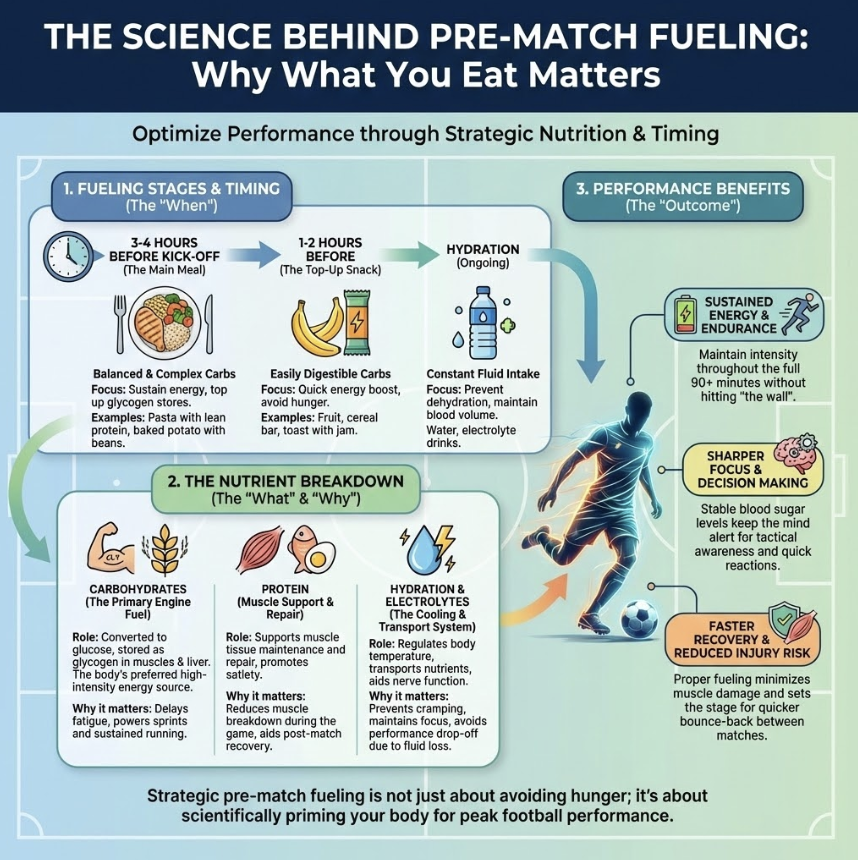
The Science Behind Pre-Match Fuelling: Why What You Eat Matters
Football is an intermittent sport, characterised by bursts of high-intensity sprints. Your body needs a constant supply of energy to meet these varying demands. Understanding how food translates into on-field performance is crucial for optimising your game.
Understanding Energy Demands on the Pitch
From the first whistle, your body burns calories rapidly. High-intensity activities like sprinting and tackling primarily rely on carbohydrate stores for quick energy. If these reserves run low, fatigue affects reaction times and a noticeable dip in your performance. A full 'battery' ensures sustained power.
The Role of Glycogen: Your Football Fuel Tank
Glycogen, the stored form of carbohydrates in your muscles and liver, is your body’s primary fuel during exercise. Consuming carbohydrates replenishes these glycogen stores, ensuring a full 'fuel tank' before the game. This direct link is crucial for maintaining stamina and endurance throughout the match.
Hydration: The Unsung Hero of Performance
Proper hydration is vital. Even a small degree of dehydration impairs physical and mental performance, causing decreased endurance, reduced strength, and muscle cramps. Well-hydrated means maintaining blood volume, regulating body temperature, and transporting essential nutrients for optimal function.
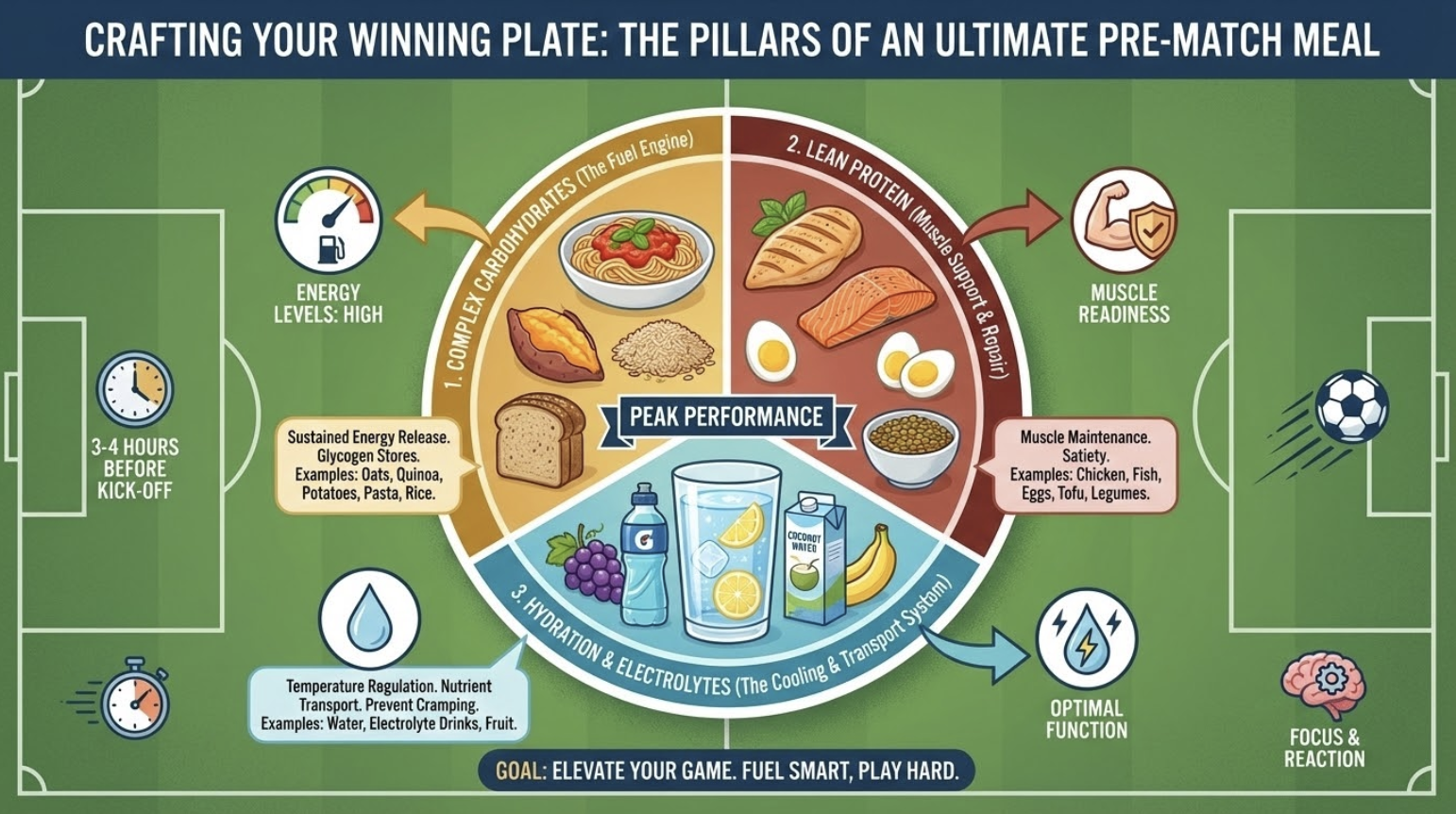
Crafting Your Winning Plate: The Pillars of an Ultimate Pre-Match Meal
Building the perfect pre-match meal involves strategically combining macronutrients. Each component plays a specific role in providing energy, supporting muscle function, and ensuring you feel comfortable and ready to play.
Carbohydrates: Your Primary Power Source
Complex carbohydrates are the cornerstone of any pre-match meal. They provide a sustained energy release, slowly replenishing your glycogen stores without causing a rapid sugar spike. Aim for easily digestible options to avoid discomfort during the game.
Examples of excellent complex carbohydrates include:
• Whole wheat pasta
• Brown rice
• Sweet potatoes
• Oats (porridge)
• Wholemeal bread
These foods are rich in starches that break down gradually, ensuring a steady supply of glucose into your bloodstream for sustained energy for football.
Lean Protein: Muscle Support and Satiety
Modest amounts of lean protein are essential. Protein aids muscle repair, recovery, and contributes to feelings of fullness. However, too much protein slows digestion, so portion control is key for a balanced pre-match meal supporting both immediate energy and long-term muscle health.
Good sources of lean protein include:
• Grilled chicken breast
• Turkey
• Fish (cod or salmon)
• Eggs
• Tofu
• Low-fat Greek yogurt
A small serving of grilled chicken alongside your brown rice, for example, provides a balanced approach to pre-game fuelling.
Healthy Fats: Energy Backup (In Moderation)
Fats are an important energy source, but they take longer to digest. Too much fat pre-game causes stomach upset and sluggishness on the pitch. Keep fat content low in your pre-match meal, saving the majority of your healthy fat intake for other meals throughout the week.
If included, small amounts can come from:
• A few slices of avocado
• A sprinkle of seeds
• A light dressing
The goal is to focus on easily digestible fuels for immediate use, not long-term storage, in the hours leading up to kick-off.
Fruits and Vegetables: Vitamins, Minerals, and Antioxidants
Fruits and vegetables pack essential vitamins, minerals, and antioxidants, supporting overall health and recovery. They also provide fiber, important for digestive health. Opt for lower-fibre, easily digestible options closer to the game to avoid discomfort.
Consider easily digestible options like:
• Bananas
• Berries
• Cooked carrots
• Spinach (lightly cooked)
These add nutritional value without overwhelming your digestive system. A banana, for instance, is a fantastic source of quick, natural sugars and potassium, perfect for a pre-game snack.
Timing is Everything: When to Eat Your Pre-Match Meal
Eating the right foods at the wrong time is detrimental. The timing of your pre-game food is critical for proper digestion and optimal energy availability. It's not a one-size-fits-all, but general guidelines help you achieve this.
The 3-4 Hour Window: The Main Event
Your main pre-match meal should be consumed approximately 3-4 hours before kick-off. This allows ample digestion time, converting carbohydrates into stored glycogen. Eating too close to the game can leave you heavy and sluggish. This meal truly tops up your glycogen stores for your match day diet.
The 1-2 Hour Snack: A Quick Top-Up
If you feel hungry or need a final energy boost closer to the game, a small, easily digestible, carbohydrate-based snack 1-2 hours pre-kick-off helps.
Ideal snacks include:
• A banana
• A small handful of pretzels
• A rice cake with jam
• A sports drink (if needed for electrolytes and quick carbs)
This light snack acts as a quick top-up without causing digestive distress, ensuring you maintain optimal energy for football from start to finish.
Pre-Game Sips: The Importance of Hydration
Don't wait until kick-off to hydrate. Drink water steadily throughout the day leading up to the game. Aim for around 500-600ml 2 hours before the game, then another 200-300ml 15-30 minutes before kick-off. This proactive hydration strategy ensures you start well-hydrated, critical for endurance and stamina.
What to Avoid: Common Pre-Match Mistakes That Can Cost You the Game
Knowing what to eat is important, but what to avoid is equally crucial. Certain foods can hinder your game day performance, causing discomfort or energy crashes. Avoid these foods for peak play.
High-Fat Foods: The Digestive Disaster
Foods high in fat—such as greasy fast food, fried items, rich sauces, and heavy cream dishes—take a very long time to digest. This can lead to heavy, bloated feelings, stomach cramps, and even nausea. Your body diverts blood flow to your digestive system, impacting your performance food. Steer clear of these on match day.
Spicy and Processed Foods: Unwanted Surprises
Spicy foods can cause heartburn or digestive upset, especially when combined with physical exertion. Heavily processed foods, often laden with artificial ingredients, offer little nutritional value and lead to energy fluctuations. Your stomach should be settled and ready for action.
Sugary Drinks and Sweets: The Energy Crash
While sugary foods provide a quick burst of energy, they often lead to an equally rapid drop in blood sugar, known as a 'sugar crash,' leaving you fatigued and unfocused. Sports drinks are an exception, formulated for sustained effort, but regular soda or excessive sweets are a definite no-go. Focus on steady energy for football.
Experimenting on Game Day: Stick to What You Know
Game day is not the time to try out a new recipe or an unfamiliar food. Stick to meals and snacks that you know your body tolerates well and that you've tested during training. This minimises the risk of unexpected digestive issues. Consistency is key for your football nutrition plan and game day performance.
Real-World Examples & Actionable Tips: Building Your Pre-Match Playbook
Let's put theory into practice. Here are actionable tips and examples to help build your ultimate pre-match meal routine.
Sample Pre-Match Meal Ideas
Here are simple meal ideas for the 3-4 hour window pre-game:
• Classic Pasta Power-Up: Whole wheat pasta with light tomato sauce and grilled chicken or fish.
• Rice Bowl Resilience: Brown rice with baked chicken or turkey breast and roasted sweet potato.
• Oatmeal Energy Boost (for morning games): Porridge with banana and a drizzle of honey.
• Sandwich Savvy: Wholemeal bread sandwich with lean turkey or chicken, lettuce, and light spread.
Remember, portion sizes will vary based on your individual energy needs and body size.
Hydration Strategy: More Than Just Water
Your hydration for football extends beyond just drinking water. On hot days or if you're a heavy sweater, consider adding an electrolyte tablet to your water or opting for a low-sugar sports drink. These help replenish fluids and vital minerals lost through sweat. Start hydrating actively the day before the match.
Travel & Away Games: Eating on the Go
Midfielder Sarah used to grab unhealthy options during two-hour bus journeys to away games, causing poor performance. Now, she packs homemade meals: whole wheat pasta, grilled chicken, fruit, and water. She fuels up before leaving, eats on the bus, arriving light, energised, and ready to play. This transformed her away game performance.
Actionable Tip: Plan ahead for away games. Pack non-perishable, easily digestible options like wholemeal sandwiches, fruit, rice cakes, and plenty of water. Avoid relying on unknown or potentially unhealthy options from service stations.
Listen to Your Body: Personalised Nutrition
Your body is unique. Pay attention to how different foods make you feel: do they cause stomach upset or leave you feeling sluggish? Experiment with different healthy options during training weeks to find what works best. A simple food diary helps track what you ate and how you performed for **personalised nutrition**.
FAQs: Answering Your Top Pre-Match Meal Questions
Navigating pre-match nutrition can raise several questions. Here are answers to common queries from grassroots footballers.
Is it okay to have coffee before a football match?
Moderation is key. Caffeine can enhance alertness but excessive amounts cause jitters, anxiety, or digestive upset. If you regularly consume coffee, a small cup 60-90 minutes pre-game might be fine. Avoid trying it for the first time on match day. Ensure you're also well-hydrated with water, as caffeine is a diuretic.
What if I feel hungry closer to kick-off?
If genuinely hungry after your main meal, a small, easily digestible, carbohydrate-rich snack is appropriate 1-2 hours before the game. Think a banana, a few pretzels, or a rice cake with jam. These provide a quick energy top-up without heavy digestion.
Can I have a protein shake before the game?
While protein is important for muscle repair, a large protein shake might be too heavy and slow to digest right before a game. Focus on complex carbohydrates in your main meal. For a small protein boost closer to the game, choose a light, easily digestible source like a small pot of low-fat Greek yogurt, ensuring it doesn't cause stomach upset.
What should I eat immediately after the game for recovery?
Post-match, your body needs to replenish glycogen stores and repair muscle tissue. Aim for a meal or snack within 30-60 minutes after the final whistle that combines carbohydrates and protein. If not directly after, it’s not the end of the world but you must eat at some point! Examples: a chicken or tuna sandwich, a recovery shake with protein and carbs, or yogurt with fruit and granola.
How much water should I drink on game day?
General recommendations suggest drinking about 2-3 liters of water throughout the day, more if it's hot. On game day, start early and drink consistently. Aim for 500-600ml 2 hours before the game, and another 200-300ml 15-30 minutes before kick-off. Continue sipping during warm-ups and at halftime.
Final Whistle: Fuelling Your Passion for Peak Performance
The ultimate pre-match meal for grassroots football players isn't a secret formula; it's a strategic approach to fuelling your body optimally. By mastering complex carbohydrates, lean protein, and proper hydration, you empower yourself to perform your best from whistle to whistle. No more fading or cramping; a smart football nutrition plan means investing in your stamina, endurance, and overall enjoyment of the game. Take control of your plate to control your performance – fuel your passion and elevate your game.
Thanks for reading, if you enjoyed this blog, you may also like:
The 6 Key Areas for GKs in Football: Mastering the Modern Game
3 Things Football Coaches/Scouts Look for in CMs
A Parent’s Guide to Buying Football Boots for UK Pitches
Designing a Football Practice in 60 Seconds: Master Efficiency on the Pitch
Check out our latest events down below: