Unlocking the Beautiful Game: Mastering the Coolest Passing Tricks in Football
Has a perfectly weighted pass ever left you breathless, dissecting an entire defense in one sublime motion? Did you know that over 70% of goals in professional football originate from a sequence of three or more passes? Imagine the sheer power of not just moving the ball, but dictating play, creating impossible angles, and leaving opponents bewildered.
This isn't just about kicking; it's about artistry, vision, and the kind of magic that transforms a simple game into a dazzling spectacle.
Welcome to the captivating world of advanced football passing, where skill meets strategy to redefine how the game is played. For any aspiring player, coach, or even just an avid fan, understanding these intricate passing tricks offers a deeper appreciation of football's tactical genius and individual brilliance.
This comprehensive guide will take you through the 'what' and 'why' of the most captivating passing techniques, offering insights into how these moves are executed and, crucially, how they elevate team performance and individual flair. Get ready to not only learn about these passes but to understand the mindset and practice needed to bring them to your own game.
Understanding the Art of Football Passing: More Than Just Kicking
At its heart, football is a game of possession and movement. While scoring goals is the ultimate objective, the journey to the net is almost always paved by successful passes. These 'coolest passing tricks' aren't just for show; they are sophisticated tools designed to break down rigid defenses, exploit fractions of space, and create scoring opportunities out of seemingly impossible situations.
The Core Philosophy of Effective Ball Distribution
Effective ball distribution isn't merely about connecting passes; it's about controlling the tempo, creating attacking patterns, and disrupting the opponent's defensive shape. Every pass has a purpose, delivered with specific weight and direction to a teammate's advantage.
This core philosophy underpinning all advanced passing techniques, where every trick is a calculated risk designed for maximum reward.
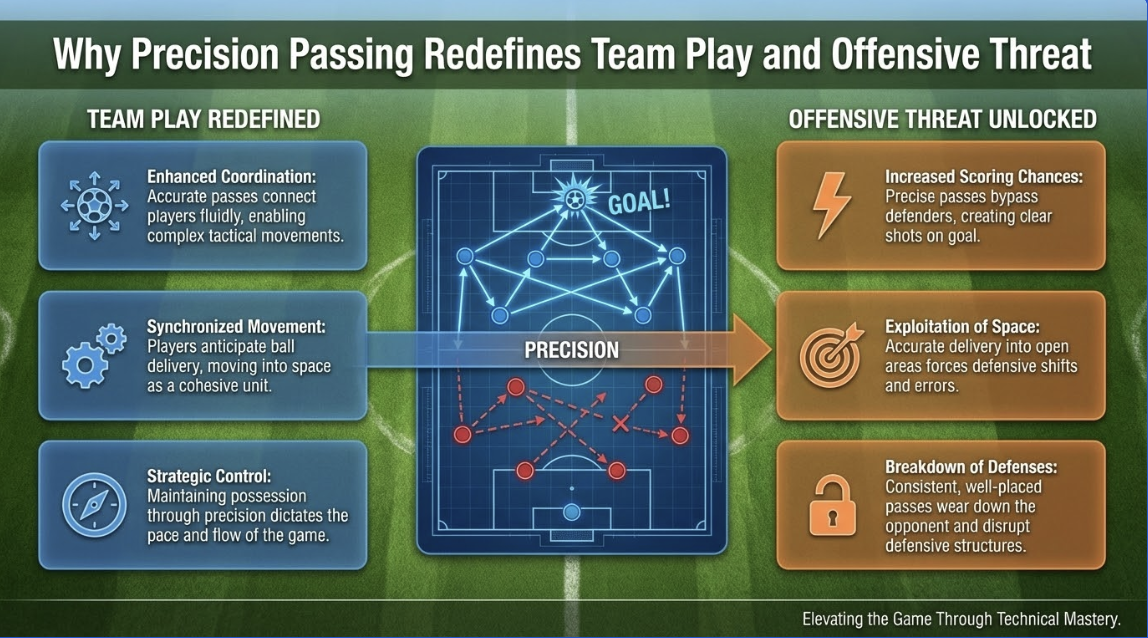
Why Precision Passing Redefines Team Play and Offensive Threat
Precision passing elevates a team from good to great. When passes are consistently accurate, well-weighted, and delivered with vision, it builds confidence, fosters fluid movement, and transforms individual players into a cohesive unit.
Such pinpoint delivery not only creates direct scoring chances but also forces opponents to spread out, opening more space for attackers, making a team incredibly difficult to defend against.
Mastering the Fundamentals Before Daring the Dazzling Passes
Before attempting audacious no-look passes or elegant backheels, a strong foundation in basic passing is essential. The 'coolest' tricks are merely advanced applications of fundamental principles: proper body positioning, strike technique, and an acute understanding of timing and weight. Without these building blocks, any trick pass will likely result in a misplaced ball and a lost opportunity.
Essential Techniques for Building a Strong Passing Foundation
To lay a solid foundation, focus on these critical elements:
1. Body Shape and Balance: Always position your body correctly, facing your target with your non-kicking foot beside the ball. Maintain balance throughout the kicking motion for accuracy.
2. Foot Contact: Use the inside of your foot for accuracy and control, and the instep for power on longer passes. Practice hitting the ball consistently in its center for ground passes, or slightly underneath for loft.
3. Weight of Pass: Deliver the pass with just the right amount of pace—not too hard for control, not too soft for interception. This requires thousands of repetitions and constant feedback.
4. Follow Through: After striking the ball, your kicking foot should follow through towards your target. This generates power and directs the ball's trajectory precisely.
5. Communication: Verbal and non-verbal communication with teammates is vital. A simple call or glance informs your receiver, allowing them to anticipate and react effectively. A good passer is always talking and observing.
Developing Vision and Spatial Awareness for Superior Play
Beyond technical mechanics, influential passers possess exceptional vision and spatial awareness. This means seeing the entire pitch: teammates' runs, defenders' positions, and opening or closing pockets of space. It's about being two or three steps ahead.
Peripheral vision is critical. Practice scanning the pitch before receiving the ball, building a mental picture of changing dynamics. This 'head up' approach allows for quick, informed decisions. Anticipation, predicting where players will be, enhances this. Developing heightened awareness comes from constant practice, game experience, and analysing how top players read the game.
Unlocking the Arsenal: Iconic Passing Tricks Every Player Should Know
With the groundwork firm, let's explore exciting football passing tricks. These are strategic weapons adding deception, speed, and creativity, designed to overcome defensive challenges or exploit momentary lapses in concentration. Each serves a unique purpose in advanced passing techniques.
The Mesmerising Through Ball: Slicing Through Defensive Lines
The through ball is arguably the most impactful pass, played into space behind the defensive line for an attacking teammate to run onto, often leading to a one-on-one. Its beauty lies in timing and weight—too early/hard, goalkeeper; too late/soft, defender. It requires exquisite vision and precision. Lionel Messi is a virtuoso, finding non-existent angles.
Actionable Tip: Practice playing the ball just beyond the last defender, aiming for your teammate's path rather than directly at their feet. Focus on timing relative to their sprint.
The Elegant Backheel Pass: Surprise and Deception on the Pitch
The backheel pass is a fantastic tool for surprising opponents and maintaining momentum in tight spaces, especially when facing away from your target. It's about deception—defenders rarely expect the ball to go opposite to the player's body movement. Often used in crowded penalty areas or along the touchline, a well-executed backheel creates vital space, leaving defenders flat-footed.
Relatable Example: A striker receiving a ball with their back to goal, then subtly flicking it back into the path of an onrushing midfielder for a shot. Ronaldinho famously showcased its flair and effectiveness.
The Audacious Rabona Pass: Style Meets Substance in Tricky Situations
The rabona is visually spectacular, involving wrapping one leg behind the standing leg to strike the ball. Typically used when a player needs to cross or pass with their stronger foot but the ball is on their weaker foot side, or for showmanship. It can maintain dangerous attacking positions or create unexpected crosses, requiring immense coordination, balance, and confidence.
Insight: While flashy, a rabona is strategically useful when a player is off-balance or needs to quickly change the angle of attack without much body adjustment, for instance, a right-footed cross from the left wing.
The Enigmatic No-Look Pass: The Ultimate Illusion of Intent
The no-look pass is a masterclass in deception. The passer feigns intent by looking one way while passing the ball in another, entirely different direction. This relies on misleading opponents with body language and eye contact, freezing defenders and opening crucial passing lanes. It demands exceptional peripheral vision and pinpoint accuracy. Ronaldinho and Paul Pogba have mastered this magic.
Expert-level Explanation: Its effectiveness manipulates a defender's predictive algorithms. By creating a false read, the defender commits to a trajectory the ball never takes, giving the receiver a critical extra second of space and time.
The Incisive Chip Pass: Lifting the Ball Over Impending Obstacles
A chip pass involves striking the ball underneath with an open foot, causing it to ascend quickly and drop sharply, usually over an opponent or into a small space. It bypasses low defenses, sends the ball over a defender's head, or chips a shot. Key elements are perfect height and spin for precise drop, requiring finesse and a delicate touch.
The Weighty Lob Pass: Delivering the Ball with Perfect Trajectory
Similar to the chip but for longer distances, the lob pass sends the ball high with a controlled trajectory. Used to switch play, bypass multiple defensive lines, or clear danger. The 'weight' is paramount: powerful enough to reach, soft enough to control. A well-executed lob changes game dynamics, opening vast areas for attack.

The Strategic Genius Behind Advanced Passing Techniques
These football passing tricks are strategic decisions made instantly, exploiting tactical vulnerabilities and controlling game flow. Understanding the 'why' is as important as the 'how' for maximising their impact on offensive threat and team play.
Reading the Game: Anticipating Opponent Movements and Exploiting Weaknesses
Great passers read the game, anticipating both teammates' and opponents' movements. This involves scanning the pitch, processing defensive lines, marking, and team shape. A skillful passer exploits a defender's imbalance or lapse with a trick pass, like a no-look pass targeting a channel when a defender commits elsewhere.
Creating Space: How Clever Passing Draws Defenders Out of Position
Football thrives on creating and exploiting space. Trick passes are excellent tools for this. An unexpected pass can draw defenders from their zones, opening channels for teammates. A backheel in a tight area, for instance, can shift several defenders' focus, creating acres of space for a teammate. It disrupts defensive structures, forcing reactions, and opening the pitch.
The Power of Misdirection: Using Tricks to Control the Flow of Play
Misdirection is potent, and trick passes are its ultimate expression. Deceiving opponents about a pass's direction or recipient controls game tempo. This can slow a press, speed an attack, or buy critical seconds. Surprise forces defenders to pause, creating a mental lag attackers capitalise on. This control allows elite teams to dominate possession and dictate terms.
Training Drills to Elevate Your Passing Game to the Next Level
Learning these tricks demands relentless, focused practice. Incorporating specific training drills into your routine builds muscle memory, improves precision, and boosts confidence for executing these advanced passing techniques under pressure. Consistency is key for achieving passing mastery.
Repetition and Precision: Practices for Perfecting Passing Mechanics
1. Cone Passing Practices: Set cones in patterns. Practice different passes (inside foot, instep, chipped) to specific cones, focusing on hitting the target with appropriate weight. Gradually increase distance and complexity.
2. Wall Passing: Pass against a wall, focusing on receiving and immediately returning. This improves first touch, reaction, and quick release needed for trick passes. Experiment with backheels and chips.
3. Passing Gates: Set up small "gates" with cones. Practice passing through these narrow gates from various angles and distances. This hones precision and the ability to thread a pass through tight spaces.
Game-Situational Practices: Applying Tricks Under Pressure
1. Rondo (Piggy in the Middle): Excellent for quick, accurate passing in tight spaces, forcing rapid decision-making. Incorporate no-look passes or quick backheels when space is limited.
2. Small-Sided Games with Constraints: Play 3v2 or 4v3. Add rules like "must pass with a backheel every third pass" or "a goal only counts if scored from a through ball." This encourages trick passes in game contexts.
3. Blind Passing Practices: A player closes eyes briefly before receiving, relying on cues before passing. This develops spatial awareness and vision for no-look passes.
Improving Communication and Timing with Teammates
1. Movement and Pass Practices: In pairs/small groups, one player runs, the other passes into their path. Focus on varying runs and passes. Constant verbal communication ("call for the ball!") is vital.
2. "Follow Your Pass" Practices: After passing, immediately move to a new position, expecting a return pass or opening space. This teaches thinking ahead and fluid attacking patterns, like a backheel then a sprint.
3. Vision Practices: Before receiving, players call out a coach's finger count or identify an open teammate. This forces head-up scanning, enhancing peripheral vision crucial for all advanced passes.
Frequently Asked Questions About Football Passing Tricks
What's the most effective passing trick for beginners?
For beginners, mastering the weighted through ball is incredibly effective and foundational. It teaches crucial elements like vision, timing, and precision, transferable to all advanced passes. Practice passes into space for a teammate to run onto, focusing on power and direction so they don't break stride.
How can I improve my passing vision in a game?
Improve passing vision by consistently practicing scanning the pitch before receiving the ball. Lift your head to observe player positions, opponent movements, and available space. In training, incorporate drills where you identify targets before passing. Actively watching professional matches, focusing on top midfielders, also trains your eye.
Are trick passes always practical, or are they just for show?
While some, like the Rabona, have showmanship, trick passes are generally highly practical tools for specific situations. They create surprise, overcome pressure, or use a player's stronger foot when awkward. The key is knowing when to deploy them strategically, not just for flair. When effective, they are game-changing.
What's the difference between a through ball and a lob pass?
A through ball is a ground or low pass into space behind the defensive line for a run, aiming to penetrate directly. A lob pass sends the ball high with controlled trajectory, bypassing multiple lines, switching play, or clearing. Both move the ball past defenders, but through ball emphasizes ground penetration, and lob pass emphasizes aerial clearance and redirection.
How much practice is needed to master these passing tricks?
Mastering these passing tricks requires thousands of repetitions and dedicated practice over an extended period. It's about consistent execution under varying game conditions and pressure. Regular training sessions focused on specific practices, combined with small-sided games, are essential. Patience, perseverance, and learning from mistakes are key; mastery is a gradual process.
Final Thoughts: Elevating Your Game Through Passing Mastery
The journey to mastering the coolest football passing tricks is a rewarding one, transforming a player into an artist of the beautiful game. These advanced passing techniques enhance team cohesion, unlock stubborn defenses, and provide moments of magic. Each trick is a testament to the blend of skill, vision, and audacity that propels the game forward.
True passing mastery begins with a solid foundation in fundamentals, built through endless repetition. The strategic application—knowing when and why to deploy them—becomes paramount, reading the game and using misdirection. So, step onto the pitch with purpose. Observe masters, dedicate yourself to consistent practice, and embrace elevating your game.
Incorporate these insights and training drills today, and you'll not only enhance your performance but also contribute to a more captivating and dynamic style of play for your entire team. The power to dictate the game, one incredible pass at a time, is now within your reach. Unleash your full potential and become a master of the beautiful game!
Thanks for reading, if you liked this blog, you may also like:
How to Scan Like a Pro in Your Football Match
What To Say and Not to Say On The Sidelines of Your Child's Football Match
The 5-Minute Wall-Ball Challenge for Total Football Mastery
Why I Ban the Term "Weak Foot" in My Football Sessions