

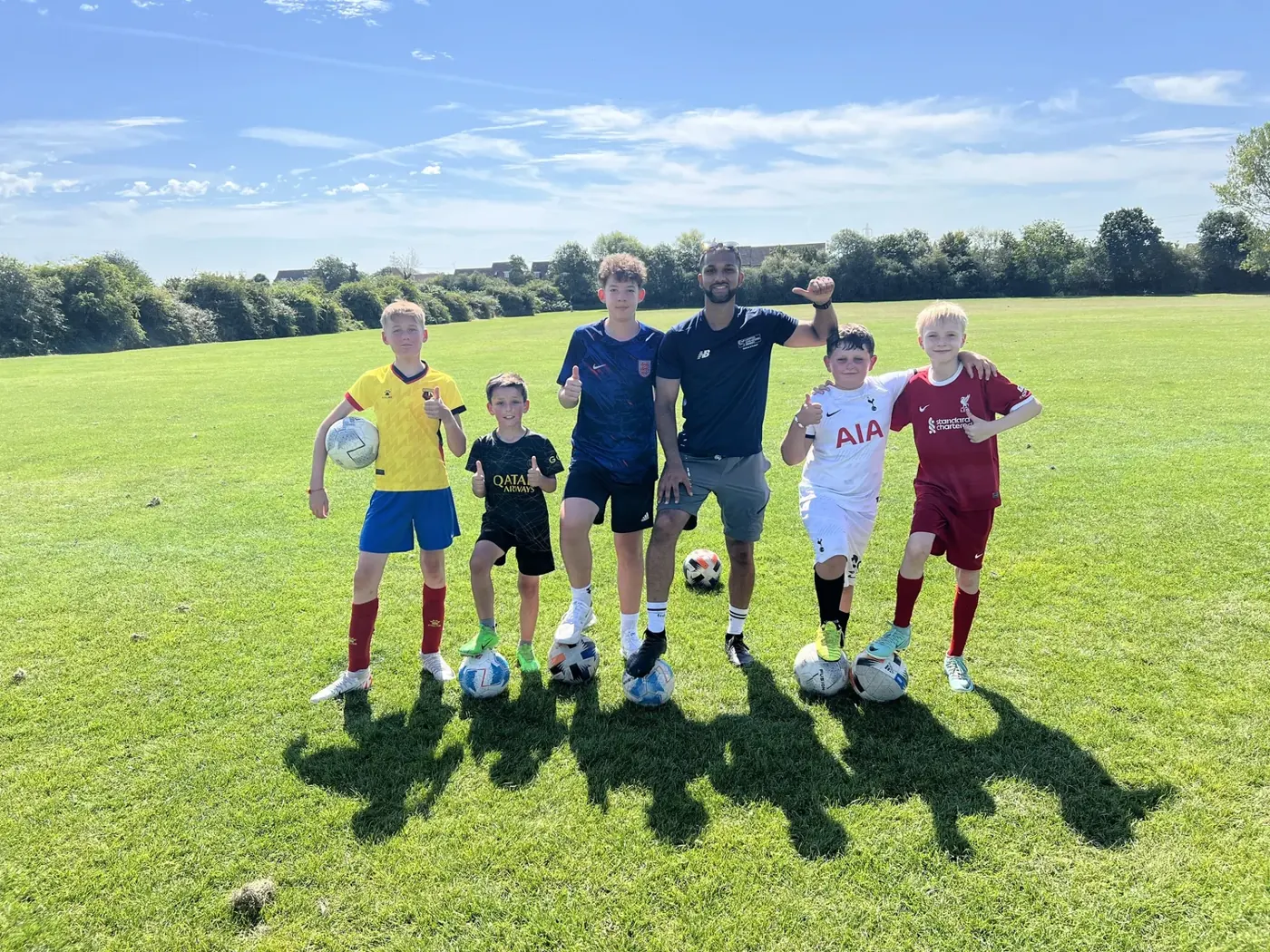
Should your child start 1-2-1 football coaching now, or wait?
The short answer. Your child is ready when they ask for it, practise without a reminder and can focus for a full session. Attitude matters more than age. If the idea is yours and they are lukewarm, wait a season.
Most parents ask me the same question in a slightly different way. "Is it worth it yet?" or "Is she too young?" or "Will he take it seriously?"
They are good questions. Private coaching costs more than a team session, and you want to know it will do something. I coach kids and teens across Leighton Buzzard and Milton Keynes, and I do not think every player needs it.
So here is the honest version. I will cover the signs that a child is ready and the signs that they should wait. Then I will show you how to get value from the sessions.
What is 1-2-1 football coaching?
A 1-2-1 session is one coach, one player and one plan. There is no queue for the ball and nowhere to hide. Your child gets far more touches than a team session can give them, and feedback on almost every one.
That is the strength of it. A coach with fifteen players sees the team, while a coach with one player sees the detail. I can watch which foot they plant, where their eyes go and what happens when they get tired.
It is not a shortcut, though. One hour a week will not turn an average player into a star. It will not replace matches either, because football is a team game and decisions under pressure come from playing it.
How do you know your child is ready?
Look for a child who asks for it, practises alone and can name something to fix. Taking correction and holding focus for a full session count too.
Age matters less than attitude. Some ten year olds are ready and some fifteen year olds are not. These are the things I look for.
- They ask for it. The idea comes from them, or they light up when you suggest it.
- They practise without a reminder. You find them in the garden with a ball, not only at training.
- They can name something they want to fix. "My left foot" or "my first touch" is a good start.
- They can take correction. A coach can stop them, show them, and they try again without sulking.
- They can focus for a full session. An hour of close attention is hard work for a young player.
You do not need all five. Three is a strong sign, and the first one counts for the most.
When is it better to wait?
Wait if the idea is yours, if they are new to football, or if their week is full.
Sometimes the kindest answer is "not yet". Waiting a season costs nothing, and starting too early can put a child off.
Hold back if:
- The idea is yours and your child is lukewarm about it.
- They are new to football and still learning to enjoy it.
- Their week is full of school, clubs and matches as it stands.
- They are tired, flat or losing interest in the game.
- They are carrying an injury or a niggle.
A new player usually gets more from a group first. They need games, friends and the fun of scoring before they need detail.
If your child seems flat about football in general, read my post on football burnout before you add anything. For an injury or any health worry, see a GP or physio first. A coach is not the right person to judge that.
The questions parents ask themselves
"Is my child good enough for it?" There is no entry level. Private coaching is not a reward for the best player in the team. A child who is behind often gains the most, because nobody is watching their mistakes.
"Is my child too young?" Our coaching is for kids and teens, and readiness varies a lot inside that range. A younger child often does better with plenty of games inside each session.
"Will it make football feel like homework?" It can, if the parent wants it more than the player. That is why the first sign on my list is that they ask for it.
What does 1-2-1 coaching help with most?
It helps most with specific problems: the other foot, first touch, position work and confidence on the ball.
Some problems are hard to fix in a team session. There is not enough time on one player, and the drill has to suit everyone. These are the areas where I see the fastest change.
- The other foot. It takes hundreds of calm repetitions, which is why I wrote about why I ban the term "weak foot".
- First touch. We can repeat the same pass from the same angle until the touch is clean.
- Position work. A full back, a striker and a keeper need different things, and a team session cannot split three ways.
- Confidence on the ball. Quiet players often open up when no team-mates are watching.
- Coming back after time out. Once a GP or physio has cleared them, a steady session helps a player find their feet again.
Notice that each one is specific. "Get better at football" is not a plan, but "receive on the half turn with either foot" is.
How to get the most from each session
The hour with the coach is only part of it. What happens between sessions decides how fast your child improves.
Start with one clear target. Small, countable goals work best for young players, and I explain why in the power of micro-goals.
Then build a little practice into the week. Ten minutes with a ball on most days beats one long session at the weekend. Ask the coach for two or three drills your child can do alone.
Keep a record too. When players track their own numbers they can see the work paying off, and that keeps them going. In our 1-2-1 sessions, Track Your Game boot sensors measure touches, passes, speed and distance.
Finally, stay out of the session. Watch from a distance if you like, but let the coach do the coaching. Children try harder things when a parent is not listening to every word.
Should 1-2-1 coaching replace team football?
No. Team football should stay, with private coaching added on top.
I never suggest private coaching in place of team football. The two do different jobs.
In a 1-2-1 your child learns the skill. In a group they test it against real opponents, with noise, speed and a team-mate shouting for the ball. A touch that looks perfect in a quiet session has to survive a tackle.
That is why many of our players do both. They work on one thing in private, then take it into group coaching and see if it holds up. When it does, you can see the confidence in how they play.
Mind the size of the week as well. Football has to fit around homework, sleep and friends. My post on how to balance school and football training has some simple ways to plan it.
Frequently asked questions
What age should a child start 1-2-1 football coaching?
Readiness is about focus and desire more than birthdays. If your child asks for it and can concentrate for a session, they are usually ready.
How often should my child have a session?
For most players, one session a week is plenty, with a little practice at home between sessions. More is not always better at this age.
Is 1-2-1 coaching only for academy players?
No. Grassroots players, school players and beginners with a real interest can all benefit. The plan changes to suit the player in front of me.
What if my child is nervous or low on confidence?
That is common, and a quiet session with one coach often suits a nervous child. If nerves or self-doubt hold them back in matches, mindset coaching can help as well.
How long is a 1-2-1 session?
Our sessions last one hour. That is long enough to work on one clear target with plenty of repetition.
The next step
If you are still not sure, start with a group session and watch how your child takes to it. Our first group session is a free trial in Leighton Buzzard. You will learn a lot from that one hour.
If your child comes off the pitch asking for more, they are ready. If they do not, give it a few months and ask again.